CBSE Board Score & Grade Estimator
Enter your marks for each subject. The tool applies the official theory/practical split so you can see exactly how much internal work moves your final result.
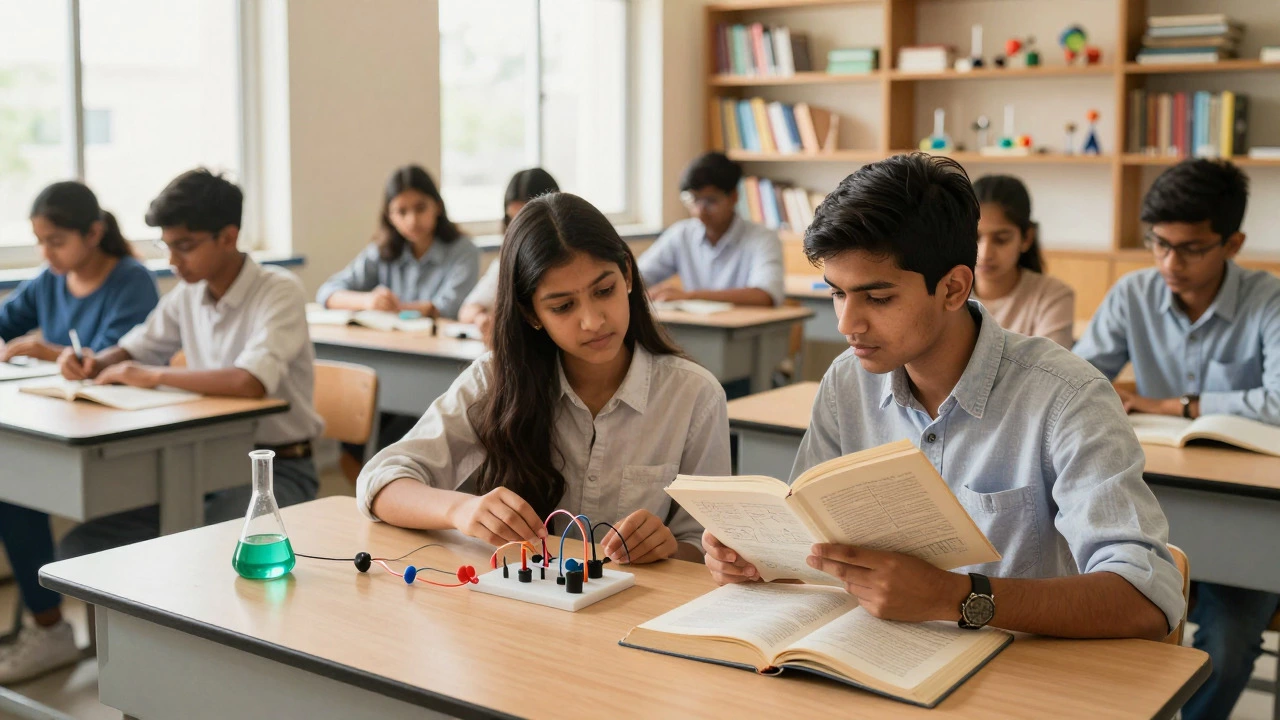
Walking into a classroom in New Delhi or Mumbai, you’ll quickly realize that the books on the desk aren’t just local choices. They follow a strict national blueprint. This blueprint is the CBSE syllabus, which serves as the standardized curriculum framework mandated by the Central Board of Secondary Education for schools across India and select international institutions. If you are a parent trying to understand what your child is learning, or a student preparing for board exams, knowing how this structure works is essential.
The CBSE doesn't just list topics; it dictates the depth, the assessment style, and the pedagogical approach. For the 2025-2026 academic year, the focus has shifted significantly toward application-based learning rather than rote memorization. Understanding this shift helps you navigate the resources available online and offline more effectively.
What Exactly Is the CBSE?
Central Board of Secondary Education (CBSE) is a national-level educational organization established in 1954 under the Ministry of Education, Government of India. Its primary role is to manage the curriculum and examinations for Class 8 through Class 12 in affiliated schools. Unlike state boards, which operate under individual state governments, CBSE operates at a central level, ensuring uniformity across its network.
Currently, over 27,000 schools in India are affiliated with CBSE. Additionally, hundreds of schools in countries like Nepal, Sri Lanka, and Singapore also follow this system. This widespread adoption means that a student moving from one city to another, or even from one country to another, can continue their education without facing major curriculum gaps.
Syllabus Structure Across Classes
The syllabus is divided into three distinct stages, each with specific goals. Here is how the content breaks down:
- Primary Stage (Classes 1-5): Focuses on foundational literacy and numeracy. Subjects include English, Hindi (or regional language), Mathematics, Environmental Studies (EVS), and Sanskrit (optional). The emphasis here is on activity-based learning.
- Middle Stage (Classes 6-8): Introduces formal subjects like Science, Social Science, and additional languages. Internal assessments begin to play a larger role in final grades.
- Secondary and Senior Secondary (Classes 9-12): This is where specialization begins. Students choose streams in Class 11 (Science, Commerce, Arts) and prepare for the high-stakes board examinations.
For Classes 9 and 10, the syllabus covers core subjects uniformly. In Class 11 and 12, however, the structure changes drastically based on the chosen stream. A Science student will study Physics, Chemistry, and Biology/Mathematics, while a Commerce student will focus on Accounts, Business Studies, and Economics.
Key Changes in the 2025-2026 Curriculum
Education boards rarely stay static. For the upcoming 2025-2026 session, the CBSE has introduced several adjustments aligned with the National Education Policy (NEP) 2020. These changes aim to reduce stress and increase practical understanding.
- Flexible Subject Choices: In Class 11, students can now mix subjects from different traditional streams. For example, a student interested in both science and humanities can take Physics alongside History, provided they meet the prerequisite requirements.
- Reduced Content Volume: Approximately 30% of the syllabus has been rationalized. This means fewer chapters but deeper exploration of the remaining topics. The goal is to move away from "chasing marks" toward genuine comprehension.
- Competency-Based Questions: Exams now feature more case-study-based questions. Instead of asking "Define Newton's Second Law," a question might present a real-world scenario involving vehicle braking distance and ask the student to apply the law to calculate the force required.
Subject-wise Overview for Senior Secondary (Class 11-12)
If you are looking at the higher secondary level, the subject details matter most. Below is a snapshot of the core subjects in the Science stream, which is the most competitive category.
| Subject | Key Focus Areas | Assessment Weightage |
|---|---|---|
| Physics | Electromagnetism, Optics, Modern Physics | 70% Theory, 30% Practical |
| Chemistry | Organic Reactions, Electrochemistry, Coordination Compounds | 70% Theory, 30% Practical |
| Biology | Genetics, Evolution, Human Physiology | 70% Theory, 30% Practical |
| Mathematics | Calculus, Vectors, Probability, Linear Programming | 80% Theory, 20% Practical |
Note that the practical component is not just lab work. It includes project reports, viva voce, and record maintenance. Neglecting these internal components can lower your overall percentage, even if you score well in the written exam.
How Assessment Works Under CBSE
Many people think the final board exam is everything. While it carries significant weight, it is not the whole picture. The grading system for Classes 10 and 12 typically splits the score between the external examination and internal assessment.
- External Exam: Usually accounts for 70-80% of the total grade. This is the standardized test conducted by CBSE at designated centers.
- Internal Assessment: Accounts for 20-30%. This includes unit tests, periodic assessments, laboratory records, and project work.
For Class 12, the pattern is generally 80% theory and 20% practical/internal. However, for some vocational or elective subjects, the split may differ. Always check the specific scheme of evaluation released by CBSE for your particular subject combination, as these documents are updated annually.
Resources for Studying the Syllabus
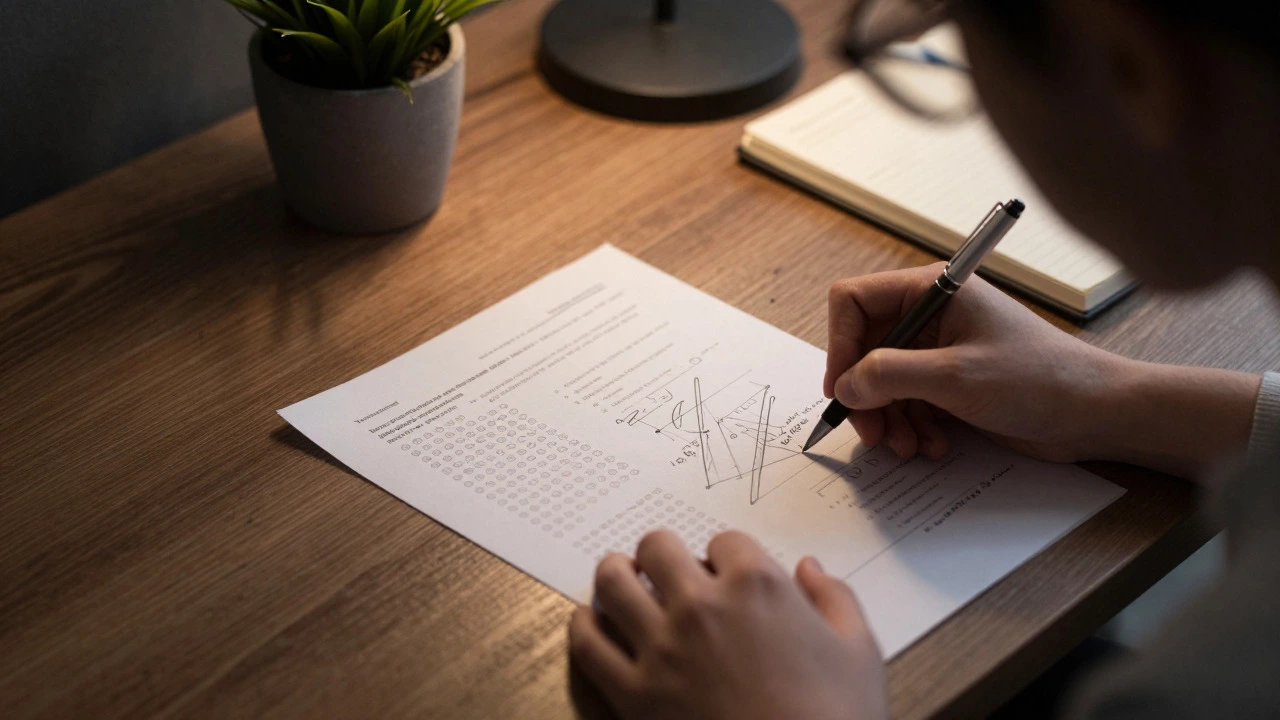
Where do you find the actual text? The CBSE website publishes the official syllabus PDFs every year, usually around November or December for the following academic year. These documents are free to download.
Beyond the official PDFs, several resources help in understanding the scope:
- NCTB Textbooks: The National Council of Educational Research and Training (NCERT) textbooks are the backbone of the CBSE curriculum. Most board questions are derived directly from NCERT lines and examples.
- Sample Papers: Released after the syllabus publication, these papers give an idea of the question pattern and difficulty level.
- Previous Year Question Banks: Analyzing trends from the last five years helps identify frequently asked topics.
A common mistake students make is relying solely on reference books without mastering the NCERT texts. Since the board aims to assess competency, sticking to the core textbook ensures you cover the fundamental concepts required for higher-order thinking questions.
Frequently Asked Questions
Is the CBSE syllabus the same for all schools in India?
Yes, for all CBSE-affiliated schools, the core syllabus is identical. However, schools have the autonomy to add local or regional content in certain subjects like Social Science or Environmental Studies, provided it aligns with the broader objectives. The core mathematical and scientific concepts remain unchanged nationwide.
Can I switch from a State Board to CBSE midway through my studies?
Yes, but it requires careful planning. You must ensure that the previous classes' syllabi are covered before joining a CBSE school. Many students face gaps in foundational concepts if they switch without bridging courses. Schools usually conduct a diagnostic test to assess readiness before admitting a transfer student.
Which is harder: CBSE or State Boards?
Difficulty is subjective and depends on the specific state board. Generally, CBSE is considered moderate in difficulty but rigorous in conceptual clarity. Some state boards are known for being more theoretical, while others are more practical. The key difference is that CBSE follows a single national standard, whereas state boards vary significantly in quality and depth.
Does the CBSE syllabus change every year?
The core structure remains stable, but minor deletions or additions happen annually to keep the curriculum relevant. Major structural changes, like those introduced under NEP 2020, occur less frequently. Always download the latest syllabus PDF from the official CBSE portal at the start of the academic year to confirm any specific chapter deletions.
Are there physical education components in the CBSE syllabus?
Yes, Physical Education is often offered as an optional subject in senior secondary levels. It involves both theoretical knowledge of sports and health, and practical performance. It can be chosen as a sixth subject for students who want to diversify their profile or improve their aggregate score.