
MBA Return on Investment (ROI) Calculator
Enter Your Data
Analysis Results
Break-Even Point
You spend two years of your life and often six figures to earn a Master of Business Administration. You walk across the stage, handshakes exchanged, expectations high. Then you hit the job market, and suddenly, the doors that used to swing open seem stuck. Is the MBA really dead? Or is it just changing shape under the weight of new economic realities?
The short answer is no, the degree itself isn't worthless. But the era of the 'automatic promotion' is over. We are living through a correction phase for business education. For decades, top-tier programs acted as golden tickets into consulting, finance, and tech leadership. Today, recruiters are skeptical, salaries have plateaued in many sectors, and alternative pathways like bootcamps and specialized master’s degrees are eating into the MBA's lunch.
If you are considering an MBA in 2026, you need to stop looking at it as a status symbol and start treating it as a specific tool with a very narrow use case. Here is what is actually happening on the ground.
The Supply Glitch: More Graduates Than Ever
Let’s look at the numbers because they tell a brutal story. Global enrollment in MBA programs has remained stubbornly high despite the pandemic dip. In the US alone, accredited business schools produced over 100,000 graduates annually in the pre-2020s, and that number has stabilized or grown slightly since then. Meanwhile, Europe and Asia have seen massive expansions in their own business school offerings.
On the demand side, however, the landscape has shifted. The tech layoffs of 2023-2024 were not just a blip; they signaled a structural change. Companies stopped hoarding talent. They started demanding immediate productivity. An MBA graduate who needs six months of training to understand the basics of digital transformation is less attractive than a candidate who already knows how to run a product launch.
General Management MBAs are facing increased competition from specialized skills-based roles. Unlike Specialized Master's, general MBAs often lack the technical depth required by modern agile teams.
This mismatch creates the feeling of oversaturation. It’s not that there are too many MBAs; it’s that there are too many *generic* MBAs chasing a shrinking pool of generic management entry-level roles. The middle-management ladder has been flattened by automation and organizational restructuring. There are fewer 'manager' titles to go around, which means every seat is more contested.
The Rise of the Specialist Alternative
Why pay $150,000 for a broad overview of marketing, finance, HR, and strategy when you can get a targeted skill set for $20,000? This is the core question driving the decline in perceived MBA value.
We are seeing a surge in specialized master’s degrees. A Master of Science in Data Analytics, a Master of Finance, or even a certified Project Management Professional (PMP) credential often carries more weight with hiring managers than a generalist MBA. These programs teach hard skills-SQL, Python, financial modeling, supply chain logistics-that can be tested in an interview.
An MBA teaches soft skills: negotiation, leadership, strategic thinking. These are valuable, but they are harder to quantify. In a tight labor market, companies prefer quantifiable assets. If you want to work in data-driven marketing, a certificate in Google Analytics plus experience beats a vague 'marketing strategy' module from a business school.
| Pathway | Avg. Cost (USD) | Time Commitment | Primary Value Prop | Best For |
|---|---|---|---|---|
| Top-Tier MBA (M7) | $180k - $220k | 2 Years Full-Time | Network & Brand Prestige | Career switchers to Consulting/Finance |
| Mid-Tier MBA | $60k - $90k | 1-2 Years | Local Network & General Skills | Regional career advancement |
| Specialized Master's (e.g., FinTech) | $30k - $50k | 1 Year | Technical Depth & Niche Expertise | Staying within current industry |
| Professional Certifications (CFA, PMP) | $2k - $5k | 6-12 Months Part-Time | Immediate Skill Validation | Quick upskilling without quitting job |
The Tiering Effect: Winner Takes All
If you feel the market is saturated, ask yourself: which tier are you in? The MBA world is brutally hierarchical. The 'M7' schools (Harvard, Stanford, Wharton, Chicago Booth, Columbia, MIT Sloan, Northwestern Kellogg) still command premium placement rates and starting salaries above $150,000. Their alumni networks are powerful moats that protect them from the saturation trend.
But below that top echelon, the returns diminish rapidly. A mid-tier MBA might cost $80,000 but only boost your salary by $20,000 upon graduation. When you factor in two years of lost wages, the return on investment (ROI) can be negative. This is where the 'oversaturation' narrative hits hardest. Mid-tier programs are struggling to justify their price tags because employers don't distinguish between a graduate from School A and School B if neither is a global brand name.
In Manchester, London, and other major hubs, recruiters are increasingly ignoring non-target schools for competitive graduate schemes. They rely on campus recruiting pipelines from elite institutions. If your school isn't on that list, you are competing in the open market against thousands of other candidates, including those with relevant work experience but no degree.

Who Actually Needs an MBA in 2026?
Despite the gloom, the MBA is not extinct. It remains the best vehicle for three specific groups of people:
- Career Switchers: If you are an engineer wanting to move into product management, or a teacher wanting to enter corporate strategy, an MBA provides the structured pivot. It signals to employers that you have the foundational business knowledge to bridge the gap.
- Entrepreneurs: You don't go to business school to learn how to start a company from a textbook. You go to find co-founders, access venture capital networks, and de-risk your early decisions. The network is the product here, not the curriculum.
- Executives Seeking C-Suite Access: For senior leaders aiming for CEO or CFO roles, an Executive MBA (EMBA) or a top-tier full-time MBA serves as a credentialing stamp. It validates your experience and connects you with peers at similar levels.
If you fall outside these categories, pause. If you are already in marketing and want to become a better marketer, an MBA is likely overkill and poor ROI. Take a specialized course instead.
The Changing Curriculum: Adaptation or Obsolescence?
Business schools know they are under fire. Many are trying to adapt by injecting technology and analytics into their curricula. You will see more courses on AI ethics, blockchain supply chains, and digital transformation. However, critics argue this is too little, too late. Professors teaching these subjects often lack real-world tech industry experience, leading to a disconnect between theory and practice.
Furthermore, the pace of technological change outstrips academic cycles. By the time a syllabus is approved, the tools mentioned may be outdated. This reinforces the preference for self-taught skills or industry certifications that update monthly.
Calculating Your Personal ROI
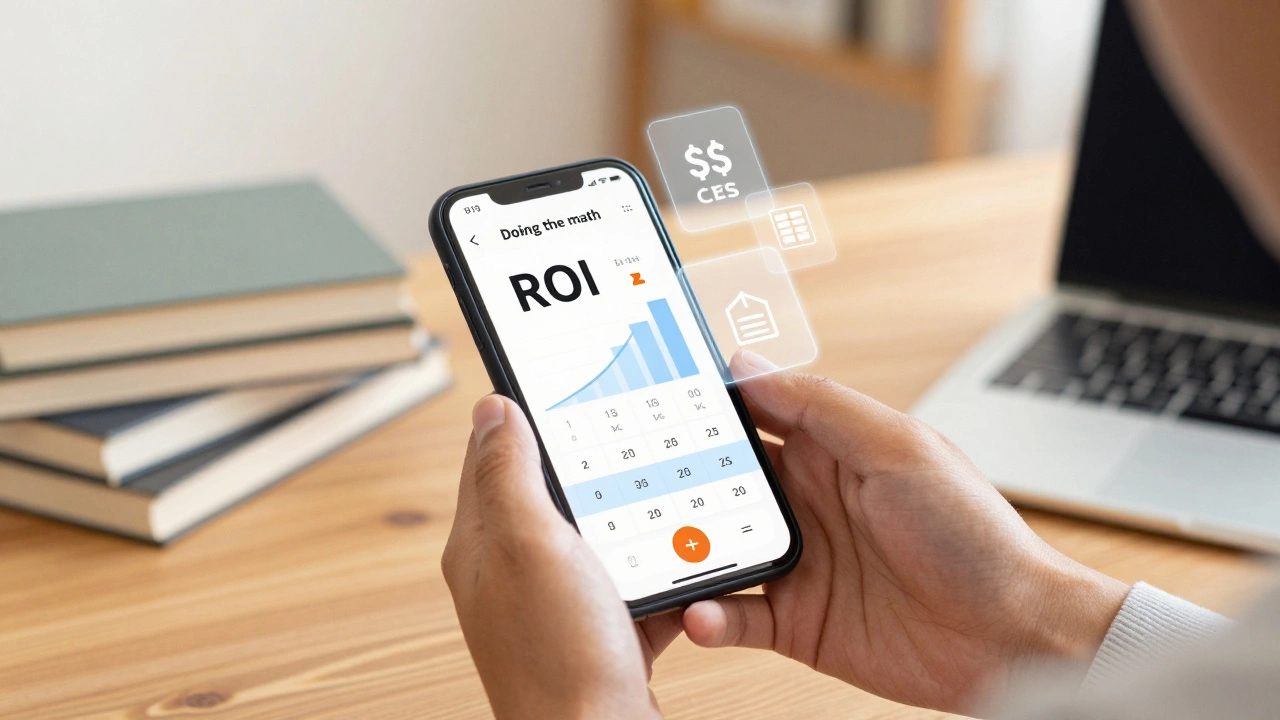
Before applying, do the math. Don't trust the average salary figures published by the school-they are skewed by outliers. Look at the median base salary for graduates entering your target role in your target location.
- Total Cost: Tuition + Fees + Lost Wages (2 years) + Opportunity Cost.
- Expected Gain: (Post-MBA Salary - Pre-MBA Salary) x Years to Break Even.
- Break-Even Point: How many years until your cumulative earnings exceed your total cost?
If the break-even point is more than 5-7 years, the risk is high. Consider part-time or online MBAs from reputable institutions. They offer similar networking benefits without forcing you to quit your job, preserving your income stream and professional momentum.
Conclusion: Saturation is a Signal, Not a Stop Sign
The MBA is not oversaturated in the sense that it is useless. It is oversaturated in the sense that it is no longer a default path to success. The barrier to entry for 'management' has lowered, while the bar for 'value creation' has risen. The degree works best when it is a lever for a specific, well-defined career move, not a vague hope for future prosperity.
If you approach an MBA with eyes wide open-knowing exactly what network you need, what skills you lack, and what the real costs are-it can still be one of the best investments you make. But if you are doing it because everyone else did, or because you think it’s the only way to get ahead, you might be walking into a crowded room with no seats left.
Is an MBA worth it if I already have 5 years of experience?
It depends on your goal. If you want to stay in your current track (e.g., software engineering), an MBA is usually low ROI. Specialized certifications or internal promotions are better. If you want to switch functions (e.g., from engineering to sales leadership), an MBA provides the necessary credibility and network to make that jump.
Are online MBAs respected by employers in 2026?
Respect varies by institution. Online MBAs from top-tier brands (like Indiana Kelley, UNC Kenan-Flagler, or IESE) are highly regarded and often treated identically to their on-campus counterparts. However, online degrees from unknown or unaccredited providers carry little weight. Always check for AACSB, AMBA, or EQUIS accreditation.
What is the biggest mistake people make when choosing an MBA program?
Choosing based on ranking alone. Rankings often prioritize research output and endowment size over student outcomes. Instead, look at employment reports: Where do graduates actually go? What is the median salary in your specific region? Does the school have strong ties to your target industry?
Can I get promoted without an MBA?
Absolutely. Most middle and upper management positions are filled through internal promotion based on performance. While an MBA can accelerate this process, it is rarely a strict requirement unless you are targeting specific industries like investment banking or top-tier management consulting.
How does AI impact the value of an MBA?
AI automates many analytical tasks traditionally taught in MBA programs, such as basic financial forecasting and market analysis. This increases the value of uniquely human skills emphasized in MBAs: leadership, ethical decision-making, and complex negotiation. However, it also means you must complement your MBA with technical literacy to remain relevant.