
Coding vs. Programming Quiz
Can you tell the difference between writing code and designing a system? Answer these questions to see where you stand.
What is the primary focus of "Coding"?
Which scenario best describes a "Programming" challenge rather than just "Coding"?
According to the article, what is the recommended path for most beginners?
Why might someone who only knows how to code hit a "wall" when building an app like Uber?
How does the article describe the relationship between coding and programming?
You’ve probably heard these terms thrown around like they’re interchangeable. Your friend says they’re "learning to code," while a job posting asks for "strong programming skills." It’s confusing, right? But here’s the truth: coding and programming are not the same thing, even if people treat them as twins. One is about typing instructions; the other is about solving problems. If you’re staring at a list of coding classes wondering where to start, understanding this difference saves you months of frustration.
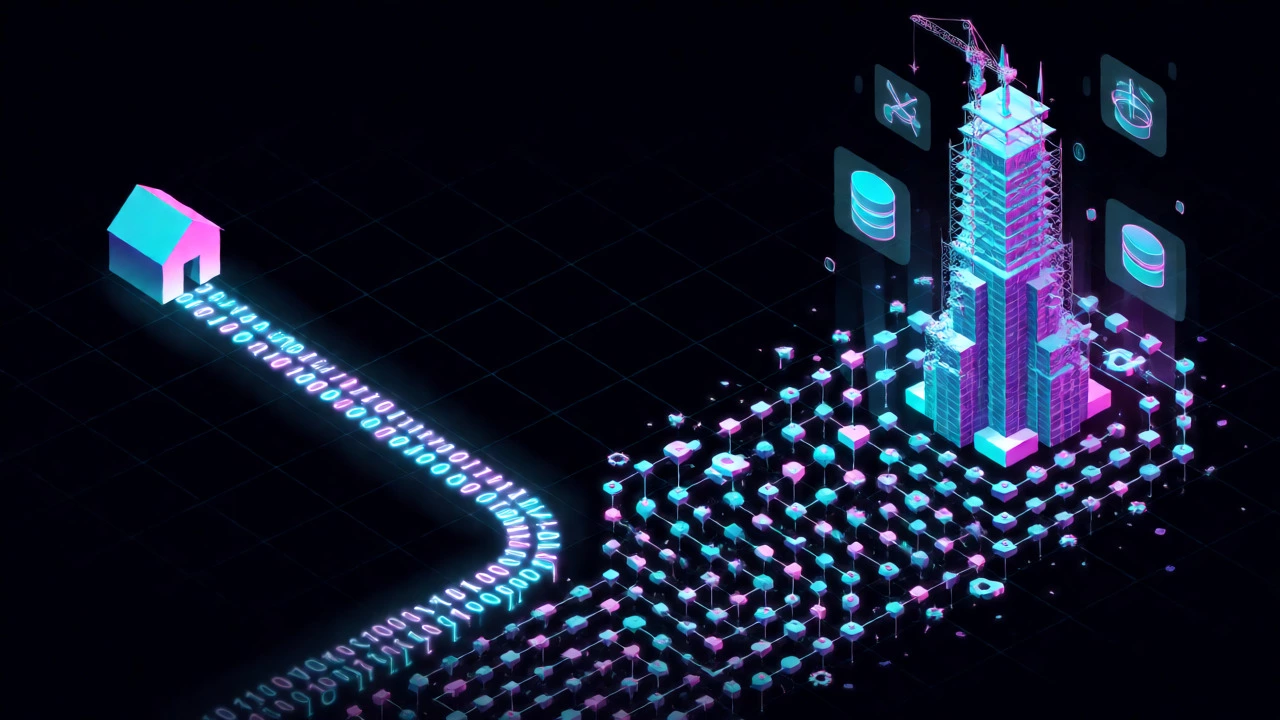
Think of it this way. Coding is the act of translating logic into a language a computer understands, like Python or Java. It’s mechanical. You write syntax. Programming is bigger. It’s designing the architecture, choosing the right algorithms, and ensuring the system doesn’t collapse under real-world pressure. If coding is laying bricks, programming is being the architect who decides why the building stands up in an earthquake.
The Core Difference: Syntax vs Strategy
When you learn to code, you focus on grammar. Where does the semicolon go? How do I declare a variable? These are specific, rule-based tasks. You can teach someone to code in a weekend workshop. They’ll write a script that prints "Hello World" or calculates a tip. That’s valuable, but it’s narrow.
Programming requires strategy. It involves breaking down complex issues into smaller, manageable parts. Imagine you’re building an app like Uber. Coding lets you write the function that calculates the fare. Programming helps you decide how to handle ten thousand requests per second without crashing the server. It involves data structures, memory management, and scalability. If you skip the programming mindset, you might write code that works on your laptop but fails miserably when thousands of users hit it simultaneously.
This distinction matters because it changes what you study first. If you dive straight into advanced programming concepts without knowing basic syntax, you’ll feel lost. But if you only learn syntax without understanding problem-solving, you’ll be stuck copying snippets from Stack Overflow without knowing why they work.
Why Beginners Often Confuse Them
The confusion stems from how tech jobs are advertised. Many entry-level roles use "coder" and "programmer" interchangeably. This blurs the line for newcomers. Additionally, modern tools make coding easier. Integrated Development Environments (IDEs) suggest code completions, hiding some of the raw mechanics. This makes it seem like programming is just about typing fast.
But let’s look at the learning curve. Learning to code is linear. You learn `if` statements, then loops, then functions. It’s step-by-step. Programming is non-linear. You might need to understand databases before you can effectively program a web application. Or you might need to grasp object-oriented principles to structure large projects. The feedback loop in programming is slower. In coding, you run the script, and it either works or throws an error. In programming, the "error" might be inefficient performance that takes weeks to notice.
Which Path Fits Your Goals?
Your choice depends entirely on what you want to build. Are you automating spreadsheets? Do you want to create simple websites? Or do you aim to build scalable software systems?
- Choose Coding First If: You want quick wins. You’re interested in data analysis, automation, or front-end design. Tools like Excel macros, HTML/CSS, or basic Python scripts fall here. You get immediate visual feedback, which keeps motivation high.
- Choose Programming Mindset If: You want to become a Software Engineer. You care about efficiency, security, and architecture. You’re ready to tackle algorithms, design patterns, and system design. This path is harder initially but offers higher long-term career ceilings.
Here’s a practical scenario. Sarah wants to automate her monthly reports. She learns Python coding. Two days later, she has a script that cleans her data. She’s happy. Mike wants to build a social network. He starts with coding too, writing user profiles. But within a month, he hits a wall. He doesn’t know how to store relationships between users efficiently. He needs programming knowledge-specifically, graph theory and database indexing-to move forward.
A Comparison of Learning Outcomes
| Feature | Coding | Programming |
|---|---|---|
| Primary Focus | Writing valid syntax in a specific language. | Solving complex problems using logical structures. |
| Scope | Narrow; focuses on implementation details. | Broad; includes design, testing, and deployment. |
| Tools Used | Text editors, compilers, interpreters. | IDEs, version control, debuggers, project managers. |
| Time to Proficiency | Weeks to months for basic competence. | Months to years for deep understanding. |
| Career Roles | Junior Developer, Script Editor, Data Analyst. | Software Architect, Senior Engineer, Tech Lead. |
How to Structure Your Learning Journey
You don’t have to choose one forever. The best developers master both. Start with coding to get comfortable with the medium. Pick a beginner-friendly language like Python. Its readable syntax reduces friction, letting you focus on logic rather than punctuation. Spend two weeks writing small scripts. Automate file renaming. Calculate averages. Get used to the flow of writing, running, and fixing errors.
Once you’re comfortable with syntax, shift to programming concepts. Don’t just write code; think about it. Ask questions: Is this loop efficient? Could I use a dictionary instead of a list? What happens if the input is null? Introduce yourself to Data Structures and Algorithms. Learn why sorting a million items quickly matters. Practice breaking big problems into small functions. This transition is where many beginners quit because it feels abstract. Push through it. Use pseudocode to plan your logic before you type a single character.
Consider taking structured coding classes that emphasize problem-solving over rote memorization. Look for courses that assign projects requiring architectural decisions, not just filling in blanks. A good course will ask you to justify your choices, not just submit working code.

Pitfalls to Avoid
The biggest mistake is trying to learn everything at once. You don’t need to master C++ pointers to write a Python script. Another trap is ignoring version control. Git is essential for programming projects where multiple files interact. If you only code in isolation, you’ll struggle when joining teams.
Also, don’t underestimate the value of reading other people’s code. Reading well-written open-source projects teaches you programming style and structure better than any tutorial. It shows you how experienced programmers organize their thoughts into code.
Next Steps for Aspiring Developers
If you’re completely new, start today by installing a code editor and running a "Hello World" program. Feel the satisfaction of making the machine obey you. Then, enroll in a course that bridges the gap. Look for curricula that cover both syntax and fundamentals like variables, control flow, and modular design.
Remember, coding is a tool. Programming is the craft. You need the tool to practice the craft, but owning the hammer doesn’t make you a carpenter. Build small things, break them, fix them, and gradually increase complexity. Within six months, you’ll find yourself thinking less about syntax and more about solutions. That’s when you’ve truly started learning to program.
Is coding harder than programming?
No, coding is generally considered easier to start because it focuses on specific syntax rules. Programming is often perceived as harder because it requires abstract thinking, system design, and a broader understanding of computer science principles. However, mastering programming makes coding much easier over time.
Can I get a job knowing only how to code?
Yes, especially for junior roles, internships, or specific niches like QA automation or front-end styling. However, most software engineering interviews test programming concepts like algorithms and data structures. Relying solely on syntax knowledge may limit your career growth and salary potential in the long run.
Which language should I learn first for programming?
Python is widely recommended for beginners due to its readable syntax and versatility. JavaScript is another excellent choice if you are interested in web development. Both languages allow you to practice coding mechanics while gradually introducing programming concepts like object-oriented design and asynchronous operations.
Do I need a degree to learn programming?
No, a formal degree is not mandatory. Many successful developers are self-taught or graduates of bootcamps. However, a computer science degree provides deep exposure to theoretical programming concepts like operating systems and compiler design, which can be difficult to replicate through online tutorials alone.
How long does it take to learn coding versus programming?
You can learn basic coding syntax in 2-4 weeks. Becoming proficient in programming-meaning you can design robust, scalable applications independently-typically takes 6-12 months of consistent practice. Mastery continues throughout your career as technologies evolve.