
Career ROI Calculator
Compare different career paths by calculating their Return on Investment (ROI). Enter the program cost and expected starting salary below.
Associate in Nursing
Healthcare- Cost: $5k - $15k
- Duration: 2 Years
- Start Salary: $75k+
Cybersecurity Diploma
Tech / IT- Cost: $3k - $10k
- Duration: 6-12 Months
- Start Salary: $65k+
Radiologic Technology
Medical Tech- Cost: $8k - $20k
- Duration: 2 Years
- Start Salary: $60k+
Web Dev Bootcamp
Software- Cost: $5k - $15k
- Duration: 3-6 Months
- Start Salary: $70k+
You’re staring at a student loan bill that looks like a phone number. You want to work, you want to earn, and frankly, you don’t have four years to spare. The old advice of "get a bachelor’s degree" is great if you’re starting fresh at eighteen. But if you’re looking to pivot careers or jump into the workforce fast, that timeline feels like a lifetime.
The good news? The landscape of higher education has shifted. In 2026, employers care less about the diploma frame on your wall and more about what you can actually do on day one. This has opened the door for accelerated degrees and vocational credentials that cut the fluff and focus on skills. You can get qualified, hired, and earning a solid salary in two years or less.
The Shift from Time-Served to Skill-Proven
For decades, the university model was rigid. Four years, regardless of whether you learned the material in two or needed six. That model is breaking down. According to recent labor market data, nearly half of all new jobs now require some form of post-secondary training, but only a fraction require a traditional four-year liberal arts degree.
Employers are increasingly using "skills-based hiring." They look for specific competencies-like coding in Python, managing cloud infrastructure, or performing diagnostic medical tests. If you can prove you have those skills through a focused, shorter program, you bypass the need for a generic bachelor’s. This shift benefits you because it reduces tuition costs and gets you to a paycheck faster. It’s not about lowering standards; it’s about removing barriers that no longer add value.
Top Quick Degrees with High Earning Potential
Not all short degrees are created equal. Some lead to dead-end jobs with minimum wage paychecks. Others open doors to six-figure salaries within five years. Here are the most reliable paths where speed meets income.
1. Associate Degree in Nursing (ADN)
If you want stability and immediate demand, nursing is hard to beat. An Associate Degree in Nursing typically takes two years to complete at a community college. Once you pass the NCLEX-RN exam, you are a licensed Registered Nurse (RN).
Registered Nurses are healthcare professionals who provide patient care and educate patients about health conditions. In the current healthcare climate, hospitals are desperate for staff. The median annual wage for RNs is significantly higher than the national average for all occupations. Plus, you can always go back later to get your Bachelor’s in Nursing (BSN) while working full-time, often with employer sponsorship.
2. Cybersecurity Analyst Certifications & Diplomas
You don’t necessarily need a four-year computer science degree to enter cybersecurity. Many employers accept candidates with an associate degree in information technology combined with industry certifications like CompTIA Security+ or CISSP. Bootcamps and accelerated online programs can prepare you for these roles in as little as six to twelve months.
Cybersecurity threats are growing exponentially. Companies are spending billions on protection. A junior security analyst can start with a competitive salary, and the field offers rapid advancement. If you enjoy puzzles and protecting systems, this is a high-growth area that values practical testing skills over theoretical essays.
3. Radiologic Technology
Radiologic technologists operate equipment that produces images of the human body for diagnosis by physicians. Programs for this usually take two years to complete, resulting in an associate degree. After graduation, you take a certification exam.
This job is physically less demanding than nursing but still requires precision and patient interaction. The demand is steady due to an aging population needing more diagnostic imaging. It’s a classic example of a trade skill that pays well without requiring a decade of schooling.
4. Web Development and Software Engineering Bootcamps
While not always called a "degree," accredited bootcamps and intensive certificate programs function similarly for hiring purposes. These programs compress two years of computer science curriculum into three to six months of intense, project-based learning. You build a portfolio of real apps and websites.
Tech companies, especially startups and mid-sized firms, hire based on code quality. If your GitHub repository shows clean, functional code, your lack of a four-year degree matters less. Salaries in tech remain among the highest across all sectors, even for entry-level positions.
| Program Type | Duration | Estimated Cost (US) | Median Starting Salary | Key Requirement |
|---|---|---|---|---|
| Associate in Nursing (ADN) | 2 Years | $5,000 - $15,000 | $75,000+ | NCLEX-RN Exam |
| Cybersecurity Diploma | 6-12 Months | $3,000 - $10,000 | $65,000+ | CompTIA Security+ |
| Radiologic Tech | 2 Years | $8,000 - $20,000 | $60,000+ | ARRT Certification |
| Web Dev Bootcamp | 3-6 Months | $5,000 - $15,000 | $70,000+ | Portfolio/GitHub |
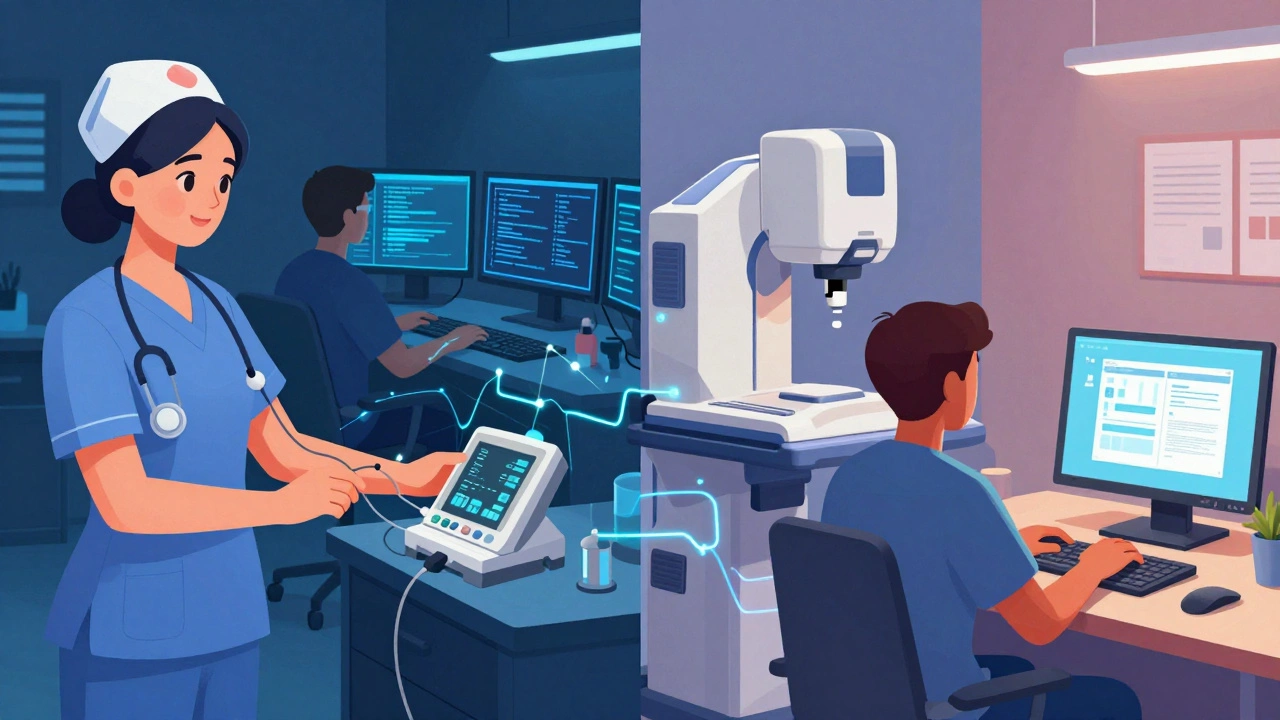
How to Choose the Right Path for You
Picking a quick degree isn’t just about the money. It’s about fit. If you hate blood, don’t pick nursing. If you struggle with logic puzzles, coding might be frustrating. Here is how to narrow it down:
- Assess Your Learning Style: Do you learn by doing (hands-on trades, coding) or by studying theory (business administration)? Accelerated programs are intense. You need a style that matches the pace.
- Check Local Demand: A cybersecurity degree is great everywhere. A wind turbine technician degree is only great if there are wind farms near you. Look at job boards in your city before you enroll.
- Verify Accreditation: This is critical. Ensure the program is regionally accredited (for degrees) or recognized by relevant industry bodies. Without this, your credential may be worthless to employers.
- Calculate ROI: Divide the estimated cost of the program by the expected first-year salary. A lower ratio means a better return on investment.
The Role of Online Courses in Accelerated Learning
You don’t have to sit in a classroom to get these credentials. The rise of Online Courses are digital educational modules delivered via the internet, allowing flexible learning schedules has democratized access to high-paying skills. Platforms like Coursera, edX, and specialized bootcamps offer accredited pathways.
Many universities now offer "stackable credentials." You can take individual online courses that count toward a larger degree. If you decide to stop after two courses, you still have certificates to show employers. If you continue, they roll up into an associate or bachelor’s degree. This flexibility reduces risk. You aren’t locked into a four-year commitment from day one.
Moreover, online programs often allow you to keep your current job while studying. This dual-income approach helps pay off the education debt immediately. Just ensure the online program includes hands-on components, such as virtual labs for coding or clinical rotations for healthcare fields.

Pitfalls to Avoid
Speed can be dangerous if you rush blindly. Here are common traps:
- Degree Mills: Avoid schools that promise a degree in weeks with no coursework. These are scams. Legitimate education requires effort.
- Ignoring Soft Skills: Technical skills get you the interview; soft skills get you the job. Communication, teamwork, and problem-solving are essential. Make sure your program includes projects that develop these traits.
- Overlooking Licensing: Some fields require state-specific licenses. Check the requirements in your state before enrolling in a nursing or therapy program.
- Underestimating the Pace: Accelerated means fast. Expect long hours. Burnout is real. Plan your schedule realistically.
Next Steps for Your Career Change
If you’re ready to move, start small. Don’t quit your job today. Spend a weekend researching local community colleges and accredited online providers. Talk to people already in the fields you’re considering. Ask them what their day-to-day life is like. Their reality will tell you more than any brochure.
Remember, a quick degree is a tool, not a guarantee. Your success depends on your willingness to learn, adapt, and network. The barrier to entry is lower than ever. The question is no longer "Can I afford college?" but "Which skill do I want to master next?"
What is the fastest degree to get a high-paying job?
An Associate Degree in Nursing (ADN) or a specialized IT bootcamp/certificate are among the fastest paths. ADN takes about two years and leads to stable, high-demand healthcare roles. IT bootcamps can take 3-6 months and lead to tech roles with strong starting salaries.
Do employers care if my degree is from an online school?
Most employers care about accreditation and skills, not the delivery method. As long as the institution is regionally accredited, an online degree holds the same weight as an on-campus one. Tech and healthcare industries particularly value demonstrated competence.
Is it worth getting a degree instead of just a certificate?
It depends on the field. For tech, certificates and portfolios often suffice. For healthcare (nursing, radiology), a formal degree is usually required for licensure. Check the specific licensing requirements for your target job.
How much does a quick degree cost?
Costs vary widely. Community college associate degrees can range from $5,000 to $15,000 total. Private bootcamps may cost $10,000 to $20,000. Always compare the cost against the potential salary increase to calculate ROI.
Can I work while completing an accelerated degree?
Yes, many students do. Online programs and evening classes are designed for working adults. However, be realistic about your time. Accelerated programs are intensive, so part-time work is often easier than full-time employment during studies.