Duolingo: Free Language Learning App and How It Really Works
When you use Duolingo, a free, gamified language learning platform that turns grammar and vocabulary into bite-sized daily lessons. Also known as language learning app, it lets you practice speaking, listening, reading, and writing in over 40 languages without paying a cent. Millions of people start with Duolingo because it feels like a game—not a class. You earn points, unlock levels, and get streaks for daily practice. But is it enough to actually speak a language? The answer depends on what you want to achieve.
Duolingo works best as a daily habit builder, not a full language course. It’s great for learning basic phrases, common vocabulary, and sentence structure—especially if you’re just starting out. Many users pair it with free YouTube videos or language exchange apps to get real conversation practice. If you’re trying to learn English, Duolingo’s lessons cover everything from simple greetings to past tense verbs, but it won’t teach you how to write an essay or understand native-speed conversations. That’s where real-world practice comes in.
What makes Duolingo different from other tools is how it keeps you coming back. The app uses spaced repetition, so you review words just before you’re likely to forget them. It also gives instant feedback—correct your answer and you move on. Get it wrong and you get a gentle nudge to try again. It’s designed for people who don’t have time for long lessons or expensive tutors. Teachers and students alike use it to reinforce classroom learning, and parents often let kids play it like a mobile game.
But here’s the truth: Duolingo alone won’t make you fluent. It’s like learning to ride a bike on a trainer—you’ll get the motion, but you won’t handle traffic. For real progress, you need to listen to podcasts, talk to native speakers, or watch shows in your target language. Still, if you want to build confidence, learn 10 new words a day, or keep your brain active, Duolingo is one of the easiest ways to start. It’s free, works offline, and fits into your coffee break or commute.
Below, you’ll find real stories and practical guides on how people use Duolingo to learn English and other languages. Some use it as a daily warm-up. Others combine it with free tools like language exchange apps and YouTube channels. No magic. No secrets. Just what actually works when you’re learning on your own, on a budget, and on your own time.
What Is the Fastest Growing Digital Platform in E-Learning?
Posted by Aria Fenwick On 2 Dec, 2025 Comments (0)
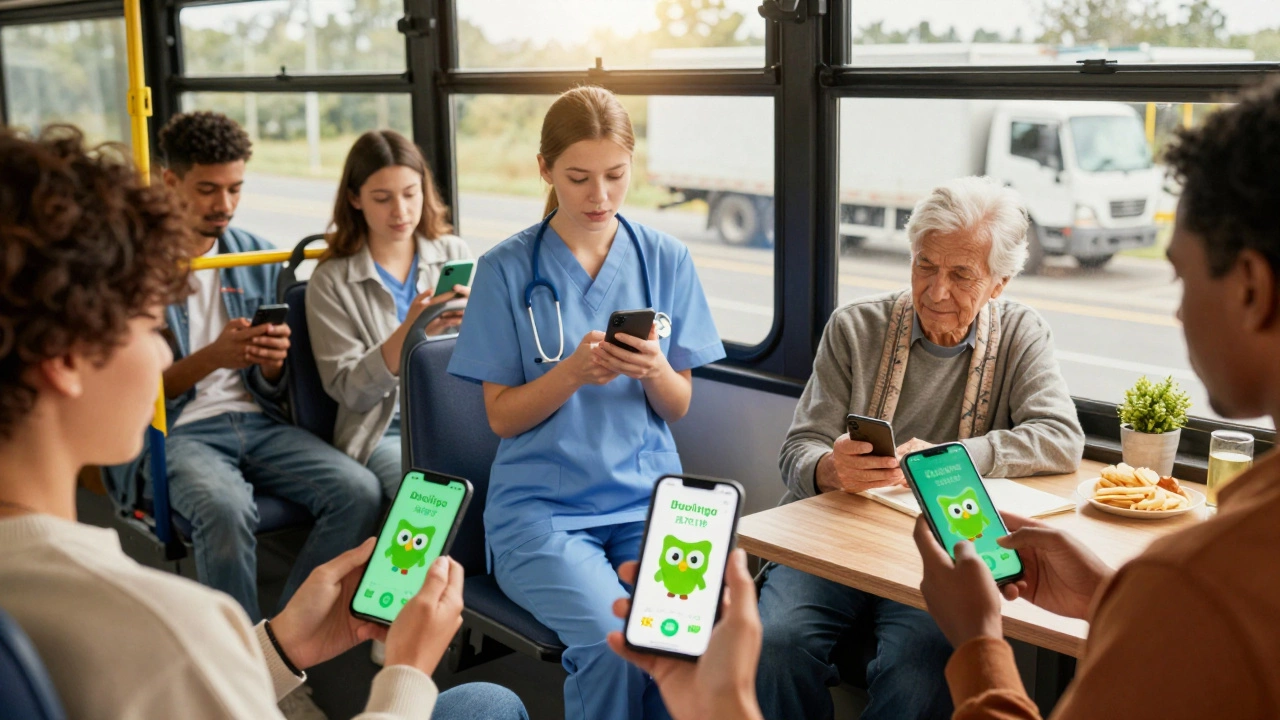
Duolingo is the fastest-growing digital learning platform, with over 700 million users and 180 million new sign-ups in 2024. It beats competitors by making learning a daily habit, not a chore.
Is Duolingo Truly Free for Learning Languages?
Posted by Aria Fenwick On 24 Jan, 2025 Comments (0)

This article explores whether Duolingo truly offers free language learning courses, discussing its features and the potential costs involved. It examines how the app sustains itself financially while providing lessons at no direct charge. Readers will gain insight into the functionality of Duolingo, uncover some surprising facts, and learn practical tips on maximizing their language-learning experience without incurring costs. By understanding the limitation and offerings of the platform, users can make informed decisions about their language education journey.