Learning Management System: What It Is and How It Powers Online Education
When you take an online course, watch videos, submit assignments, or check your grades on a website, you’re likely using a Learning Management System, a digital platform designed to deliver, manage, and track educational content and learner progress. Also known as an LMS, it’s the backbone of every online class—from a college degree program to a coding bootcamp you take after work. It’s not just a video library. A real Learning Management System organizes lessons, sends reminders, grades quizzes, lets teachers give feedback, and even shows how much time you’ve spent on each topic.
Many schools and training centers in India now use LMS platforms because they make learning flexible. You don’t need to be in a classroom to get certified. Whether you’re studying for JEE from a small town, taking a free English course at home, or earning a fast-track degree online, the system behind it is probably an LMS. These systems connect students with teachers, track who’s falling behind, and let schools measure what’s working. Tools like Moodle, Google Classroom, or custom-built platforms are all types of LMS. They’re used by universities, coaching centers like Allen or Resonance, and even government programs aiming to reach more learners.
What makes a good Learning Management System? It’s simple: it needs to work on your phone, load fast, and not confuse you. If you’ve ever struggled to find your assignment or couldn’t upload a file, that’s a bad LMS. The best ones are quiet, reliable, and let you focus on learning—not tech issues. They also help teachers. Instead of emailing 200 students, they push one update. They can see who watched the lecture and who didn’t. They can flag students who need help before they fall too far behind.
And it’s not just for students. If you’re building your own online course, you need an LMS to sell it, track learners, and collect payments. That’s why so many posts here talk about creating eLearning platforms, choosing the right hosting, or setting up payment gateways—they’re all parts of making an LMS work. Whether you’re a student trying to find the cheapest online course or a teacher looking to digitize your classroom, the Learning Management System is the invisible engine behind it all.
Below, you’ll find real examples of how LMS tools are used in India—from free English apps to coaching institutes tracking thousands of students. Some posts show you how to build one. Others explain why some platforms fail. All of them tie back to the same thing: learning doesn’t happen in a vacuum. It needs a system. And that system? It’s an LMS.
Understanding LMS: A Guide to Learning Management Systems in Education
Posted by Aria Fenwick On 16 Jan, 2025 Comments (0)
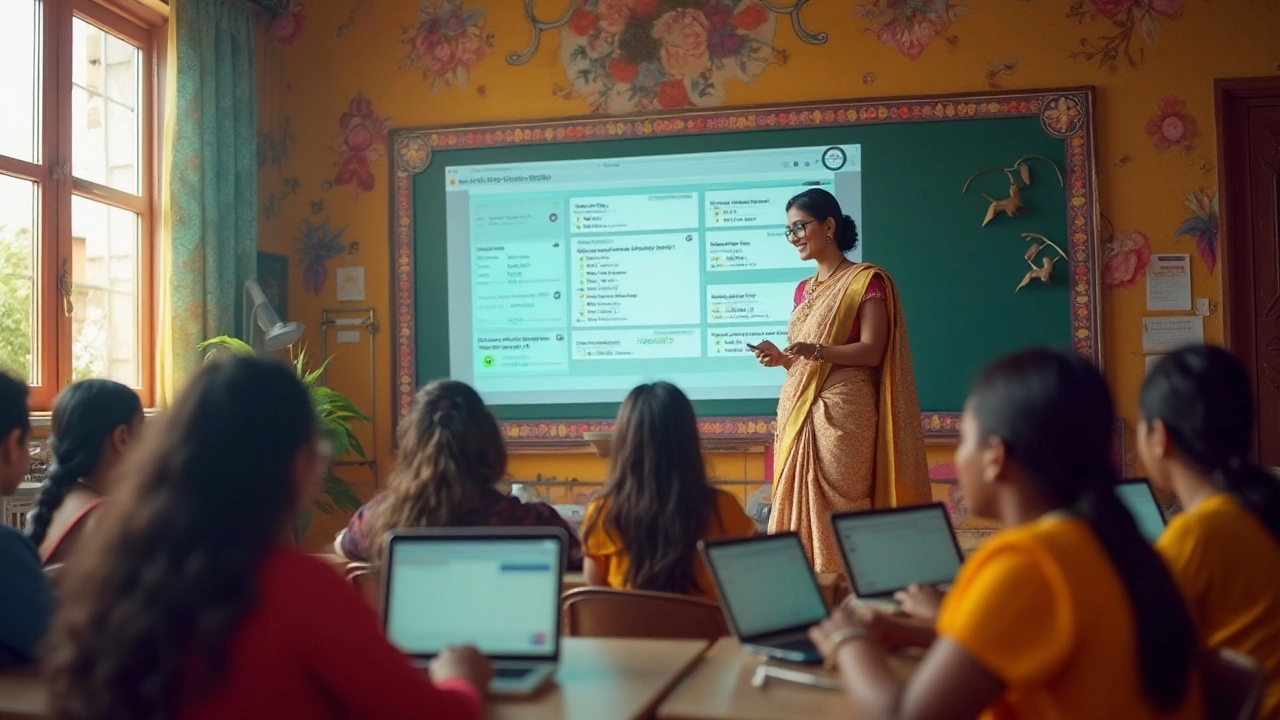
Learning Management Systems, commonly known as LMS, play a pivotal role in today's educational landscape. These platforms provide a digital environment for educators to manage content, analytics, and student interactions seamlessly. The evolution of LMS has transformed traditional classrooms into dynamic e-learning ecosystems, offering flexibility and access to various educational resources. Understanding their features and potential can significantly benefit institutions and learners alike.