State Board Education in India: What You Need to Know
When it comes to school education in India, state board education, the curriculum and examination system managed by individual Indian states. Also known as state syllabus, it serves over 60% of Indian school students and is the backbone of public education in regions like Maharashtra, Tamil Nadu, Uttar Pradesh, and Karnataka. Unlike CBSE or ICSE, which follow a national standard, state boards design their own syllabi, exams, and grading systems—often with a stronger focus on regional languages, local history, and state-specific content. This makes them more accessible for students in rural areas and those planning to pursue state-level colleges or government jobs later.
One big advantage of state board education, the curriculum and examination system managed by individual Indian states is its alignment with state-level entrance exams. For example, if you’re aiming for engineering colleges in Maharashtra, the MHT-CET exam is built directly around the Maharashtra State Board syllabus. Same goes for Tamil Nadu’s TNEA or Karnataka’s KCET. This means students don’t need to relearn content—they’re studying for their board exams and competitive exams at the same time. On the flip side, state boards sometimes have less emphasis on English and global standards compared to CBSE or ICSE, which can make transitioning to national universities or studying abroad a bit harder without extra prep.
Many parents assume CBSE is always better, but that’s not true for everyone. If your child is strong in regional languages, plans to stay in-state for college, or thrives in a less intense academic environment, a state board can be the smarter choice. It’s also often more affordable, with lower fees and fewer coaching demands. Schools under state boards don’t always push students into endless mock tests or expensive coaching centers like some CBSE institutions do. You’ll find that state board toppers often come from schools with limited resources but strong teaching—proving that success isn’t about the board, it’s about the effort.
There’s also a growing trend: more state boards are updating their syllabi to include digital literacy, environmental science, and critical thinking—just like CBSE and ICSE. And with the new National Education Policy (NEP) pushing for more flexibility, state boards are starting to offer more subject choices and vocational options. So while they were once seen as "second-tier," they’re now becoming a practical, high-value path for millions.
What you’ll find in the posts below are real stories, comparisons, and strategies tied directly to state board education. You’ll see how it stacks up against CBSE and ICSE, what subjects work best for board exam prep, how students from state boards land top ranks, and why some of the most cost-effective coaching models are built around these systems. Whether you’re a student, parent, or teacher, this isn’t about which board is "best"—it’s about which one fits your life, goals, and reality.
Which Board Is Best for My Child? CBSE vs ICSE vs State Boards Explained
Posted by Aria Fenwick On 20 Nov, 2025 Comments (0)
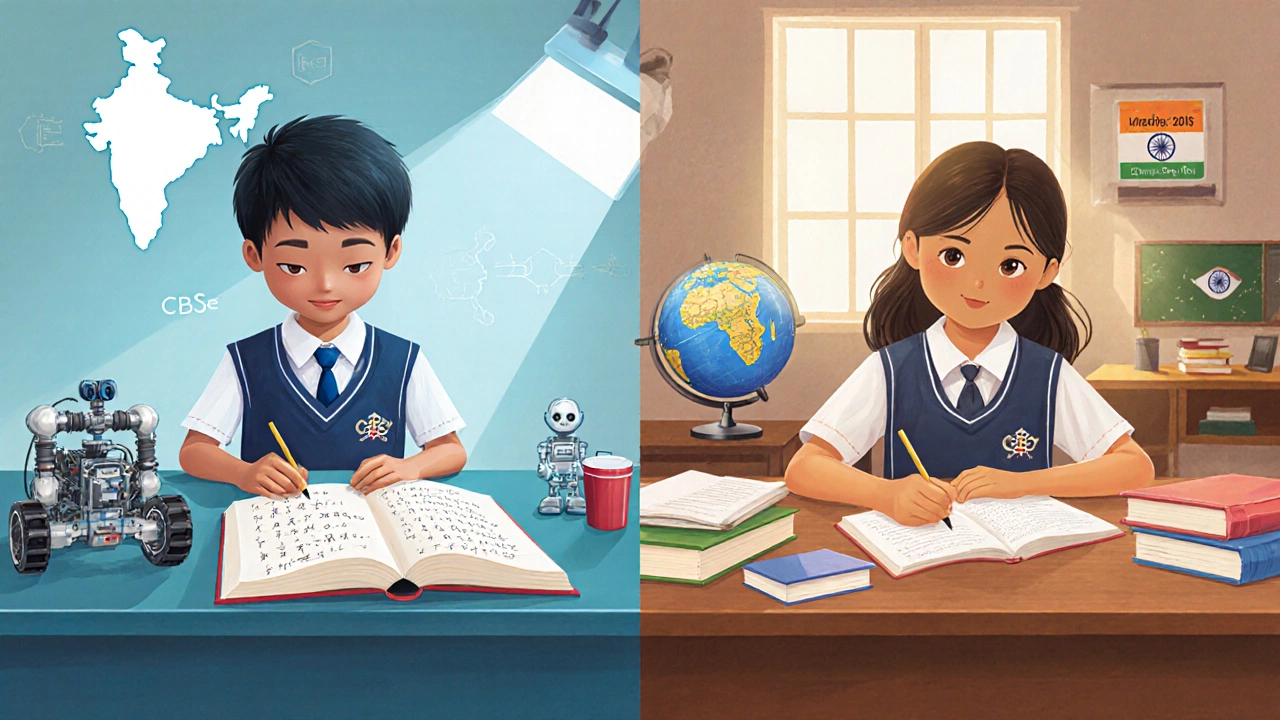
Choosing the right education board for your child depends on their goals, learning style, and future plans. CBSE is best for competitive exams, ICSE for deep learning, and state boards for local opportunities.