
Study Time Optimizer
Find Your Perfect Study Window
Based on neuroscience and top scorer routines, we'll help you identify when your brain is naturally most alert for effective studying.
How It Works
Based on your inputs, we analyze:
- Biological rhythms - Your natural cortisol peaks
- Exam timing alignment - Matching to actual test schedule
- Consistency patterns - Building neural pathways for focus
There’s no magic hour that works for everyone, but if you’re preparing for a competitive exam-whether it’s UPSC, SSC, NEET, or JEE-you need to match your study time with your body’s natural rhythm. Studying at the wrong time doesn’t just waste hours; it drains focus, weakens retention, and burns you out faster. The best time to read isn’t what your coach says or what worked for someone else last year. It’s what works for you right now.
Your Brain Has a Daily Performance Curve
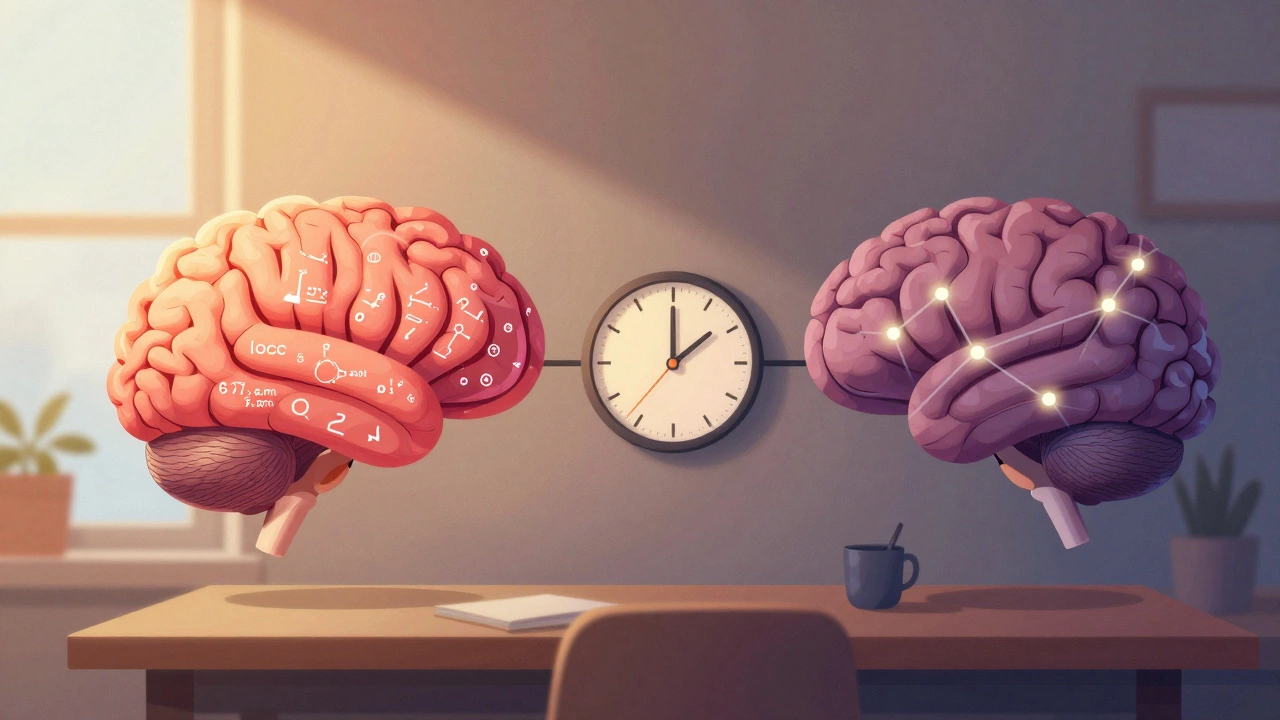
Science shows that human alertness follows a predictable pattern. Cortisol, the hormone that wakes you up, peaks between 6 and 8 a.m. That’s when your brain is sharpest for absorbing new information. Around 10 a.m., your working memory hits its daily high. That’s the sweet spot for tackling tough topics like math formulas, legal sections, or complex chemistry reactions.
By 2 p.m., most people hit a post-lunch dip. Your body’s core temperature drops, serotonin levels rise, and your focus slips. That’s not the time to push through a 3-hour physics session. Save lighter tasks-revision, flashcards, or note-making-for then.
Then comes the evening surge. Between 5 and 7 p.m., your cognitive flexibility improves. This is when your brain gets better at connecting ideas, solving problems, and recalling what you studied earlier. If you’re studying for an exam that tests application over rote learning-like UPSC mains or CAT-this is prime time.
What Works for Top Scorers
Looking at the routines of students who cracked NEET with 700+ scores or cleared UPSC in their first attempt, a pattern emerges. Most start early. Not because they’re early risers by nature, but because they trained their brains to be.
One student from Delhi who ranked in the top 50 for JEE Advanced studied from 5:30 a.m. to 8 a.m. every day. He didn’t sleep in. He didn’t scroll through social media. He did 30 minutes of active recall-quizzing himself on yesterday’s notes-before breakfast. His brain was fresh, undistracted, and ready to lock in new material.
Another student from Hyderabad, preparing for SSC CGL, studied from 7 p.m. to 10 p.m. She had a full-time job. Her mornings were spent commuting and working. But her evenings were quiet. No noise. No family interruptions. She used that time to solve previous year papers. Her accuracy in quant and reasoning improved by 40% in two months.
The common thread? They didn’t force themselves to study at a time that didn’t fit their life. They found their rhythm and stuck to it.
Match Your Study Time to Your Exam Pattern
Think about when your actual exam will happen. If it’s at 10 a.m., your brain needs to be wired to perform then. You wouldn’t train for a marathon by running at midnight. Same logic applies here.
For morning exams (like NEET, JEE Main, or most state PSCs), train your body to be alert by 7 a.m. Start waking up at 6 a.m. and do a 30-minute mock test every day at 9 a.m. Your brain will adapt. Within 2-3 weeks, you’ll feel naturally sharp at that time.
For afternoon or evening exams (like UPSC Prelims or IBPS PO), shift your peak study window. Don’t study at 5 a.m. just because someone said it’s best. Study from 2 p.m. to 5 p.m. instead. Do your hardest problems during those hours. Let your body learn that this is when you’re on.
Forget the 5 a.m. Myth
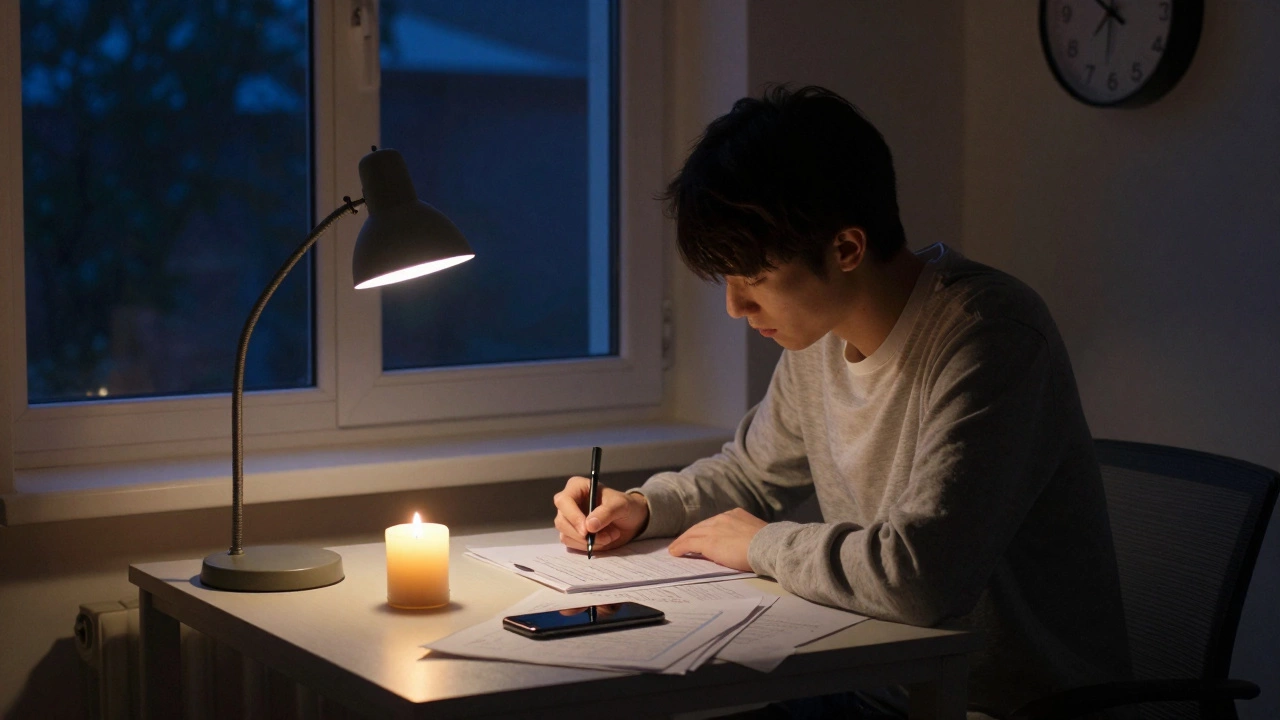
Everyone talks about waking up at 5 a.m. like it’s the only way to succeed. But if you’re a night person-your brain hums after 9 p.m.-forcing yourself into an early schedule will backfire. You’ll end up half-asleep, rereading the same paragraph five times, and feeling guilty for not being “disciplined.”
A 2023 study from the National Institute of Education in India tracked 1,200 competitive exam aspirants. Those who studied during their natural peak hours scored 22% higher on retention tests than those who forced themselves into early mornings. The difference wasn’t in how long they studied. It was in when.
Don’t chase trends. Chase consistency. If you’re most alert at 8 p.m., own it. Set your alarm for 7:30 p.m. to start studying. Turn off notifications. Light a candle. Play soft instrumental music. Make it a ritual. Your brain will thank you.
How to Find Your Best Time
Here’s a simple 5-day test to find your personal peak study window:
- Choose four time slots: 6-8 a.m., 10 a.m.-12 p.m., 3-5 p.m., and 8-10 p.m.
- Study the same topic (say, biology or reasoning) for 90 minutes in each slot, one per day.
- After each session, write down: How focused did you feel? How many concepts did you remember after 1 hour? Did you feel tired or energized?
- On day 5, pick the slot where you felt most alert and retained the most.
- Stick to that slot for the next 30 days.
You don’t need to be perfect. You just need to be consistent. Your brain learns patterns faster than you think.
What to Avoid
Even the best time won’t help if you’re doing these things:
- Studying after a heavy meal-your body diverts blood to digestion, not your prefrontal cortex.
- Scrolling through YouTube or Instagram right before studying-your attention span resets every time you switch tabs.
- Trying to study for 6+ hours straight-your brain needs 5-10 minute breaks every 50 minutes.
- Studying in bed or on the couch-your brain associates those spots with rest, not work.
Also, avoid changing your schedule every week. Your circadian rhythm thrives on predictability. If you study at 7 p.m. Monday through Friday, your brain starts preparing for it by 6:45 p.m. That’s when dopamine kicks in. That’s when focus begins.
Real Example: A Student Who Turned Things Around
Ashok, 22, from Bhopal, failed his first attempt at SSC CHSL. He studied from 11 p.m. to 2 a.m., thinking more hours meant better results. He was exhausted, forgetful, and anxious.
He switched his schedule: woke up at 6 a.m., studied English and reasoning until 8:30 a.m., took a walk, ate breakfast, then reviewed notes from 6 p.m. to 8 p.m. He stopped studying after 8:30 p.m.
Within 45 days, his mock test scores jumped from 110 to 155 out of 200. He didn’t study more. He studied smarter. He aligned his time with his biology, not his guilt.
He cleared the exam the next year.
Final Rule: Consistency Beats Timing
The best time to study is the time you show up for-every single day. If you can’t study at 5 a.m., don’t stress. If you can’t study at 9 p.m., don’t force it. Find your slot. Protect it. Make it non-negotiable.
Competitive exams aren’t won by who studies the longest. They’re won by who shows up with the clearest mind, the most consistent rhythm, and the quiet confidence that comes from knowing their schedule works-for them.
Start tomorrow. Not at 5 a.m. But at the time your body says: Now.
Is studying at 5 a.m. really the best time for competitive exams?
Not for everyone. While early mornings offer fewer distractions and higher cortisol levels-which help with memory formation-your natural body clock matters more. If you’re a night person, forcing yourself to wake up at 5 a.m. can reduce retention and increase burnout. The best time is when you’re naturally alert and can focus without struggle.
How many hours should I study daily for competitive exams?
Quality beats quantity. Most top performers study 6-8 focused hours a day, broken into blocks of 50-90 minutes with short breaks. Studying 12 hours with low attention won’t help. Track how much you retain, not how long you sat at your desk.
Should I study the same subject at the same time every day?
Yes. Your brain learns patterns. If you study math every morning from 7-9 a.m., your mind automatically shifts into problem-solving mode at that time. This reduces mental resistance and improves efficiency. Switching times daily makes it harder for your brain to get into flow.
Can I study effectively at night?
Absolutely. Many students, especially those with daytime jobs or family responsibilities, perform better at night. The key is consistency and avoiding screens 30 minutes before bed. Use dim lighting and avoid caffeine after 7 p.m. to ensure sleep quality.
What should I do if I feel sleepy while studying?
Stop. Don’t push through. Take a 10-minute walk, splash cold water on your face, or do 5 minutes of stretching. If you’re still tired, it might mean you’re studying at the wrong time. Re-evaluate your schedule. Sleep deprivation kills retention more than skipping a study session.
Does the season affect the best time to study?
Yes. In winter, daylight ends early, and your body may feel sluggish by 4 p.m. Use that time for revision or lighter topics. In summer, afternoons can be too hot and tiring. Shift heavier study blocks to early morning or evening. Adjust your schedule with the seasons-it’s not laziness, it’s smart adaptation.