Find Your Ideal Learning Platform
Not sure which giant fits your needs? Answer three simple questions to get a personalized recommendation for 2026.
1. What is your primary goal?
You want to know who runs the show in online education. The answer isn't a single name because "biggest" depends entirely on what you measure. Are we talking about the number of students enrolled? The variety of courses available? Or the revenue generated? In 2026, the landscape has shifted again. The era of one dominant player is over; instead, we have a triad of giants serving different needs.
If you define big by sheer volume of users and course availability, Udemy takes the crown. If you mean academic prestige and university partnerships, it’s Coursera, which is a global online learning platform that offers courses, certificates, and degrees from top universities and companies. And if you care about non-profit educational access, edX remains a massive open online course provider founded by Harvard and MIT.
This article breaks down the numbers, the business models, and the user experiences so you can decide which "biggest" matters for your goals.
The Volume King: Why Udemy Is Technically the Largest
When people ask for the biggest platform, they usually think of scale. By headcount and content library size, Udemy is an online learning marketplace where anyone can create and sell courses. As of early 2026, Udemy boasts over 60 million learners worldwide. That number dwarfs its competitors. But here is the catch: Udemy is an open marketplace.
Unlike traditional schools or even other platforms, Udemy allows almost anyone to publish a course. This leads to a staggering catalog of over 400,000 courses. You can find everything from Python programming to sourdough baking, guitar lessons to Excel macros. The barrier to entry is low, which means the quality varies wildly. You might stumble upon a masterclass taught by a Google engineer, or you might find a poorly recorded lecture with outdated information.
For the casual learner or the hobbyist, this variety is a feature, not a bug. The pricing model also drives volume. Udemy is famous for its frequent sales, where courses drop from $100+ to $10-$15. This impulse-buy dynamic keeps the user base massive but often results in low completion rates. People buy ten courses and finish none. Yet, in terms of raw traffic and total enrollments, Udemy remains the heavyweight champion.
The Academic Powerhouse: Coursera’s Prestige Play
If Udemy is the Amazon of online courses, Coursera is an online learning platform offering accredited courses and degrees from top universities. Founded in 2012 by Stanford professors Andrew Ng and Daphne Koller, Coursera took a different path. They didn’t open the gates to everyone. Instead, they partnered with elite institutions like Yale, Imperial College London, and companies like IBM and Google.
In 2026, Coursera reports over 150 million registered users. While this is lower than Udemy’s, the engagement is deeper. Coursera focuses on "Specializations"-series of courses that lead to a certificate-and full online degrees. When you take a course on Coursera, you are often following a syllabus designed by a professor at a world-class university. The rigor is higher. The prices are higher too. While individual courses can be audited for free, earning a certificate or degree costs significantly more, ranging from $49 per month for subscriptions to tens of thousands for master’s degrees.
Coursera’s "biggest" claim comes from its impact on career mobility. Employers recognize Coursera certificates because of the brand names attached to them. It is the go-to platform for professionals looking to upskill in data science, project management, or cloud computing with credentials that hold weight on a resume.
The Non-Profit Giant: edX and Open Knowledge
Then there is edX, which is a non-profit online learning initiative founded by Harvard University and Massachusetts Institute of Technology (MIT). Launched in 2012 alongside Coursera, edX shares the academic DNA but operates under a non-profit umbrella (though it spun off a for-profit subsidiary, 2U, which later rebranded as Degreed, creating some complexity in its ownership structure). EdX currently serves around 50 million learners.
EdX’s strength lies in its commitment to open education. Many of its courses are part of the MIT OpenCourseWare legacy, meaning the core material is often free. Like Coursera, it partners with top-tier universities (Harvard, Berkeley, Tsinghua) and organizations like the Red Cross and NASA. The vibe is less commercial and more scholarly. If you are interested in computer science theory, biology, or history, edX offers some of the most rigorous content available online.
However, edX has struggled with user experience compared to its rivals. Its interface can feel clunky, and the marketing muscle isn’t as strong. But for the purist learner who values academic integrity over flashy certificates, edX remains a critical pillar of the e-learning ecosystem.
The Corporate Contender: LinkedIn Learning
We cannot talk about the biggest platforms without mentioning LinkedIn Learning (formerly Lynda.com), which is an online learning service owned by LinkedIn offering video courses on business, technology, and creative skills. With over 300 million LinkedIn users globally, the integration is seamless. If you are already using LinkedIn for networking, accessing learning content is just a click away.
LinkedIn Learning doesn’t compete on course count or academic depth. It competes on convenience and professional relevance. The courses are short, bite-sized, and focused on soft skills, leadership, software tools, and industry trends. For corporate training departments, LinkedIn Learning is often the default choice. Employees get access through their company subscription, removing friction. In the B2B (business-to-business) sector, LinkedIn Learning is arguably the biggest player.
Comparison: Which Platform Fits Your Needs?
To help you navigate these giants, let’s look at how they stack up against each other across key metrics.
| Feature | Udemy | Coursera | edX | LinkedIn Learning |
|---|---|---|---|---|
| Primary Audience | Hobbyists, Self-learners | Professionals, Degree Seekers | Academic Enthusiasts | Corporate Employees |
| Content Source | Anyone (Marketplace) | Universities & Companies | Universities & NGOs | Industry Experts |
| Price Model | Per Course ($10-$200) | Subscription / Per Certificate | Audit Free / Pay for Cert | Monthly Subscription |
| Credential Value | Low (Completion only) | High (University-backed) | High (University-backed) | Medium (Professional skill) |
| Best For | Skill Acquisition (Coding, Design) | Career Change, Degrees | Deep Academic Study | Soft Skills, Quick Upskilling |
Regional Giants: Don’t Ignore the Local Players
While the US-based platforms dominate global headlines, "biggest" looks different depending on where you live. In India, for example, platforms like Unacademy and Vedantu are leading Indian ed-tech platforms focusing on competitive exam preparation and school curriculum. Unacademy alone has millions of daily active users preparing for exams like UPSC and JEE. In China, Tencent Classroom and NetEase Cloud Classroom serve hundreds of millions of users. If you are targeting a specific regional job market, these local platforms often offer better language support, cultural context, and relevant certification.
How to Choose the Right Platform for You
Knowing who is biggest doesn’t help if you pick the wrong tool for the job. Here is a quick decision tree:
- Want to learn a specific technical skill quickly (e.g., Photoshop, Python basics)? Go with Udemy. Search for highly-rated courses, check the latest reviews, and grab one during a sale.
- Looking to switch careers or earn a degree? Choose Coursera. Look for Specializations or Professional Certificates from recognized brands like Google, IBM, or Meta.
- Interested in deep theoretical knowledge or academic credit? Try edX. Explore MicroMasters programs that can sometimes transfer to full master’s degrees.
- Need to improve leadership, communication, or office software skills? Use LinkedIn Learning. It integrates directly into your profile, showing recruiters your continuous development.
The Future of Big Platforms in 2026 and Beyond
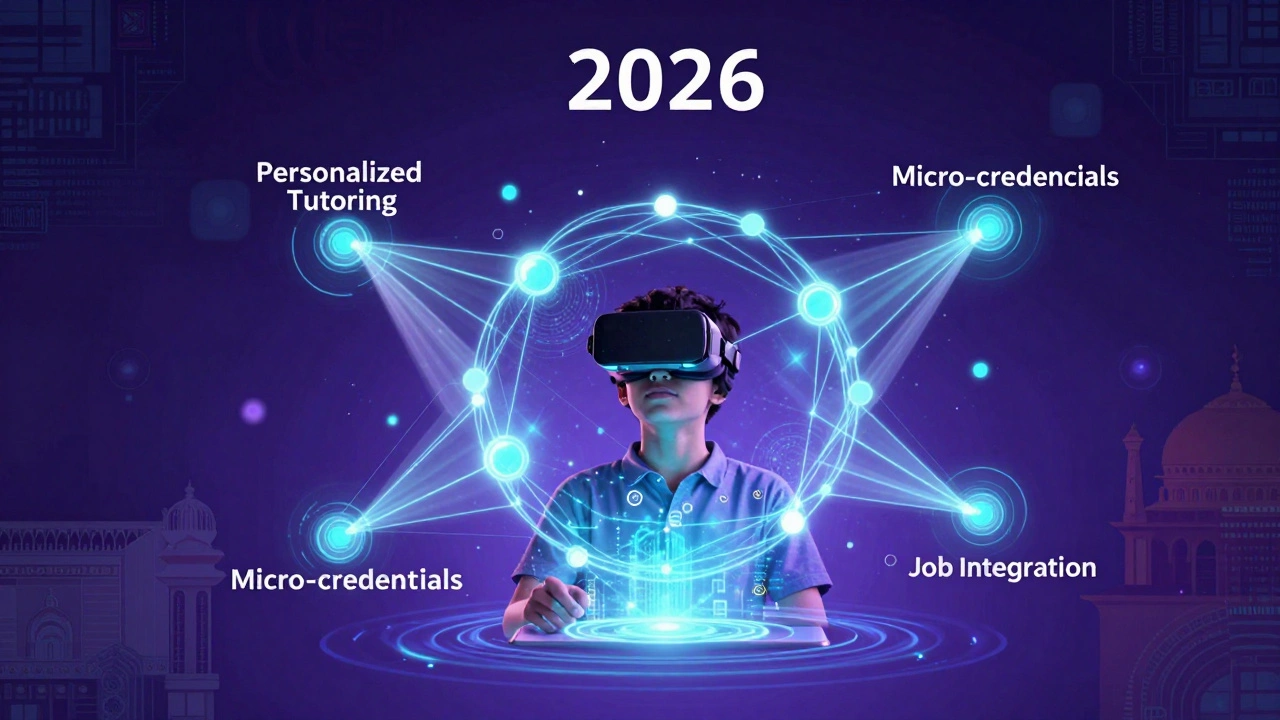
The definition of "big" is evolving. We are seeing a shift from static video lectures to interactive, AI-driven learning. Platforms are integrating generative AI tutors that can quiz you, explain concepts in different ways, and provide personalized feedback. Coursera has introduced AI-powered study assistants, and Udemy is experimenting with AI-generated course outlines. The next battle won’t be about who has the most courses, but who can deliver the most personalized learning journey.
Additionally, the rise of micro-credentials and blockchain-verified badges is changing how we prove our skills. The "biggest" platform will soon be the one that best connects your learning outcomes to job opportunities. Expect tighter integrations between learning platforms and hiring networks. The gap between studying and getting hired is shrinking, and the platforms facilitating that connection will define the next decade of e-learning.
Is Udemy really bigger than Coursera?
Yes, in terms of total number of courses and overall user registrations, Udemy is larger. However, Coursera often has higher engagement rates for structured learning paths and holds more weight in academic and professional credentialing due to its university partnerships.
Which platform is best for beginners?
Udemy is generally best for absolute beginners because of its vast library of introductory courses and low cost. You can easily find "Zero to Hero" style courses that start from the very basics. Coursera is also beginner-friendly but may require more commitment and financial investment for certificates.
Are certificates from these platforms worth it?
It depends on the source. Certificates from Coursera and edX, backed by universities or major tech companies, carry significant weight on resumes. Udemy certificates prove completion but are less recognized by employers as standalone credentials. LinkedIn Learning certificates add value to your professional profile but are viewed as evidence of continuous learning rather than formal qualification.
Can I get a full degree from these platforms?
Yes, both Coursera and edX offer full bachelor’s and master’s degrees from partner universities. These are accredited degrees that appear on your transcript just like on-campus degrees. Udemy does not offer accredited degrees, only individual course completions.
Which platform has the best free content?
edX and Coursera allow you to "audit" many courses for free, meaning you can access the lecture videos and readings without paying. However, you won’t get graded assignments or a certificate. Udemy rarely offers fully free courses, though some instructors provide limited free content. LinkedIn Learning requires a paid subscription, though they often offer a one-month free trial.