Degree Match Finder
Find the most suitable degree for your competitive exam preparation based on your target exam and preferences.
Your Recommended Degree
If you're preparing for competitive exams and wondering if there’s a degree that’s genuinely easy to get - one that won’t eat up your time, energy, or sanity - you’re not alone. Many students juggling UPSC, SSC, banking, or state-level exams look for degrees that won’t interfere with their prep. The truth? There’s no degree that’s ‘easy’ if you’re not willing to show up. But some degrees are far less demanding in structure, workload, and scheduling, making them better companions to exam prep than others.
What ‘Easy’ Really Means in This Context
When people ask for the easiest degree, they usually mean one that:- Has flexible attendance rules
- Doesn’t require daily lab work or clinical rotations
- Offers distance or online learning options
- Has straightforward exams with predictable patterns
- Allows you to study on your own schedule
Top 5 Degrees That Fit Best With Competitive Exam Prep
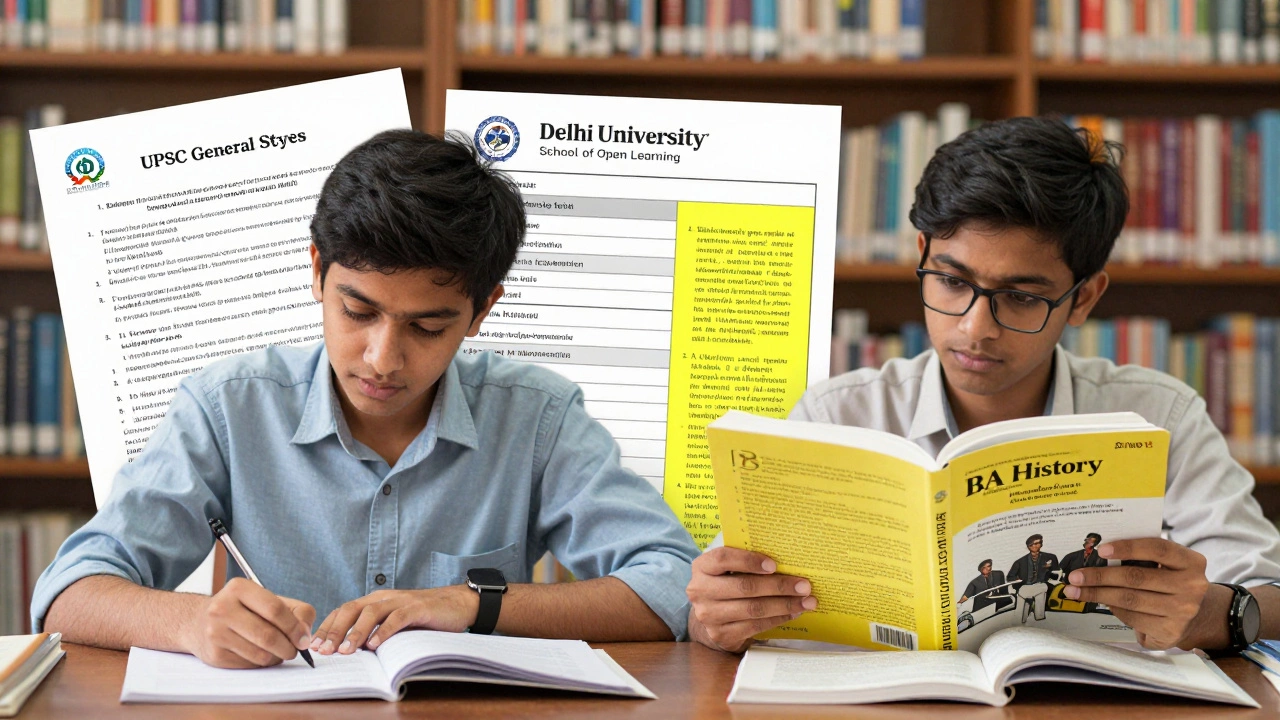
BA in Political Science is the most popular choice among UPSC aspirants. Why? Because the syllabus overlaps heavily with General Studies Paper I and II. You’ll study Indian polity, governance, international relations, and public administration - all core UPSC topics. Many colleges offer part-time or distance BA programs through IGNOU or state open universities. Attendance is often optional, and exams are mostly theory-based. You’re not just getting a degree - you’re building your exam knowledge brick by brick. BA in History is another strong contender. The content is rich in Indian and world history, which is a major part of competitive exams. If you’re good at memorizing dates and events, this degree feels like review sessions rather than new learning. Most universities let you submit assignments online and take final exams in person - no daily classes required. BA in English Literature might seem unrelated at first, but it’s a hidden gem. The reading and writing skills you build help massively with essay writing in mains exams. You’ll learn to structure arguments, analyze texts, and write clearly under time pressure - all skills tested in SSC CGL, IBPS PO, and state PSCs. Many programs allow you to take exams as a private candidate, meaning you can skip lectures entirely. BCom (Bachelor of Commerce) is ideal if you’re aiming for banking, CA, or CMA exams. The subjects - accounting, taxation, business law - are directly relevant. Many BCom colleges offer evening batches for working students. You can study for bank exams in the morning and attend BCom classes at night. The workload is lighter than engineering or medicine, and most universities have a reputation for lenient grading. BA in Psychology is surprisingly useful. It covers human behavior, cognitive processes, and social dynamics - all useful for understanding motivation, stress management, and decision-making in competitive environments. The exams are mostly MCQs and short answers. Some universities offer this degree fully online through platforms like Swayam, with no mandatory attendance.What to Avoid
Not all degrees are created equal when you’re preparing for competitive exams. Stay away from:- B.Tech or B.E. - Heavy labs, tough math, rigid timetables. You’ll burn out trying to balance this with UPSC prep.
- B.Sc. in Physics/Chemistry - Requires daily practicals, lab reports, and complex problem-solving. Time you don’t have.
- B.Arch or BFA - Portfolio submissions, studio hours, design projects. These demand creative energy you’ll need for exam revision.
- MBBS or BAMS - Even if you’re not aiming for medical careers, the course load is brutal. You’ll be lucky to sleep 6 hours a day.
How to Choose the Right One
Start by asking yourself:- Which exam are you preparing for? (UPSC? SSC? Banking?)
- What subjects in that exam overlap with university syllabi?
- Can you enroll in a distance or part-time program?
- Does the university allow private candidate registration?
- Are past papers available? Do they follow predictable patterns?
Real Student Example: How Ravi Cleared UPSC While Getting His Degree
Ravi, a 22-year-old from Patna, started preparing for UPSC in his second year of college. He picked a BA in Political Science through IGNOU. He never attended a single lecture. He studied 4 hours a day for UPSC and spent 1 hour reviewing his BA assignments. His final exams were in June - right after the UPSC Prelims. He submitted his assignments online, took the written exam, and passed both. He cleared the mains in his first attempt. His degree didn’t distract him - it helped him.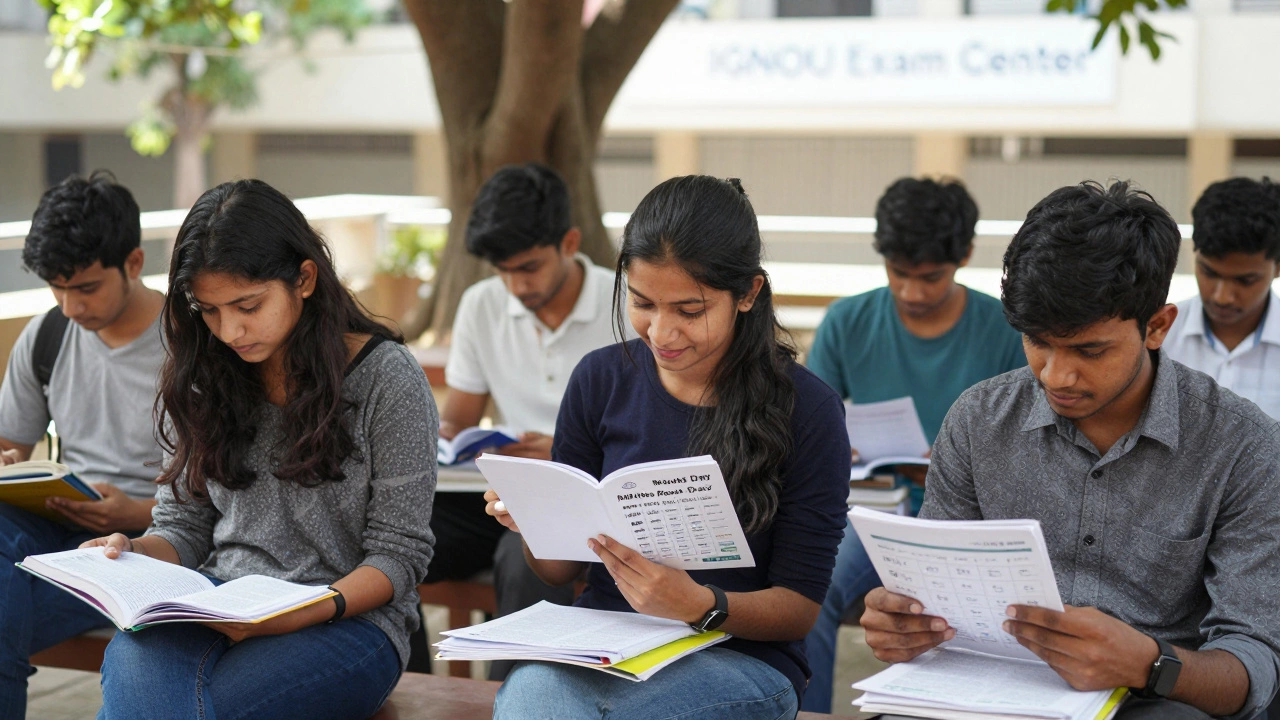
Myths About Easy Degrees
There’s a dangerous myth that ‘easy’ means ‘low quality.’ That’s not true. Degrees from UGC-recognized open universities like IGNOU, YCMOU, or Delhi University’s School of Open Learning are fully valid. They’re accepted for government jobs, higher studies, and even abroad. Another myth: ‘You’ll get a degree without learning.’ Wrong. You still need to read, write, and pass exams. The difference is you control the pace. You don’t have to sit through 8-hour lectures on topics you’ve already mastered.Where to Enroll
Here are the top institutions in India offering flexible BA and BCom programs:- IGNOU - Offers BA, BCom, and BAPY (Psychology) with online exams and no attendance.
- Delhi University School of Open Learning (SOL) - Affordable, reputable, and aligned with UPSC syllabus.
- YCMOU (Yashwantrao Chavan Maharashtra Open University) - Good for students in Maharashtra and neighboring states.
- Netaji Subhas Open University (NSOU) - Popular in West Bengal and Bihar.
- Annamalai University (Distance) - Offers BA and BCom with minimal interaction requirements.
Final Tip: Don’t Chase Ease - Chase Alignment
The goal isn’t to get the easiest degree. It’s to get the most useful degree. A degree that helps you study for your exam while you’re earning it. That’s the real shortcut.Choose a program where the syllabus does half your prep work. Pick a university that gives you space to breathe. And remember - no degree will get you a job if you don’t show up for the exam. But the right degree? It can make sure you’re ready when you do.
Is a distance degree valid for government jobs?
Yes, degrees from UGC-recognized open universities like IGNOU, SOL, and YCMOU are fully valid for all government jobs, including UPSC, SSC, and banking exams. The UGC clearly states that distance education degrees have equal standing to regular degrees, as long as the university is approved.
Can I do a degree while preparing for UPSC?
Absolutely. Many top UPSC rankers completed their degrees while preparing. The key is choosing a program with flexible attendance and exams you can schedule around your study plan. BA in Political Science or History through IGNOU is the most common path.
Do I need to attend classes for a distance degree?
No, most UGC-approved distance programs don’t require attendance. You get study material, watch recorded lectures if available, and appear for term-end exams. Some universities offer optional doubt-clearing sessions, but they’re not mandatory.
Which is easier: BA or BCom for competitive exams?
It depends on your exam. For UPSC and state PSCs, BA (Political Science/History) is easier because the syllabus overlaps directly. For banking and SSC, BCom is better since it covers accounting, economics, and business law - subjects tested in those exams. Neither is objectively easier; it’s about relevance.
Can I switch from a hard degree to an easy one later?
Yes, but it’s complicated. If you’ve already completed two years of B.Tech, you can’t just transfer to a BA. You’d need to start fresh. Your best bet is to enroll in a distance BA/BCom alongside your current degree - many students do this. Then, once you clear your exam, you can drop the harder one.