When you hear the word exam, what comes to mind? A timed multiple-choice test? A final paper you stayed up all night to write? Now imagine sitting for an exam that decides your entire future - one wrong answer could mean losing your chance at college, a career, even your family’s hopes. This isn’t fiction. Around the world, millions of students face exams so intense they reshape lives overnight. But one stands above the rest in sheer pressure, scale, and consequence: China’s Gaokao.
What Is the Gaokao?
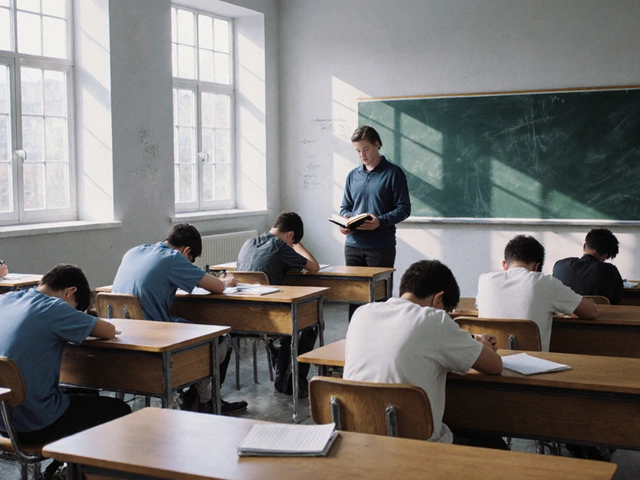
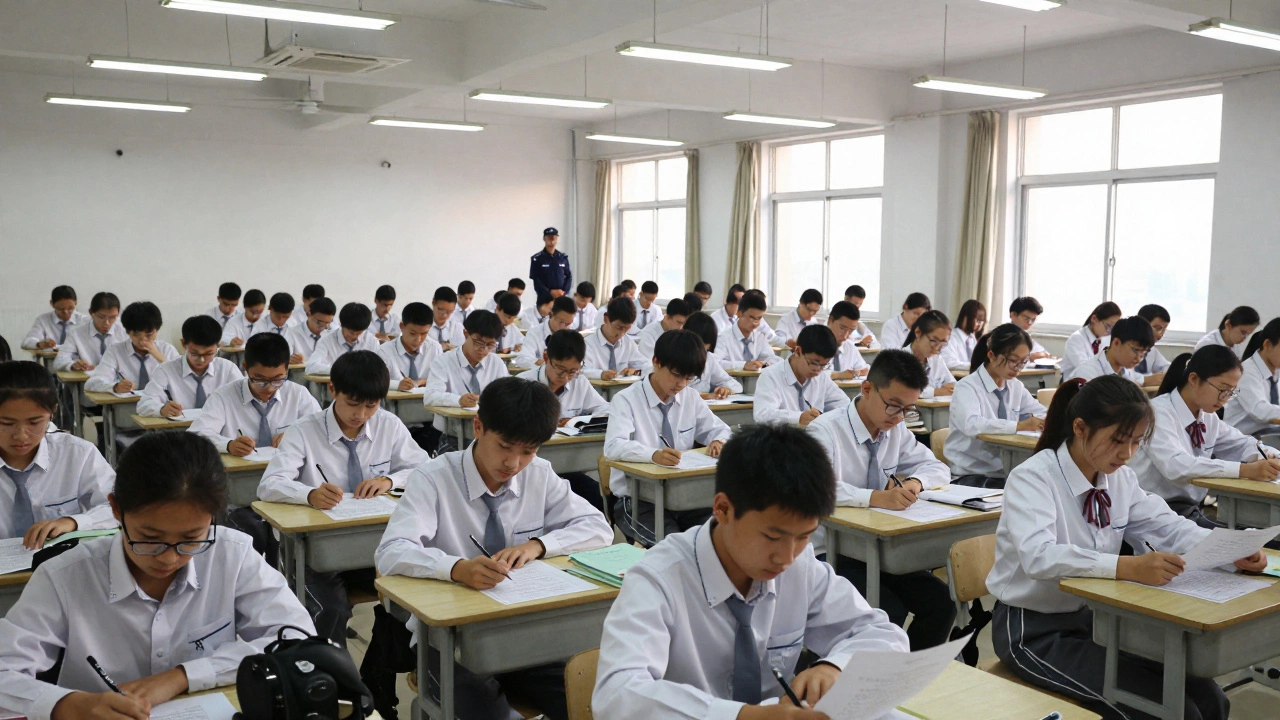
The Gaokao - short for Gāo Děng Xué Xiào Rù Xué Kǎo Shì - is China’s National Higher Education Entrance Examination. It’s not just a test. It’s a national event. Over 12 million students take it every year, all on the same two or three days. Schools shut down. Traffic is restricted near test centers. Even the government pauses construction near exam halls to avoid noise. The results determine which university you attend - and in China, that’s basically your career path.
Unlike Western systems where grades, extracurriculars, and interviews matter, the Gaokao is almost entirely score-based. A single point can mean the difference between Tsinghua University and a regional college. Top schools like Tsinghua and Peking University accept less than 1% of applicants. That means students are competing against hundreds of thousands of others for a handful of spots.
Why Is It So Stressful?
Let’s break it down.
- One shot, no retries - Most students take the Gaokao only once. If you fail, you can retake it next year, but that means a full year lost. Families often sacrifice everything to help their child prep. Some parents quit jobs. Some sell homes to pay for tutors.
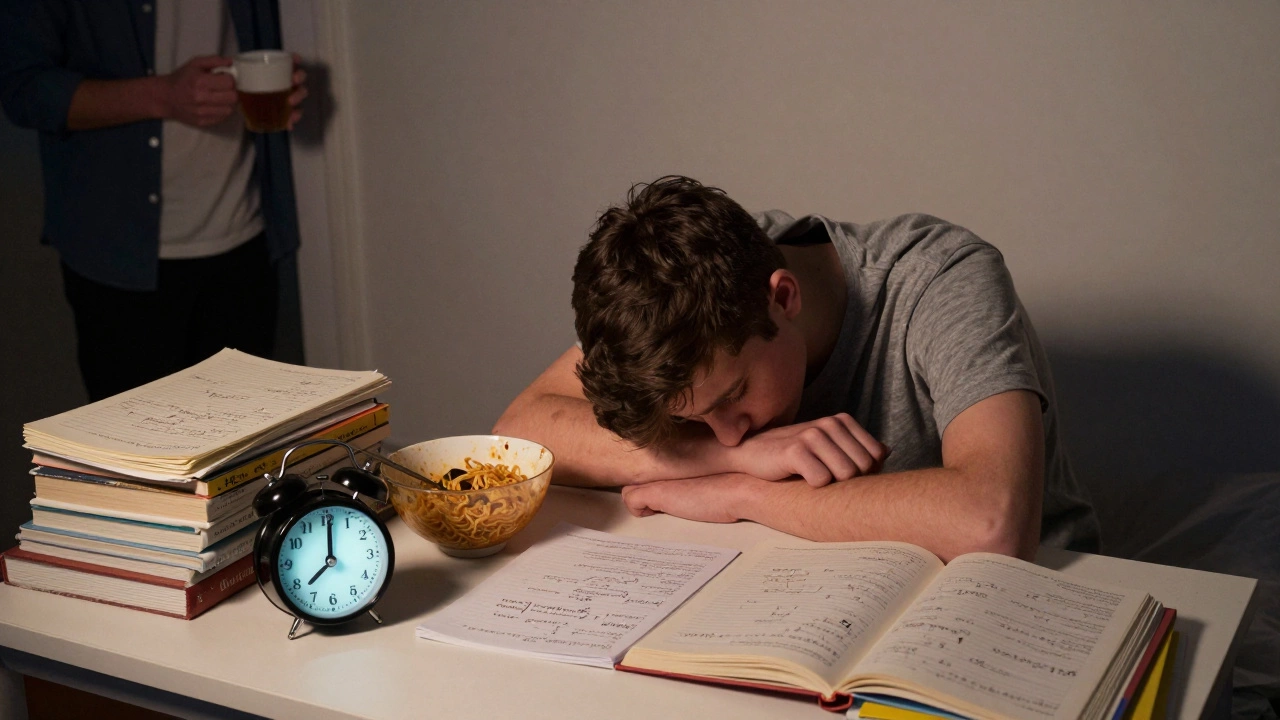
- 24-hour study cycles - Students commonly study 14 to 16 hours a day for years. Sleep is rare. Social life? Gone. Many report eating meals at their desks, studying while walking to class.
- High-stakes subjects - The exam covers Chinese, Math, English, and either Science or Social Studies. The Math section alone includes calculus, geometry, and complex problem-solving - often at university level. One 2023 study found that 78% of Gaokao students showed signs of clinical anxiety.
- Social pressure - In China, your exam score defines your worth in the eyes of family, neighbors, even future employers. A low score isn’t just disappointing - it’s seen as a personal failure. There are documented cases of students attempting suicide after poor results.
It’s not just about the test. It’s about the system. China’s education system is built on meritocracy - but that merit is measured in a single, brutal exam. There’s no second chance. No portfolio. No recommendation letters. Just a score.
How It Compares to Other Tough Exams
Other countries have brutal exams too. India’s IIT JEE for engineering and NEET for medicine are notorious. Japan’s university entrance exams are infamous for their difficulty. But none match the Gaokao’s combination of scale, stakes, and cultural weight.
| Exam | Participants | Duration | Key Subjects | Retake Policy | Impact on Future |
|---|---|---|---|---|---|
| Gaokao (China) | 12+ million | 2-3 days | Chinese, Math, English, Science/Social Studies | Retake allowed, but socially costly | University admission = career path |
| IIT JEE (India) | 1.5 million | 2 days | Physics, Chemistry, Math | Two attempts per year, multiple years allowed | Top 10,000 get into elite engineering schools |
| NEET (India) | 2.3 million | 3 hours | Biology, Chemistry, Physics | Three attempts max | Admission to medical colleges - only 1 in 10 pass |
| Japan University Entrance Exam | 500,000+ | 2-4 days | Japanese, Math, Science, Foreign Languages | Multiple attempts over years | University choice affects job prospects |
| SAT/ACT (USA) | 2+ million | 3-4 hours | Math, Reading, Writing | Multiple attempts, score choice | One factor among many (GPA, essays, activities) |
India’s NEET and IIT JEE are brutal - but they’re not national events on the scale of Gaokao. In India, students can take multiple attempts, and there’s more room for regional quotas and private colleges. In China, the Gaokao is the gatekeeper. No exceptions. No alternatives.
The Human Cost
Behind every Gaokao statistic is a real person. A 17-year-old girl in Sichuan who studies until 2 a.m. every night, her only break a 20-minute walk to the bathroom. A boy in Guangdong who hasn’t seen his parents in a year because they work overseas to pay for his tutoring. A girl who cried for three days after scoring 20 points below her target - and then quietly went back to studying.
China’s government has tried to ease the pressure. They’ve introduced reforms: reducing the number of test days, allowing some subject choices, and encouraging vocational paths. But the culture hasn’t changed. Parents still believe the Gaokao is the only fair way. Schools still measure success by how many students get into top universities. And students? They’re told, again and again: Your score is your life.
What Happens After?
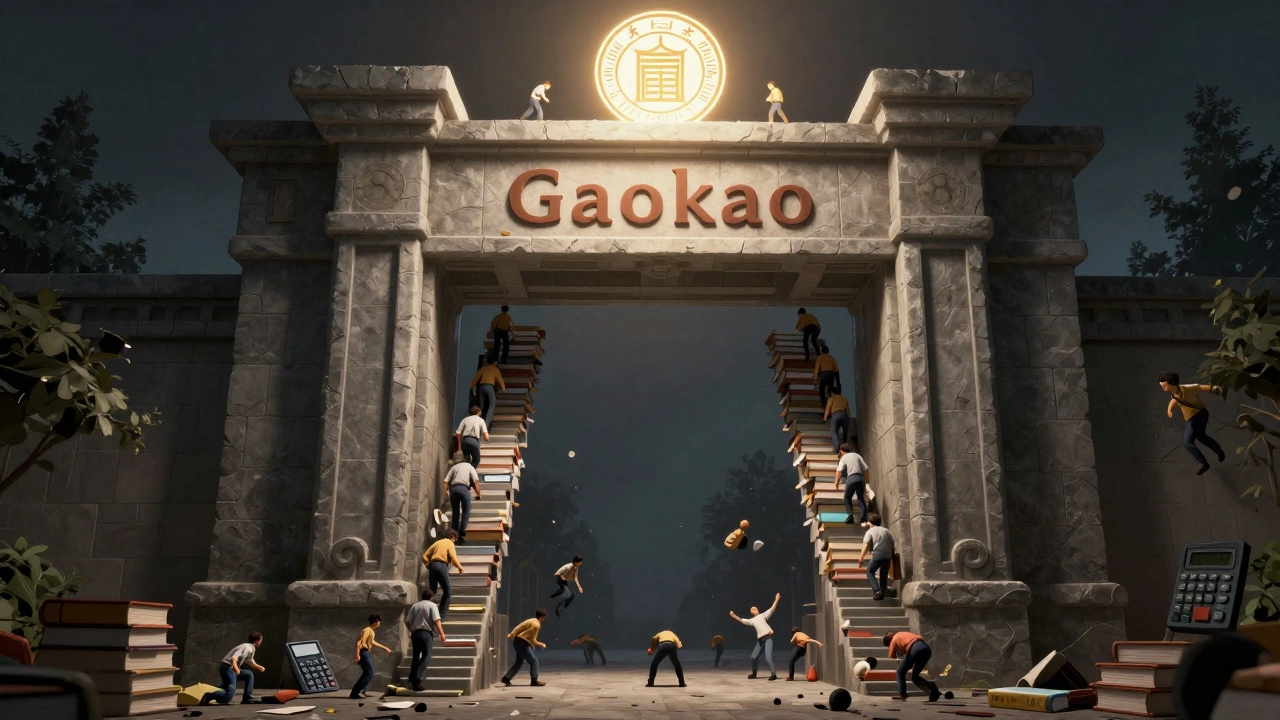
For those who score high? Life changes. They enter elite universities. They get the best internships. They land jobs at Tencent, Alibaba, or state-owned enterprises. Their parents’ sacrifices are validated. Their future is secure.
For those who don’t? It’s harder. Many end up in second-tier schools or vocational colleges. Some move abroad. Others work in factories or start small businesses. But the stigma lingers. Even at 30, people still ask: “Which university did you go to?”
The Gaokao isn’t just an exam. It’s a rite of passage. A cultural ritual. A mirror of China’s values: discipline, sacrifice, and the belief that hard work - measured in numbers - will be rewarded.
Is There a Better Way?
Some argue the Gaokao is outdated. It rewards memorization over creativity. It crushes mental health. It ignores talents in art, sports, or entrepreneurship.
But others say it’s the only system that gives every child - rich or poor, urban or rural - a real shot. In a country of 1.4 billion, it’s the one thing that doesn’t favor connections or wealth. If you study hard enough, you can rise. No matter where you start.
The truth? There’s no perfect system. But the Gaokao remains the most stressful because it doesn’t just test knowledge. It tests endurance. It tests hope. And for millions, it tests whether their entire life’s worth has been worth the cost.
Is the Gaokao the hardest exam in the world?
Yes, by most measures - scale, stakes, and societal pressure. While exams like IIT JEE and NEET are extremely difficult, the Gaokao stands out because it’s a single, national event that determines your entire future with no room for second chances. Over 12 million students take it each year, and a few points can change your life path.
Why is the Gaokao more stressful than the SAT or ACT?
The SAT and ACT are just one part of college admissions - GPA, essays, extracurriculars, and interviews matter too. The Gaokao is the only thing that matters. Your score decides your university. No exceptions. No backups. And in China, your university determines your job prospects, social status, and even marriage prospects. That level of pressure doesn’t exist in the U.S. or Europe.
Do students in China have other options besides the Gaokao?
Technically, yes - some universities accept international exams like the IB or A-Levels, and there are a few special talent pathways for athletes or artists. But these are rare. Less than 5% of students use them. For 95% of Chinese students, the Gaokao is the only realistic path to higher education.
How do students prepare for the Gaokao?
Most students start serious prep as early as middle school. They attend after-school tutoring, weekend boot camps, and sometimes live in dorms at cram schools. Study days often last 14-16 hours. Many use flashcards, past exam papers, and timed drills. Some schools even have “stress rooms” with punching bags and music to help students cope.
Has the Gaokao changed over time?
Yes. In the 1980s, it was simpler and less competitive. Since the 2000s, it’s become more rigid and high-stakes. Recent reforms have reduced the number of test days and allowed some subject flexibility, but the core remains the same: one exam, one chance, one outcome. The pressure hasn’t decreased - it’s just been redistributed.
If you’ve ever wondered what true academic pressure looks like, look no further than the Gaokao. It’s not just a test. It’s a mirror - reflecting a society that believes your future should be decided by a few hours of writing in a silent classroom.