CBSE School Suitability Calculator
Answer these questions to find the ideal school category for your family.
Your Match Analysis
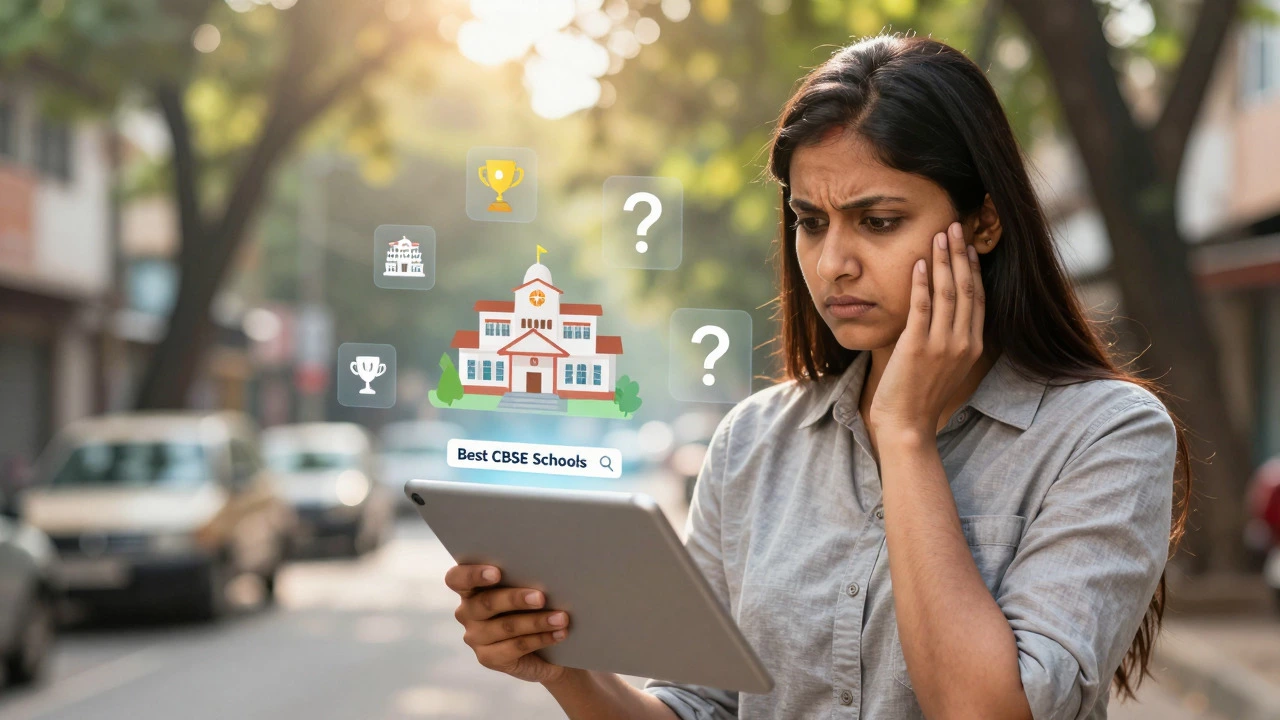
There is no single "best" CBSE school in India. If you have been searching for a definitive list that names one institution as the undisputed champion, you are likely chasing a mirage. The Central Board of Secondary Education (CBSE) does not publish an official league table of its affiliated schools. Instead, it sets the syllabus and examination standards while individual schools manage their own operations, infrastructure, and teaching quality.
This lack of central ranking creates confusion for parents. You might see news headlines declaring a specific school as the "top performer" based on IIT JEE or NEET results from a single year. While impressive, these snapshots do not tell the whole story about a school's holistic environment, teacher stability, or long-term student well-being. To find the right school, you need to look beyond viral success stories and understand how the top-tier institutions actually operate.
Understanding the Landscape of Top CBSE Institutions
When people talk about elite CBSE education, they usually refer to three distinct categories of schools: government-run chains with national reach, prestigious private trusts with historical significance, and high-end international-standard private schools. Each category serves a different demographic and offers a unique value proposition.
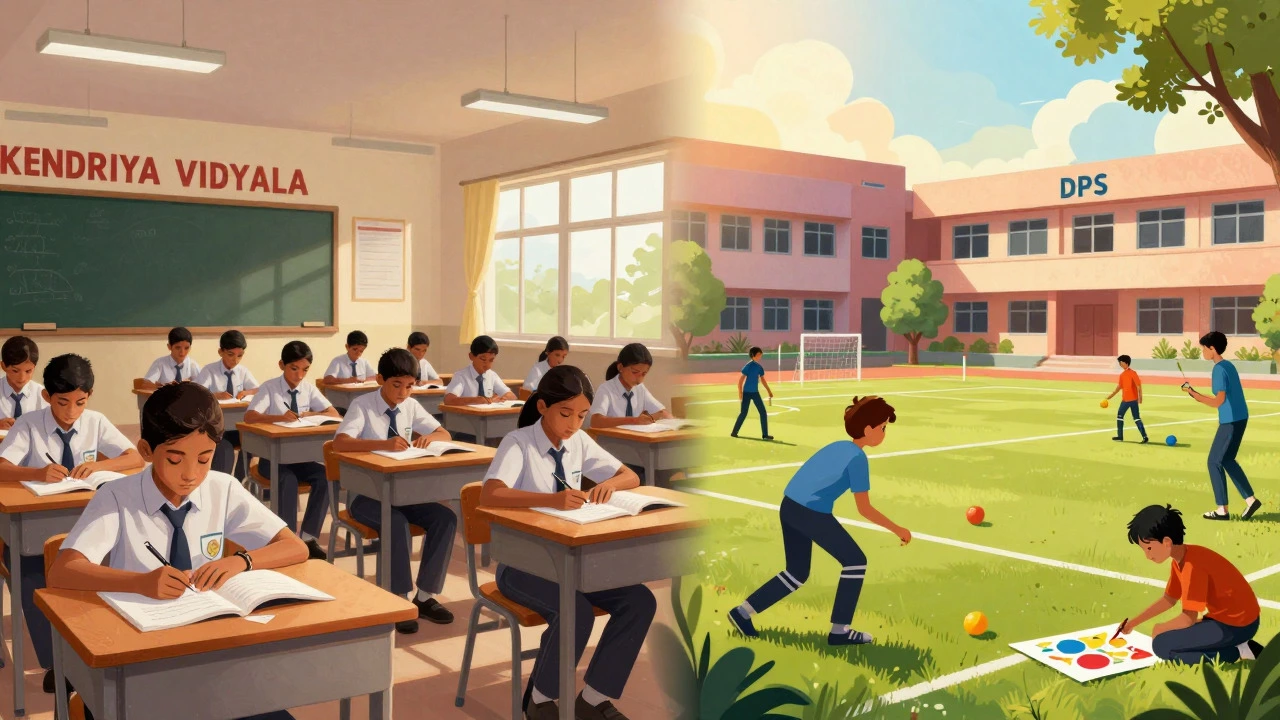
Kendriya Vidyalaya Sangathan (KVS) is a network of residential and non-residential schools primarily designed for children of defense personnel, central government employees, and other eligible categories. These schools are known for their standardized curriculum and consistent academic performance across India. Because they follow a strict national framework, a student moving from a KVS in Chennai to one in Delhi faces minimal disruption in learning continuity. They are often cited as top choices due to their disciplined environment and strong focus on board exam preparation.
On the other hand, Delhi Public School (DPS) is one of the most prominent private school chains in India, founded by the Shiksha Samiti trust, known for its emphasis on all-round development including sports, arts, and academics. With campuses spanning almost every major city, DPS has built a brand synonymous with prestige. However, the quality can vary significantly between locations. A DPS in New Delhi operates with resources and faculty depth that a newer branch in a smaller town might not yet match.
The Myth of Rankings and What Actually Matters
Why do rankings fail? Because education is highly contextual. A school that excels in producing IITians might neglect creative arts. A school famous for its robotics lab might have outdated science textbooks. When evaluating "top" schools, you must define what "top" means for your child.
- Academic Rigor: Does the school prioritize rote learning for high scores, or conceptual understanding?
- Infrastructure: Are the labs, libraries, and sports facilities modern and well-maintained?
- Teacher Quality: How stable is the faculty? High turnover rates often indicate poor management or excessive pressure on staff.
- Holistic Development: Does the school offer diverse extracurricular activities, or is everything focused on exams?
For instance, St. Stephen's School in Delhi is a historic boys' day school known for its rigorous academic standards and strong alumni network in law, medicine, and civil services. It consistently produces top rankers but maintains a traditional, discipline-heavy approach. This might be perfect for a self-driven student aiming for competitive exams but overwhelming for someone who thrives in a more flexible, project-based environment.
Key Players in the CBSE Ecosystem
Beyond KVS and DPS, several other institutions command respect. Ramjas College-affiliated schools and Ramjas School are part of the Ramjas Trust, offering high-quality education with a focus on intellectual growth and critical thinking. Similarly, Sanskriti School is a well-regarded institution in Delhi known for integrating technology into learning and maintaining high academic benchmarks.
In Mumbai, Vivekanand Education Society's Institute of Technology (VESIT)-affiliated schools like Vivekanand International School are renowned for their strong foundation in science and mathematics, preparing students effectively for engineering entrances. In Bangalore, Narayana Junior College and its associated schools are famous for their intensive coaching model that dominates medical and engineering entrance exam rankings.
| School Type | Primary Focus | Accessibility | Typical Strengths |
|---|---|---|---|
| Kendriya Vidyalaya (KVS) | Standardized National Curriculum | Restricted (Govt/Defense families) | Consistency, Discipline, Low Cost |
| Delhi Public School (DPS) | All-Round Development | Open (High Fees) | Brand Value, Extracurriculars, Alumni Network |
| Private Elite (e.g., St. Stephen's) | Academic Excellence & Tradition | Competitive Entry | Faculty Quality, Historical Prestige |
| Coaching-Integrated (e.g., Narayana) | Entrance Exam Preparation | Open (Moderate-High Fees) | JEE/NEET Results, Intensive Practice |
How to Evaluate a School Beyond the Name
Name recognition is powerful, but it is not a guarantee of fit. Here is a practical checklist to assess any CBSE school:
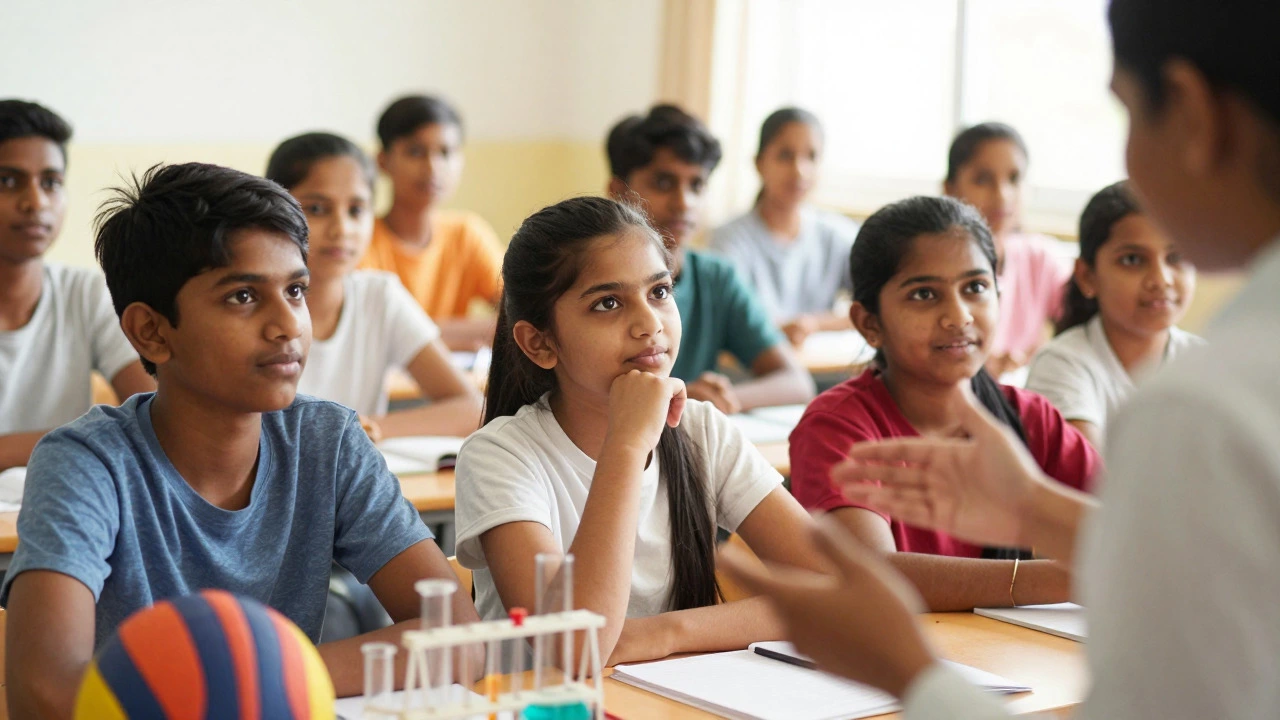
- Visit During Class Hours: Do not just tour the empty campus. Observe classrooms. Are students engaged? Do teachers encourage questions or simply lecture?
- Talk to Current Parents: Find parents outside the school gate after pickup time. Ask them about communication gaps, homework load, and hidden costs.
- Check Teacher Turnover: High churn suggests burnout or poor leadership. Stable faculty leads to better mentorship.
- Review Recent Board Results: Look at the last three years of CBSE Class 10 and 12 results. Consistent improvement is more telling than a single spike.
- Assess Peer Group: Your child will spend years with these classmates. Is the environment supportive or cutthroat?
For example, if you live in Hyderabad, Narayana English Medium School is a leading institution known for its rigorous academic schedule and high success rate in competitive exams, appealing to parents prioritizing career-oriented outcomes. But if your child struggles with stress, this environment might be counterproductive. In contrast, a school like Chinmaya Vidyalaya is a chain of schools emphasizing character building alongside academics, often providing a more balanced and less pressured atmosphere.
The Role of Location and Accessibility
Proximity matters more than prestige for daily well-being. A top-rated school two hours away drains your child’s energy through commute time. Fatigue affects concentration and mood. Many parents overlook this trade-off, assuming that "the best" school is worth the travel. Often, a good local school allows for extra sleep, homework time, and family interaction-factors that directly impact academic performance.
Consider Navodaya Vidyalaya Samiti (NVS), which runs residential schools in rural and semi-urban areas aimed at providing quality education to talented students from disadvantaged backgrounds. For families living in tier-2 or tier-3 cities, NVS schools often outperform local private options due to better funding and trained staff, despite lacking the urban "glamour" of metropolitan brands.
Common Pitfalls to Avoid
Do not fall for marketing hype. Many private schools advertise "international standards" while following the standard CBSE syllabus with minor tweaks. Verify if they truly offer IB or Cambridge streams, or if they are just using buzzwords. Also, beware of schools that promise guaranteed seats in top colleges. No school can guarantee admission; only hard work and aptitude tests can.
Another mistake is focusing solely on infrastructure. A shiny new building with smartboards is useless if the teachers are unmotivated or the curriculum is poorly executed. Always prioritize human factors over hardware.
Final Thoughts on Choosing the Right Path
The "top" CBSE school is the one that aligns with your child’s learning style, your family’s values, and your logistical reality. Whether it is the disciplined structure of a Kendriya Vidyalaya, the holistic approach of a DPS, or the exam-focused intensity of a Narayana, there is no universal winner. Visit multiple schools, ask tough questions, and trust your instincts. Your child’s happiness and mental health are the true metrics of success, far outweighing any temporary ranking glory.
Does CBSE officially rank schools?
No, the Central Board of Secondary Education (CBSE) does not publish an official ranking of its affiliated schools. Any lists you see online are created by third-party media houses, educational portals, or private agencies based on varying criteria like board exam results or entrance test performances.
Are Kendriya Vidyalayas better than private CBSE schools?
Not necessarily. Kendriya Vidyalayas offer excellent standardized education at low cost, especially for mobile government employees. However, many top private schools offer superior infrastructure, personalized attention, and broader extracurricular opportunities. The choice depends on your budget, location, and educational priorities.
Which CBSE schools are best for IIT JEE preparation?
Schools like Narayana, Resonance-affiliated institutions, and certain branches of DPS and KVS are known for strong JEE results. However, many students also succeed by attending regular CBSE schools and joining dedicated coaching institutes like Allen or FIITJEE. The school itself is less critical than the student's dedication and external support system.
Can I transfer my child from one CBSE school to another easily?
Yes, because all CBSE schools follow the same national curriculum, transferring is relatively smooth academically. However, you should check the new school's admission policy, as mid-year admissions may have limited seats. Ensure you obtain the Transfer Certificate (TC) and migration certificate from the previous school.
What is the difference between CBSE and ICSE schools?
CBSE focuses more on science and mathematics with a straightforward curriculum aligned with competitive exams. ICSE (Indian Certificate of Secondary Education) emphasizes language skills, literature, and a broader, more detailed syllabus. CBSE is generally preferred for engineering and medical aspirants, while ICSE is favored for those pursuing humanities or arts.