Government Job Exam Book Selector
Select your target exam category to see the recommended "Holy Grail" resources and publisher insights.
Publisher Comparison Insight
| Publisher | Best For | Key Strength |
|---|
You’ve decided to chase the stability of a government job. That’s a solid move. But then you walk into a bookstore or open an online store, and you’re hit with a wall of titles. Which book is best for government job preparation? It’s not just about picking the thickest one or the one with the brightest cover. The wrong choice wastes months. The right one saves them.
Here’s the hard truth: there is no single "best" book for everyone. A law graduate preparing for the Judicial Services needs different material than an engineering student aiming for SBI PO. However, there are gold-standard resources that consistently produce results. This guide cuts through the noise. We’ll look at what actually works for major exams like UPSC, SSC, Banking, and Railways in 2026, breaking down specific authors, publishers, and why they matter.
Understanding the Exam Landscape Before You Buy
Before you spend a single rupee, you need to know which battlefield you’re entering. "Government job preparation" is too broad. In India, this usually splits into three main categories, each with distinct requirements:
- Civil Services (UPSC): Focuses on deep analytical writing, current affairs, and vast static knowledge.
- Staff Selection Commission (SSC): Tests speed, accuracy, and factual recall in General Awareness, Math, and English.
- Banking & Insurance (IBPS/SBI): Heavily weighted toward Quantitative Aptitude, Reasoning, and Computer Knowledge.
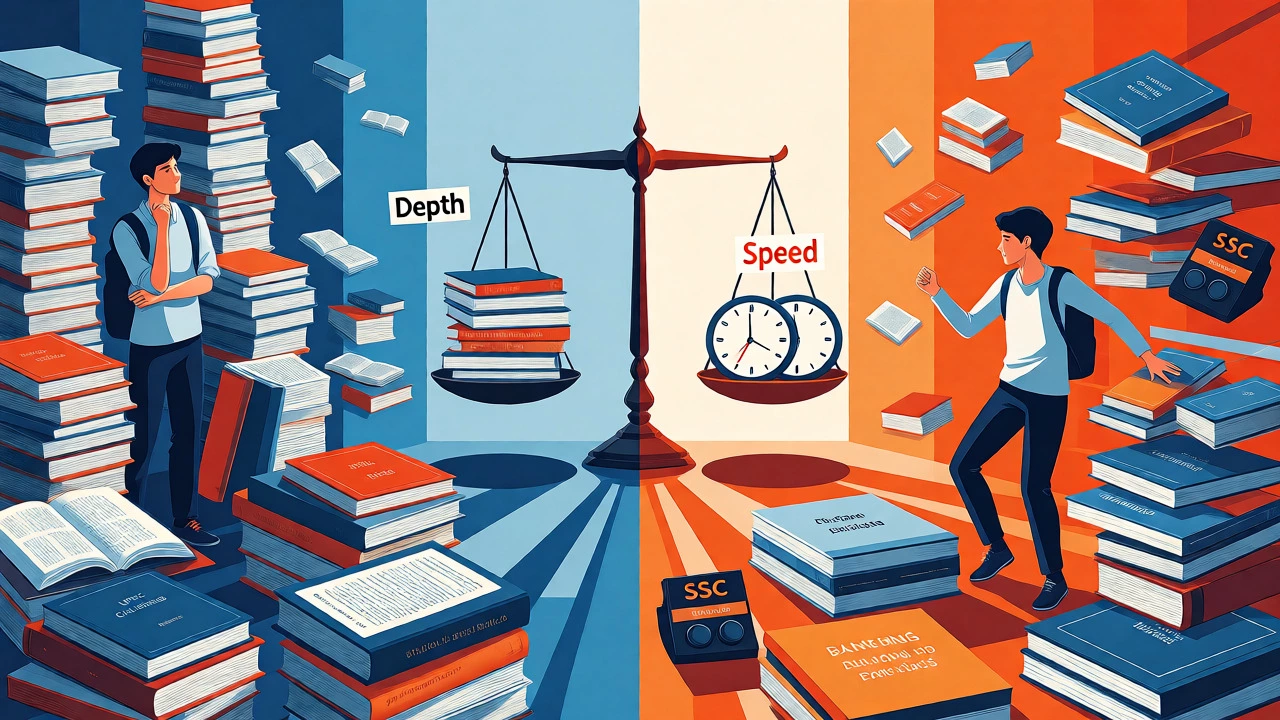
Your book choices must align with these differences. A book great for SSC might be useless for UPSC because it lacks depth. Conversely, a dense UPSC reference book will slow you down in a timed SSC exam. Let’s break down the essential reads for each track.
The Holy Grail for Civil Services Aspirants
If you are targeting the Indian Administrative Service (IAS) or similar roles, your shelf looks different. You don’t need fifty books; you need five good ones read multiple times.
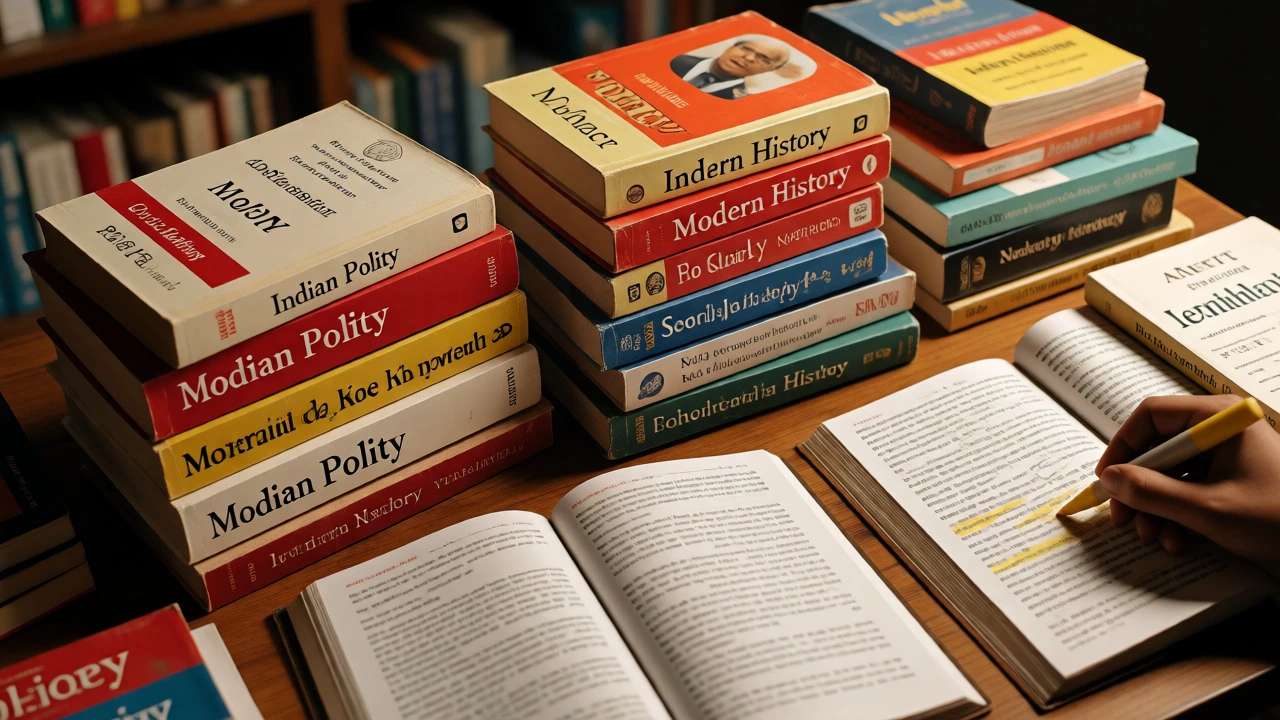
Laxmikanth’s Indian Polity is the definitive textbook for understanding the constitutional framework of India. Published by McGraw Hill, it covers everything from fundamental rights to local governance. If you buy only one book for GS Paper 2, make it this one. It’s updated annually, so always grab the latest edition.
For history, skip the dry academic texts unless you’re a specialist. Instead, go with Spectrum’s Modern History for its concise timeline-based approach to India’s freedom struggle. It’s easy to revise and covers the syllabus comprehensively without unnecessary fluff.
Economics can be tricky. Many students fail here because they memorize definitions instead of understanding concepts. For beginners, Ramesh Singh’s Indian Economy provides a balanced mix of theory and current economic trends. If you find Ramesh Singh too dense, start with NCERT Class 11 and 12 textbooks first. They build the foundation that advanced books assume you have.
Mastering Speed and Accuracy for SSC Exams
SSC exams like CGL (Combined Graduate Level) and CHSL (Combined Higher Secondary Level) are races against the clock. You don’t have time to derive formulas from scratch. You need shortcuts.
For Quantitative Aptitude, Kiran’s Previous Year Questions is widely regarded as the most comprehensive practice bank for SSC mathematics. It organizes problems by topic and year, allowing you to spot patterns. Don’t just solve them; analyze the mistakes. Why did you take two minutes when the solution takes thirty seconds?
English language sections often trip up candidates who aren’t native speakers. Plinth to Paramount by Neetu Singh offers clear rules for grammar and vocabulary building tailored specifically for competitive exams. It breaks down complex grammatical structures into simple rules. Pair this with daily reading of a newspaper editorial, but keep the book handy for rule-checking.
General Awareness in SSC changes rapidly. Static GK (like capitals, currencies, and awards) rarely changes, so use a standard handbook like Arihant’s Lucent General Knowledge which serves as a reliable repository for static facts. For dynamic events, rely on monthly magazines rather than outdated books.
Navigating Banking and Insurance Exams
Banking exams demand a different skill set. The math is faster, the reasoning puzzles are trickier, and computer knowledge is non-negotiable.
For Quantitative Aptitude, Quantitative Aptitude by RS Aggarwal remains the classic choice for building strong numerical fundamentals. While some argue it’s outdated, the core arithmetic concepts haven’t changed. Use it to build speed. Once you’re comfortable, switch to mock tests for the latest puzzle formats.
Reasoning Ability is where many candidates lose marks. Puzzles and seating arrangements dominate IBPS PO mains. Verbal and Non-Verbal Reasoning by RS Aggarwal provides extensive practice sets that mimic the complexity of actual exam questions. Work through the examples slowly first. Speed comes after accuracy.
Computer Knowledge is often ignored until the last week. Don’t make that mistake. A dedicated guide like Objective Computer Awareness by Arihant Experts covers hardware, software, networking, and internet basics in a question-answer format. It’s thin enough to finish quickly but detailed enough to handle basic queries.
Comparing Top Publishers and Resources
Choosing a publisher matters as much as choosing a title. Some specialize in depth, others in practice. Here’s how the major players stack up in 2026:
| Publisher | Strengths | Best For | Weaknesses |
|---|---|---|---|
| McGraw Hill | Academic rigor, updated content | UPSC, Law, Economics | Can be verbose for quick revision |
| Arihant | Vast catalog, affordable pricing | SSC, Railways, State PSCs | Inconsistent quality across titles |
| Lucent | Concise facts, high density | General Awareness, Static GK | Not suitable for conceptual learning |
| Made Easy | Structured notes, coaching-style | Engineering Services, GATE | Expensive, requires self-discipline |
Notice the pattern? If you need facts, go Lucent. If you need concepts, go McGraw Hill or specific authors like Laxmikanth. If you need practice volume, Arihant and Kiran are your friends. Mixing these sources is often the winning strategy.

The Role of Current Affairs and Digital Resources
No book stays current for more than six months. Government exams love recent events. A book printed in early 2025 won’t mention the 2026 budget details or new policy changes. This is where digital resources fill the gap.
Don’t try to memorize every news headline. Instead, subscribe to one reputable monthly magazine like Pratiyogita Darpan or Yojana/Kurukshetra for in-depth thematic analysis. These publications summarize complex reports into digestible chunks. They bridge the gap between static textbooks and fast-moving news.
Also, consider mobile apps for daily quizzes. Apps allow you to test your retention during commutes. They don’t replace books, but they reinforce what you’ve read. Consistency beats intensity. Reading ten pages daily is better than cramming a hundred pages once a month.
How to Build Your Personal Study Kit
So, how do you assemble your kit? Follow this step-by-step approach to avoid buyer’s remorse:
- Identify Your Target Exam: Pick one primary goal. Don’t prepare for UPSC and SSC simultaneously unless you’re experienced.
- Start with NCERTs: For any subject, if you lack a base, start with Class 9-12 NCERT textbooks. They are free, authoritative, and easy to understand.
- Add One Core Reference Book: Choose the industry standard for your main subject (e.g., Laxmikanth for Polity).
- Get One Practice Book: Select a previous years’ question bank (Kiran or Arihant) for your specific exam type.
- Subscribe to One Current Affairs Source: Either a physical magazine or a trusted digital newsletter.
This minimalistic approach prevents overwhelm. You can always add more later if you identify a specific weakness. For example, if you’re struggling with Data Interpretation in Banking, buy a specialized DI workbook. But start lean.
Common Mistakes When Buying Books
Even with the right list, aspirants often sabotage themselves. Here are three traps to avoid:
- Buying Multiple Books for One Subject: Having three books on Indian History means you’ll likely read none of them fully. Stick to one master text.
- Ignoring the Edition Date: Always check the publication year. An old edition of a current affairs book is worthless. For static subjects, older editions are fine, but verify corrections.
- Falling for "All-in-One" Claims: Be skeptical of books claiming to cover everything for every exam. Depth suffers when breadth increases. Specialized books usually perform better.
Remember, a book is a tool, not a talisman. Owning it doesn’t mean you’ve learned it. Active reading-taking notes, solving problems, teaching concepts to yourself-is what converts paper into marks.
Is NCERT sufficient for government job preparation?
NCERTs are excellent for building foundational knowledge, especially for UPSC and state PSCs. However, they are rarely sufficient on their own for higher-level competitive exams like SSC CGL or Banking Mains. You need additional reference books for deeper conceptual clarity and advanced problem-solving techniques.
Should I buy new editions of all books?
Not necessarily. For static subjects like Ancient History or Mathematical Formulas, older editions are perfectly usable. However, for dynamic subjects like Current Affairs, Economics, or Technology, always buy the latest edition to ensure the data and policies are up-to-date.
Are online PDFs better than physical books?
It depends on your learning style. Physical books reduce screen fatigue and help with spatial memory (remembering where information was on the page). PDFs are searchable and portable. Many successful aspirants use a hybrid approach: physical books for core concepts and digital resources for quick revisions and current affairs.
How many hours should I dedicate to reading these books?
Quality matters more than quantity. Aim for 4-6 hours of focused study daily. Split this time between reading new concepts, solving practice questions, and revising previously covered topics. Passive reading for eight hours is less effective than active engagement for four.
Do I need separate books for Prelims and Mains?
For UPSC, yes, the focus differs. Prelims require objective fact-recall and logical deduction, while Mains demands analytical writing and deep understanding. However, core reference books like Laxmikanth serve both stages. You might need additional materials for Essay writing or Ethics papers in Mains.