Classroom vs eLearning Suitability Calculator
What's your situation?
Answer these questions to find out which learning environment suits you best in 2026.
Results will appear here
Select your options and click Analyze to see if Classroom or eLearning fits you better.
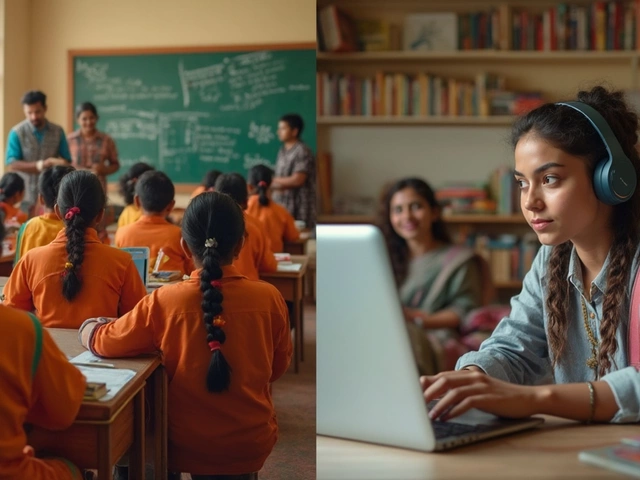
Picture this: You are sitting in a quiet room with your laptop open. The only sound is the click of your mouse as you watch a lecture recorded three months ago by an expert on the other side of the world. Now, picture yourself in a crowded hall, smelling faintly of floor wax and old books, raising your hand to ask a question while thirty pairs of eyes turn toward you.
These two scenarios represent the great divide in modern education. For decades, the classroom was the only game in town. Today, eLearning is digital education delivered via internet-based platforms, allowing learners to access content anytime and anywhere. It has moved from a niche alternative to a dominant force, especially after the global shifts of the early 2020s. But which one actually works better for you? The answer isn't simple because neither method is universally superior. They serve different needs, personalities, and goals.
The Core Experience: Structure vs. Flexibility
The most obvious difference between traditional schooling and digital learning is how time and space are handled. In a physical classroom, the schedule is rigid. If your class starts at 9:00 AM, you need to be there at 8:55 AM. Miss it, and you miss the material unless you borrow notes from a friend. This structure provides a sense of routine that many people crave. It forces discipline. You show up because the building is open and the teacher is waiting.
eLearning, on the other hand, offers radical flexibility. You can study at midnight or during your lunch break. You can pause the video, rewind it, or speed it up if the speaker talks too slowly. This freedom is amazing for working professionals or parents juggling multiple responsibilities. However, it comes with a hidden cost: self-discipline. Without a bell ringing to tell you when to start and stop, procrastination becomes your biggest enemy. Many students drop out of online courses not because the material is hard, but because they simply never log in again.
Social Interaction: Face-to-Face vs. Digital Forums
Human beings are social creatures, and learning is no exception. In a traditional classroom, interaction happens naturally. You discuss ideas with the person next to you. You read body language. You build friendships over shared struggles with difficult exams. This social fabric creates accountability. You don't want to let down your study group. You also get immediate feedback from teachers who can see confusion on your face and adjust their explanation on the spot.
In the digital realm, interaction is often asynchronous. You post a question on a forum, and someone replies hours later. Video calls happen, but they lack the spontaneity of a hallway conversation. While tools like breakout rooms and live chats have improved, they still feel structured and artificial compared to organic social mixing. For introverts, this might be a relief. For extroverts who thrive on energy exchange, eLearning can feel isolating and lonely.
Cost and Accessibility: The Financial Reality
Let's talk money. Traditional education is expensive. Tuition fees are just the start. There are textbooks, commuting costs, campus housing, and meals. When you add these up, the price tag can be staggering. Distance Education significantly reduces these overheads. Online courses often cost less because institutions save on physical infrastructure. Plus, you eliminate commuting expenses. You can learn from home in your pajamas, saving on wardrobe and transport.
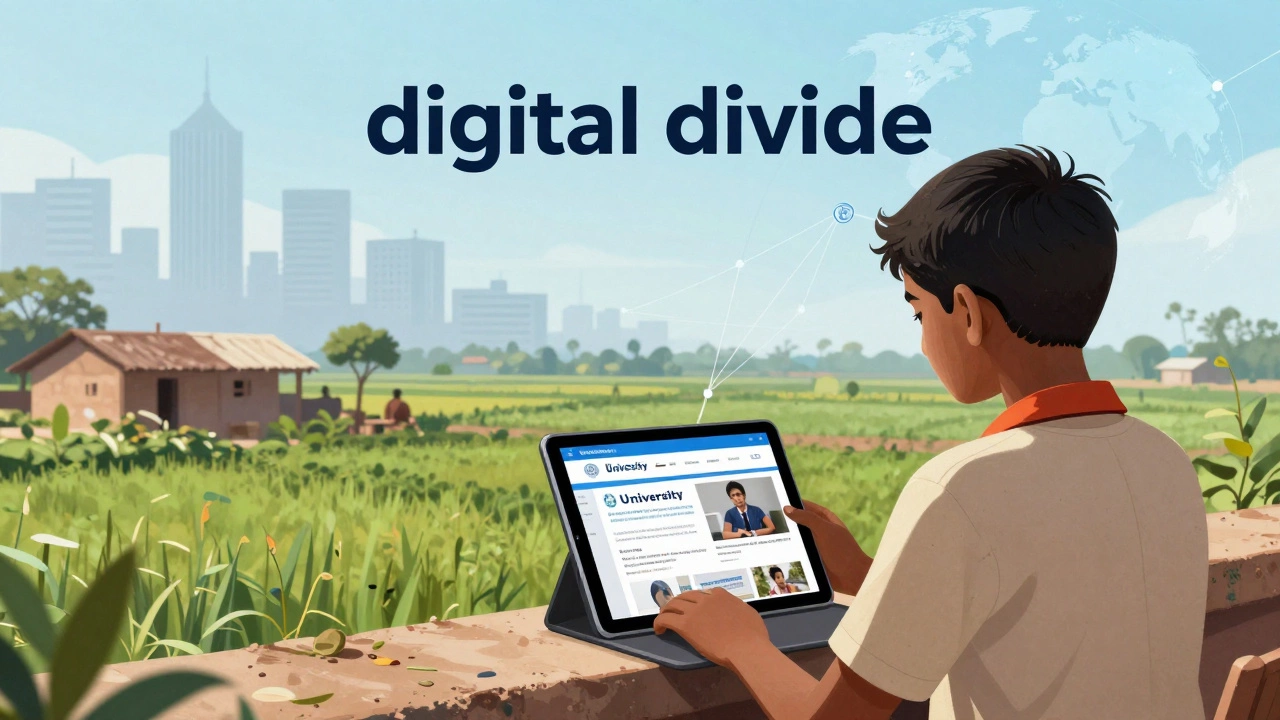
Accessibility is another huge factor. If you live in a remote area without access to top-tier universities, eLearning bridges that gap. You can take a course from Harvard or MIT without leaving your village. This democratization of knowledge is one of the strongest arguments for digital learning. However, you do need reliable internet and a decent device. In regions with poor connectivity, the "digital divide" remains a serious barrier that traditional classrooms do not face.
Learning Styles: Visual, Auditory, and Kinesthetic Needs
Not everyone learns the same way. Some people are visual learners who need diagrams and charts. Others are auditory learners who prefer listening to lectures. Kinesthetic learners need to move around and do hands-on activities. Traditional classrooms often cater best to kinesthetic and social learners through labs, group projects, and discussions. You can touch, feel, and experiment with physical materials.
eLearning excels for visual and auditory learners. High-quality videos, interactive simulations, and podcasts allow you to consume information in your preferred format. You can replay a complex concept until it clicks. However, practical skills like surgery, plumbing, or even public speaking are harder to master purely online. You need real-world practice. That is why hybrid models are becoming so popular-combining online theory with offline practice.

Comparison Table: Classroom vs. eLearning
| Feature | Classroom Learning | eLearning |
|---|---|---|
| Flexibility | Low (Fixed schedule) | High (Self-paced) |
| Interaction | Face-to-face, immediate | Digital, often delayed |
| Cost | Higher (Tuition + Commute) | Lower (Often free or cheap) |
| Discipline Required | External (Teacher/Schedule) | Internal (Self-motivation) |
| Practical Skills | Excellent (Labs/Hands-on) | Limited (Simulation only) |
| Access | Location-dependent | Global (Internet required) |
The Rise of Hybrid Learning
So, which one should you choose? The truth is, the binary choice is fading. In 2026, the most effective educational models are often hybrid. Universities offer online lectures with mandatory weekly seminars. Corporations train employees on compliance modules online but bring them together for team-building workshops. This approach leverages the strengths of both worlds. You get the flexibility and cost-efficiency of digital learning combined with the social connection and practical application of face-to-face interaction.
If you are deciding where to invest your time, consider your current lifestyle. Are you a disciplined self-starter looking to upskill without quitting your job? eLearning is likely your best bet. Do you struggle with motivation and crave community? A traditional classroom might keep you on track. Or perhaps a hybrid program offers the perfect middle ground. The goal isn't to pick a winner; it's to pick the tool that fits your life right now.
Is eLearning as effective as classroom learning?
Research shows that eLearning can be just as effective as traditional classroom instruction, provided the learner is motivated and the course design is high-quality. Studies indicate that self-paced online learning often leads to better retention because students can review material at their own speed. However, for subjects requiring heavy practical application, classroom settings remain superior.
Which is cheaper: online courses or traditional degrees?
Generally, online courses are significantly cheaper. They eliminate costs associated with commuting, housing, and physical textbooks. Many reputable online programs also have lower tuition fees due to reduced overhead costs for institutions. However, elite university degrees, whether online or offline, can still be expensive.
Do employers value eLearning certificates?
Yes, increasingly so. Employers in 2026 recognize the value of continuous upskilling. Certificates from recognized platforms and accredited universities carry weight. What matters most is the relevance of the skill and the credibility of the issuing institution, not just the mode of delivery.
How can I stay motivated while studying online?
Create a dedicated study space, set a consistent schedule, and join online study groups to simulate peer pressure. Break large courses into small, manageable chunks. Use productivity techniques like the Pomodoro method to maintain focus. Accountability partners can also help keep you on track.
What are the best subjects for eLearning?
Subjects that rely heavily on theory, coding, writing, and data analysis are ideal for eLearning. Programming languages, digital marketing, graphic design, and business management translate well to digital formats. Subjects requiring physical manipulation, such as medicine, engineering labs, or performing arts, benefit more from traditional or hybrid approaches.