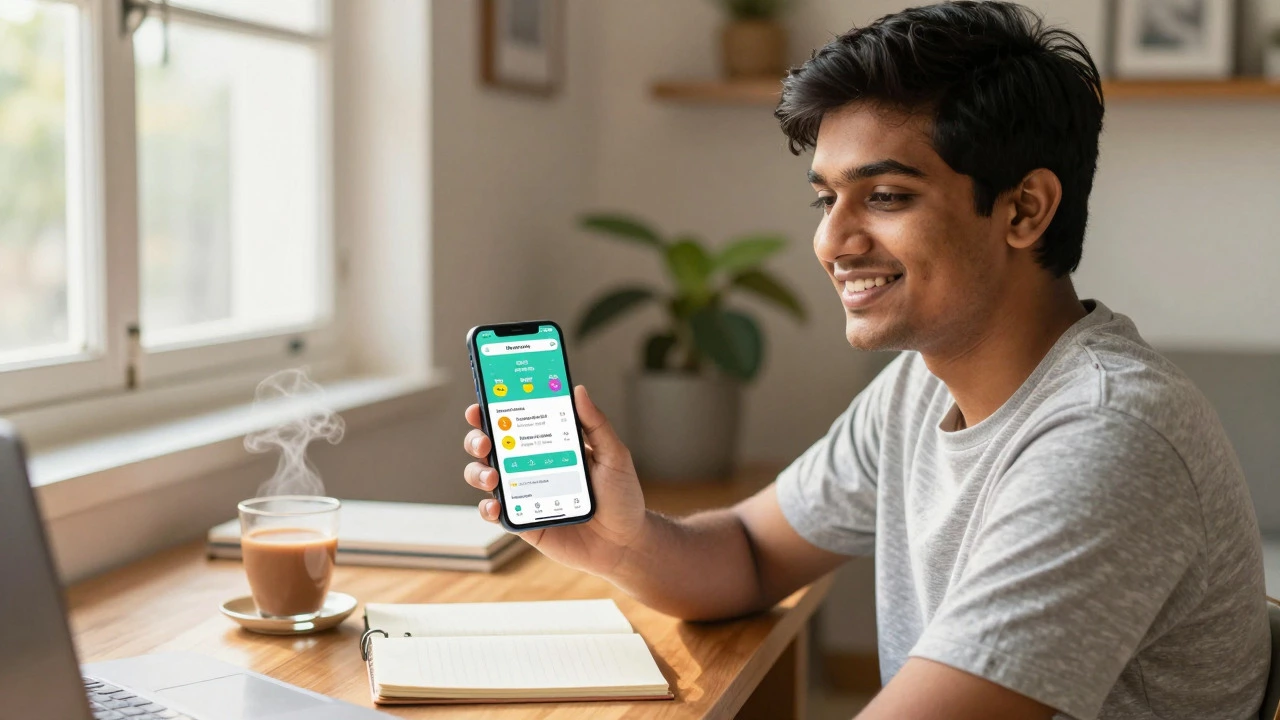
Personalized English Learning Schedule Builder
Select the activities you want to include in your daily routine. Each activity shows the recommended time commitment.
Morning Flashcard Review
Review vocabulary cards while having breakfast
Podcast Listening Practice
Listen to BBC 6 Minute English during commute
Reading Comprehension
Read simplified news articles at lunch break
Structured Lesson
Practice grammar and vocabulary with apps
Evening Journal Writing
Write three sentences about your day before bed
Speaking Shadowing Practice
Mimic pronunciation and intonation patterns
Language Exchange Chat
Chat with native speakers on exchange apps
Your Personalized Daily Routine:
💡 Pro Tip
Consistency beats intensity. Even 20 minutes daily is better than 3 hours once a week.
Imagine walking into a coffee shop in London, New York, or Sydney and ordering your favorite drink without stuttering. Now imagine doing that with zero dollars spent on tuition. It sounds like a dream, but it is entirely possible. The internet has democratized language learning. You no longer need expensive textbooks or private tutors to grasp the fundamentals of Basic English, which includes essential vocabulary, simple grammar structures, and conversational phrases.
The biggest hurdle isn't money; it's knowing where to look. There are thousands of resources floating around, and half of them are outdated or confusing. This guide cuts through the noise. We will walk you through specific apps, websites, and strategies that cost nothing but your time and effort. Whether you are preparing for travel, looking for a better job, or just want to understand Hollywood movies without subtitles, this plan works.
Start with Structured Free Apps
If you have never studied English before, jumping straight into native-level content is overwhelming. You need structure. That is where language learning apps come in. They break down complex rules into bite-sized lessons.
Duolingo is probably the most famous option. It uses gamification to keep you engaged. You earn points, maintain streaks, and level up. For absolute beginners, it is excellent for building a base vocabulary of common words like "hello," "water," "book," and "go." However, do not rely on it alone. Duolingo teaches you isolated sentences, not how to hold a conversation.
A stronger alternative for serious learners is BBC Learning English. Unlike casual apps, BBC offers structured courses based on real-world scenarios. Their "English My Way" course is designed specifically for adults who want practical language skills. It covers topics like booking a hotel, asking for directions, and understanding news headlines. The audio quality is professional, exposing you to clear British pronunciation from day one.
Another hidden gem is Khan Academy. While known for math, their reading and writing section offers high-quality lessons on grammar and comprehension. It is less flashy than Duolingo but far more rigorous. If you want to understand why we use "the" instead of "a," Khan Academy explains the logic clearly.
Immerse Yourself with Listening Practice
You cannot learn to speak if you do not know what English sounds like. Your brain needs to map sounds to meanings. This process is called auditory processing. For free, you have access to millions of hours of authentic English content.
Podcasts are your best friend here. Start with 6 Minute English by BBC. As the name suggests, each episode is short. Two hosts discuss an interesting topic using simple language. They define difficult words as they go. This is perfect for beginners because the pace is slower than normal conversation, but still natural.
For visual learners, YouTube channels offer incredible value. English Addict with Mr Steve focuses on everyday conversations. He speaks slowly and repeats key phrases. Another great channel is Learn English with TV Series. They break down scenes from popular shows like *Friends* or *Harry Potter*. This helps you understand slang, humor, and cultural references that textbooks miss.
Do not just passively listen. Active listening is key. Here is a simple technique:
- Listen to a short clip (30 seconds).
- Write down every word you hear.
- Check the transcript (most videos have captions).
- Identify words you missed.
- Repeat the clip until you can hear every word clearly.
Build Vocabulary Through Context
Memorizing lists of random words is inefficient. Your brain forgets them quickly because they lack context. Instead, learn words in groups or stories.
Use Quizlet or Anki. These are digital flashcard systems that use spaced repetition. Spaced repetition means the app shows you a card right before you are likely to forget it. This scientific method boosts long-term memory retention significantly.
Create decks based on themes. For example, create a deck for "Kitchen Items" or "Travel Phrases." Include images and example sentences. Do not just write "Apple = Manzana." Write "I eat a red apple every morning." This teaches you grammar alongside vocabulary.
Reading also builds vocabulary naturally. Start with News in Levels. This website takes current news articles and rewrites them at three different difficulty levels. Level 1 uses very simple words and short sentences. Read the same story at Level 1, then try Level 2. You will see how the language evolves while keeping the core meaning. This bridges the gap between textbook English and real-world English.
Practice Speaking Without a Partner
The scariest part of learning a new language is speaking. Many people wait until they feel "ready." Spoiler alert: you will never feel ready. You must start speaking early, even if you make mistakes.
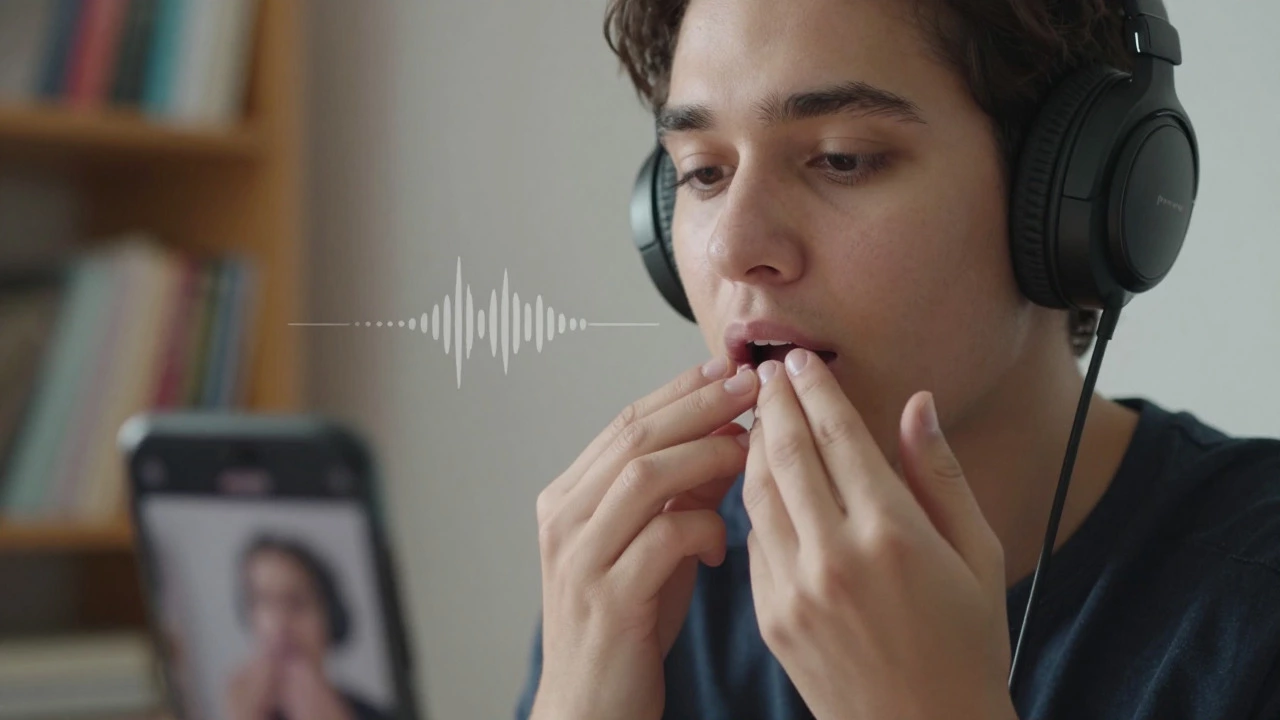
You do not need a human partner to practice. Try shadowing. Shadowing involves listening to a native speaker and repeating exactly what they say, immediately after they say it. Mimic their speed, intonation, and emotion. This trains your mouth muscles to form English sounds correctly.
Record yourself using your phone’s voice memo app. Listen to a sentence from a podcast, pause it, and repeat it. Then play back your recording. Compare it to the original. You might cringe at first, but this is how you improve pronunciation. Focus on stress patterns. In English, we stress certain syllables in words (e.g., PHO-to-graph vs. pho-TOG-ra-phy). Getting this wrong can make you hard to understand.
If you want interactive practice, try HelloTalk or Tandem. These are language exchange apps. You find someone who wants to learn your native language and teach them, while they help you with English. It is free because it is mutual benefit. Be clear about your goals. Tell your partner, "I am a beginner. Please correct my grammar gently." Most partners are happy to help.
Master Basic Grammar Rules
Grammar is the skeleton of language. Without it, words fall apart. You do not need to be a linguist, but you must understand the basics: subject-verb agreement, tense usage, and sentence structure.
British Council LearnEnglish offers free grammar exercises. Their site is organized by level (A1, A2, B1). Start with A1. Focus on these core areas first:
- Present Simple: Used for habits and facts ("I work every day.")
- Past Simple: Used for completed actions ("I worked yesterday.")
- Future with 'Will': Used for predictions and promises ("I will call you.")
- Prepositions: Words like in, on, at, which indicate time and place.
Do not get bogged down in exceptions yet. Master the rules first. Exceptions confuse beginners. Once you can construct simple sentences confidently, move to more complex tenses like Present Perfect.
Use Grammarly's free version. When you write emails or messages, Grammarly highlights errors. Read the explanations. Why did it change "me and him" to "him and me"? Understanding the reason cements the rule in your mind.
Create a Sustainable Daily Routine
Motivation fades. Discipline remains. To learn English for free, you need consistency, not intensity. Studying for five hours once a week is worse than studying for 20 minutes every day.
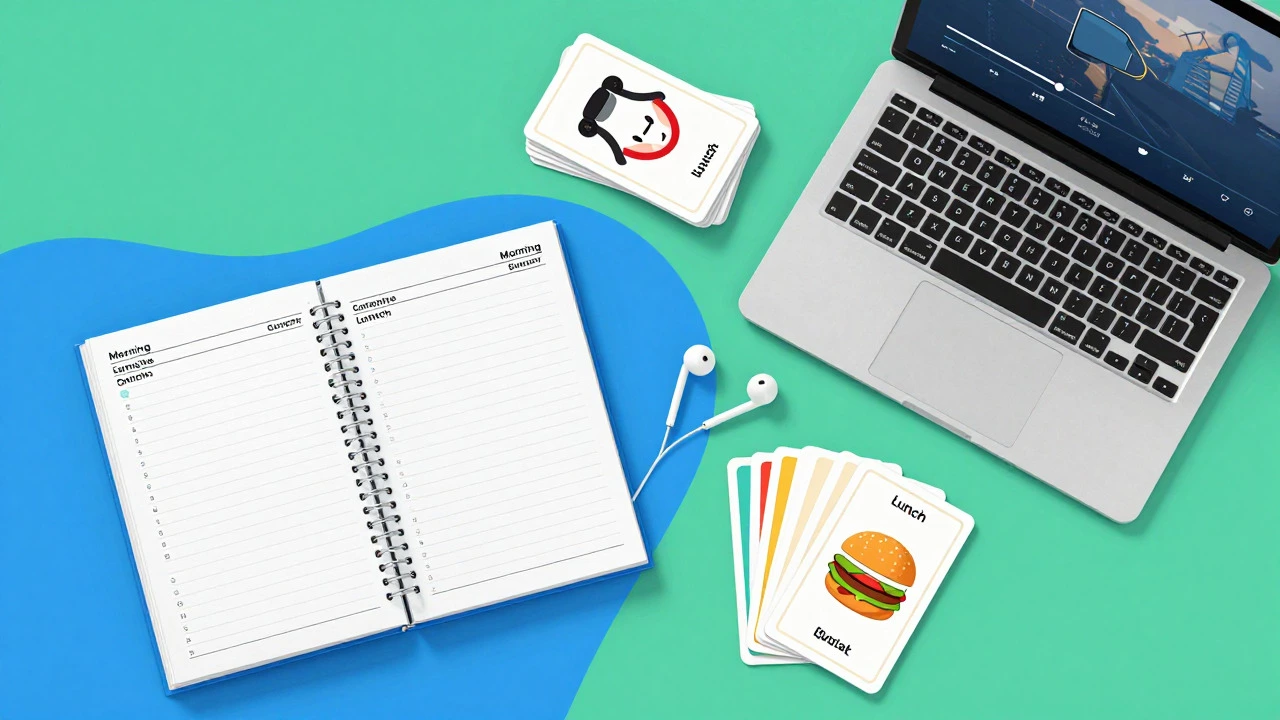
Here is a sample daily routine for a busy person:
- Morning (5 mins): Review 10 flashcards on Anki during breakfast.
- Commute (15 mins): Listen to a BBC 6 Minute English podcast.
- Lunch Break (10 mins): Read one article on News in Levels.
- Evening (10 mins): Do one lesson on Duolingo or BBC Learning English.
- Before Bed (5 mins): Journal three sentences about your day in English.
This totals 45 minutes a day. It feels manageable because it is broken into small chunks. The journaling step is crucial. Writing forces you to retrieve vocabulary actively. If you cannot find a word, look it up. That moment of struggle is when learning happens.
Overcoming Common Pitfalls
Many beginners quit because they expect linear progress. Language learning is non-linear. You will have weeks where you feel stuck. This is normal. It is called the plateau effect. Push through it.
Avoid translating everything in your head. If you think in your native language and then translate to English, you will be slow and awkward. Try to think directly in English. Start small. Look around your room and name objects in English. "Table. Chair. Window." Build associations between objects and English words, bypassing your native language.
Also, do not fear mistakes. Mistakes are data. Every error tells you what you need to practice. Native speakers appreciate the effort. They rarely judge harshly. Embrace the awkwardness. It means you are trying.
| Resource | Best For | Key Feature | Limitation |
|---|---|---|---|
| Duolingo | Absolute Beginners | Gamified lessons, habit building | Limited conversation practice |
| BBC Learning English | Listening & Real-world Usage | Professional audio, structured courses | British accent focus |
| HelloTalk | Speaking Practice | Native speaker interaction | Requires social confidence |
| Anki | Vocabulary Retention | Spaced repetition algorithm | Steep initial setup curve |
| News in Levels | Reading Comprehension | Simplified news articles | Less interactive |
Next Steps After Basics
Once you can introduce yourself, order food, and ask for directions, you have mastered basic English. What next? Expand your horizons. Watch Netflix with English subtitles, not subtitles in your native language. Join online forums related to your hobbies (gaming, cooking, tech) and participate in discussions. The goal shifts from survival to connection. Keep using the tools above, but increase the difficulty. Switch from children's books to young adult novels. Move from slow podcasts to regular-speed interviews. The journey continues, but now you have the foundation.
Can I really learn English completely for free?
Yes. While paid courses offer convenience and personalized feedback, free resources like BBC Learning English, Duolingo, and YouTube provide comprehensive coverage of grammar, vocabulary, and listening skills. Success depends on your consistency and ability to self-direct your learning rather than the price tag.
How long does it take to learn basic English?
It varies by individual, but with 30-60 minutes of daily practice, most adults can reach a basic conversational level (A1-A2) in 3 to 6 months. This allows you to handle simple social interactions and travel situations. Reaching fluency takes years, but basics are achievable quickly.
Is Duolingo enough to learn English?
Duolingo is a great starting point for vocabulary and basic sentence structure, but it is not sufficient on its own. It lacks deep grammatical explanations and spontaneous conversation practice. Combine it with listening resources like podcasts and speaking practice via language exchange apps for a balanced approach.
What is the best way to practice speaking without a tutor?
Shadowing is highly effective. Listen to native speakers and repeat their speech simultaneously, mimicking intonation and speed. Additionally, use language exchange apps like HelloTalk or Tandem to chat with native speakers who want to learn your language. Recording yourself and comparing it to native audio also helps identify pronunciation issues.
Should I focus on American or British English?
Choose the variety you are most exposed to or interested in. Both are mutually intelligible. If you watch US movies, focus on American English. If you prefer UK media, stick with British English. Mixing them slightly is common and usually not a barrier to communication, but consistency helps with spelling and vocabulary acquisition.