Neuroplasticity & Fluency Estimator
Calculate Your Daily Brain Training Score
Select the techniques you use daily to see how they impact neural pathway formation.
Neural Pathway Strength
Why this works:
Your choices will determine the thickness of your myelin sheath simulation.
You know the words. You understand the grammar. But when someone asks you a question in English, your mind goes blank. It’s a frustrating feeling that millions of learners face every day. The problem isn’t your intelligence or your vocabulary size; it’s the way your brain is wired to process information. To speak English fluently, you need to rewire your neural pathways to make English as automatic as your native tongue.
This isn’t about memorizing more lists of verbs. It’s about changing how your brain accesses language. By using specific cognitive strategies and consistent practice habits, you can train your brain to bypass the internal translator and speak directly in English. Here is how you can do it effectively.
Understanding How Your Brain Learns Language
To change your output, you first need to understand the mechanism. When you learn a new language, your brain creates new neural connections. Initially, these connections are weak and slow. This is why you might pause for seconds to recall a simple word like "umbrella" or "schedule." Your brain is searching through its filing system, often translating from your native language first.
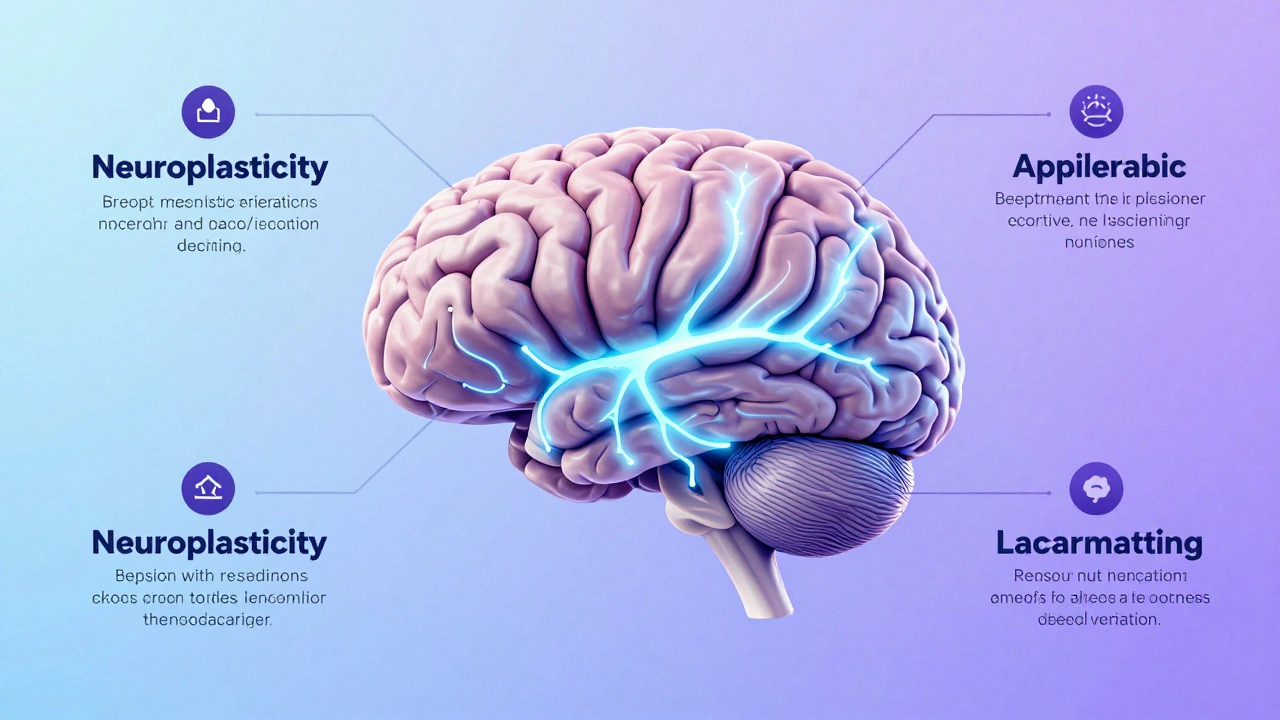
The goal of training your brain is to strengthen these connections until they become myelinated. Myelin is a fatty substance that wraps around nerve fibers, allowing electrical signals to travel faster. Think of it like upgrading from a dirt road to a superhighway. The more you use a specific phrase or structure, the thicker the myelin becomes, and the faster you access that language. This process is called neuroplasticity, and it works best with repetition and intensity.
What is neuroplasticity in language learning?
Neuroplasticity is the brain's ability to reorganize itself by forming new neural connections throughout life. In language learning, it means that repeated practice physically changes the brain structure, making language retrieval faster and more automatic.
The Shadowing Technique for Automaticity
One of the most effective ways to train your brain for speed is the shadowing technique. This involves listening to native English speech and repeating it almost simultaneously, with a delay of only a fraction of a second. You aren’t just reading along; you are mimicking the rhythm, intonation, and speed of the speaker.
Why does this work? It forces your brain to process sound patterns rather than individual words. When you read, your brain focuses on meaning. When you shadow, your brain focuses on form and flow. Start with short audio clips-podcasts or YouTube videos with transcripts are ideal. Listen to a sentence, pause, and repeat it exactly as you heard it. Gradually reduce the pause until you are speaking over the audio.
This method builds muscle memory in your mouth and ear coordination. It helps you stop thinking about grammar rules and start feeling the natural cadence of English. Over time, your brain will begin to predict phrases before you even finish hearing them, which is a key component of fluent conversation.
Thinking in English: Bypassing the Translator
The biggest barrier to fluency is the internal translator. If you think in your native language and then translate to English, you will always be slower than a native speaker. Training your brain to think in English requires a shift in daily habit.
Start small. Narrate your actions throughout the day. As you make coffee, say out loud, "I am pouring the water," or "The kettle is boiling." Keep it simple at first. Use single sentences. The goal is to associate concepts directly with English words, not with translations. If you see a dog, think "dog," not the word in your native language followed by "dog."
If you get stuck on a word, don’t switch back to your native language. Describe the concept in English. For example, if you forget the word "scissors," say "the tool I use to cut paper." This keeps your brain in English mode and strengthens your ability to communicate even with limited vocabulary. This technique is known as circumlocution, and it is a vital skill for real-world conversations.
Immersion Without Travel
You don’t need to live in London or New York to immerse yourself in English. You can create an English-rich environment right where you are. Immersion trains your brain to expect English input constantly, reducing the cognitive load required to switch into "English mode."
Change the language settings on your phone and computer to English. Watch movies and TV shows in English with English subtitles, not subtitles in your native language. This forces your eyes and ears to work together in English. Listen to English podcasts during your commute or while doing chores. Even if you don’t understand every word, your brain is getting used to the sounds and rhythms of the language.
Create "English zones" in your home. For example, decide that the kitchen is an English-only zone. While you are in there, you must speak or think in English. This physical association helps trigger the language switch in your brain. Over time, these cues become automatic, and you’ll find yourself slipping into English without conscious effort.
Active Recall and Spaced Repetition
Passive learning, like reading textbooks, is not enough to train your brain for active speaking. You need active recall, which means forcing your brain to retrieve information without help. This strengthens the neural pathways much more effectively than passive review.
Use flashcards, but not just for vocabulary. Create cards with questions or prompts that require full-sentence answers. For example, instead of a card with "Apple - Manzana," use a card that says "Describe your favorite fruit." Force yourself to speak the answer aloud. Combine this with spaced repetition, a learning technique where you review material at increasing intervals. Apps like Anki or Quizlet use algorithms to show you cards just before you are likely to forget them. This optimizes your study time and ensures long-term retention.
Spaced repetition works because it leverages the forgetting curve. Each time you recall a word or phrase, the memory becomes stronger and lasts longer. By spacing out reviews, you train your brain to store information in long-term memory, making it readily available when you need to speak.
Overcoming the Fear of Mistakes
Your brain is wired to avoid danger, and making mistakes in front of others can feel threatening. This triggers anxiety, which blocks the language centers of your brain. To train your brain to speak confidently, you need to reframe mistakes as data, not failures.
Every error you make provides feedback. If you say "I goed to the store" instead of "I went to the store," your brain notes the discrepancy. When you hear the correct form later, the correction sticks because you’ve already engaged with the error. Embrace imperfection. Focus on communication, not perfection. Native speakers make mistakes too, and they rarely notice minor grammatical errors if the message is clear.
Practice speaking with low-stakes partners. Language exchange apps or online communities allow you to practice with other learners who are also making mistakes. This reduces pressure and creates a safe environment for experimentation. The more you speak, the less fear your brain associates with English, and the more freely you will express yourself.
Building Contextual Memory
Your brain remembers information better when it is tied to context. Instead of memorizing isolated words, learn phrases and collocations. Collocations are words that naturally go together, like "make a decision" or "heavy rain." Learning these chunks allows your brain to retrieve entire phrases at once, speeding up your speech.
Read extensively in English. Stories and articles provide rich context for vocabulary and grammar. When you encounter a new word in a story, your brain links it to the characters, plot, and emotions involved. This emotional connection makes the memory stronger. Try reading aloud to combine visual and auditory processing. This multi-sensory approach engages more parts of your brain, reinforcing the learning.
Keep a journal in English. Write about your day, your thoughts, or your dreams. Writing slows down your thinking, giving you time to construct proper sentences. Later, read your entries aloud. This bridges the gap between writing and speaking, helping your brain transition from structured thought to spontaneous speech.
| Method | Brain Activity | Effectiveness for Speaking |
|---|---|---|
| Reading Textbooks | Low (Visual only) | Poor |
| Listening to Podcasts | Medium (Auditory) | Moderate |
| Shadowing | High (Auditory + Motor) | Excellent |
| Speaking Practice | Very High (Motor + Cognitive) | Best |
Consistency Over Intensity
Training your brain is a marathon, not a sprint. Short, daily sessions are far more effective than long, sporadic ones. Aim for 15-20 minutes of focused practice every day. Consistency reinforces neural pathways, while irregular practice leads to decay. Your brain needs regular signals to maintain the connections you’re building.
Set realistic goals. Instead of aiming for "fluency," aim for "speaking for five minutes without stopping." Celebrate small wins. Did you order food in English? Did you understand a joke in a movie? These moments build confidence and motivate you to continue. Remember, progress is non-linear. There will be days when you feel stuck, but trust the process. The changes are happening beneath the surface, even if you can’t see them immediately.
Finally, integrate English into your hobbies. Do you like cooking? Follow English recipes. Do you like gaming? Join English-speaking servers. When learning feels like play, your brain releases dopamine, a neurotransmitter that enhances memory and motivation. Make English a part of your life, not just a subject you study.
Frequently Asked Questions
How long does it take to train your brain to speak English?
It varies depending on your starting level and consistency, but noticeable improvements in fluency can occur within 3-6 months of daily practice. Full automaticity may take 1-2 years. The key is consistent, daily engagement with the language.
Is shadowing effective for all proficiency levels?
Yes, shadowing is beneficial for beginners to advanced learners. Beginners should start with slow, clear audio and focus on pronunciation. Advanced learners can use faster, complex audio to improve rhythm and intonation.
Can I train my brain to speak English without a tutor?
Absolutely. While tutors provide valuable feedback, self-directed learning using techniques like shadowing, immersion, and active recall can be highly effective. Online resources and language exchange partners offer ample opportunities for practice.
What should I do if I forget words while speaking?
Use circumlocution. Describe the word or concept using simpler English words. This keeps the conversation flowing and trains your brain to find alternative expressions, enhancing overall communicative competence.
Does watching TV in English really help?
Yes, but only if you actively engage with the content. Use English subtitles, pause to repeat phrases, and note down new vocabulary. Passive viewing has limited benefits compared to active engagement techniques like shadowing.