Daily English Speaking Tracker
English Speaking Progress Tracker
Pro Tip: The article recommends 15 minutes daily for fluency. You're 30 days away from the one-month challenge!
Your Progress
| Date | Activity | Minutes |
|---|---|---|
| No practice logged yet | ||
If you’ve ever been stuck in a conversation because your mind blanks out when you try to speak English, you’re not alone. Millions of people around the world know grammar rules, can write essays, and understand movies-but freeze when it’s time to talk. The truth is, fluency isn’t about memorizing vocabulary lists. It’s about rewiring your brain to think in English, not translate from your native language. And you can do it on your own, without expensive courses or tutors.
Stop translating. Start thinking in English.
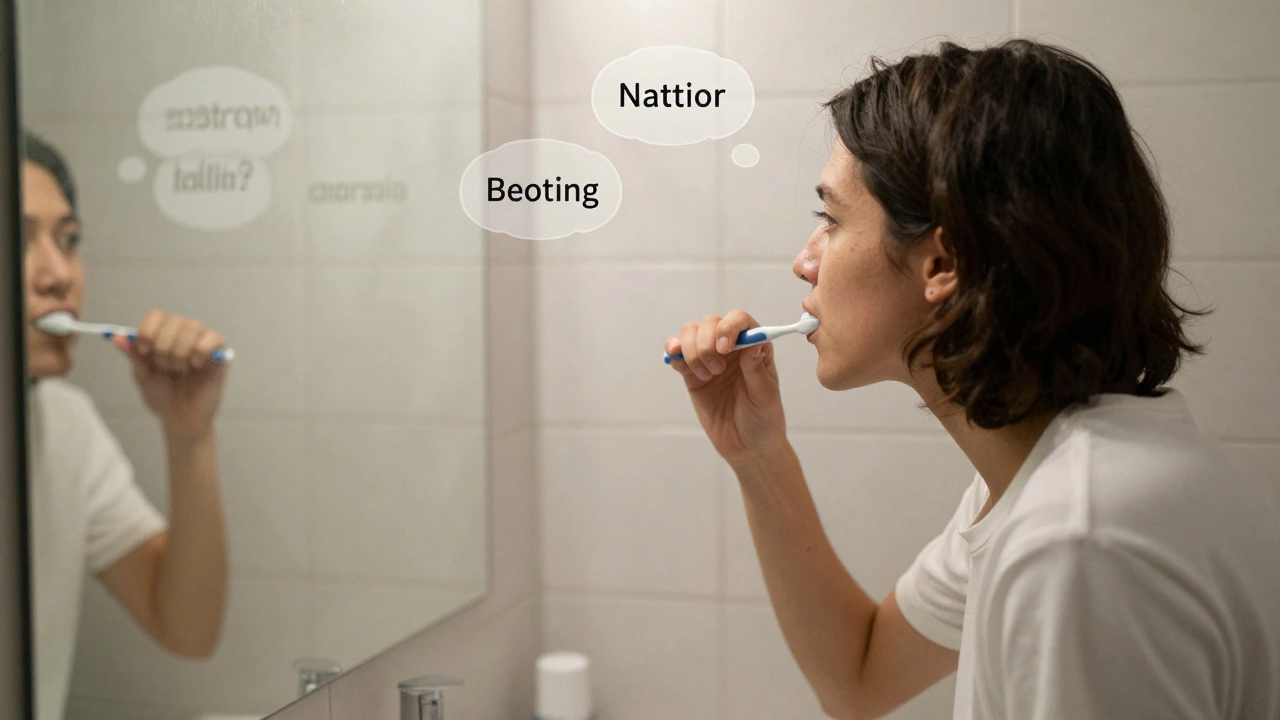
The biggest barrier to speaking fluently is translation. Every time you hear a question like "What did you do yesterday?", your brain goes: "What... did... I... do... yesterday?" → "I went to the store." → "I went to the store." That delay? That’s what makes you sound slow or nervous. Fluency happens when you skip the middle step. You hear the question, and your brain replies in English-no translation needed. Start small. Pick one routine activity every day and describe it out loud in English. Brushing your teeth? Say it: "I’m brushing my teeth. The toothpaste tastes minty. I need to rinse." Make it simple. Don’t worry about perfect grammar. Just keep talking. Do this for 5 minutes every morning. In two weeks, you’ll catch yourself thinking in English while making coffee or walking to the bus stop.Listen like a language learner, not a passive listener
Watching Netflix or listening to podcasts won’t magically make you fluent. You need to listen with purpose. Most people just let English wash over them. That’s not learning-that’s background noise. Here’s how to change that: Pick one short clip-2 to 3 minutes-from a show you already like. Watch it once with subtitles in English. Then watch it again without subtitles. Pause every 10 seconds. Say out loud what you just heard. Don’t worry if you didn’t catch everything. Try to repeat the exact phrases. Notice how native speakers link words: "wanna" instead of "want to," "gotta" for "got to." Write down those phrases. Use them in your own sentences later. Try this with YouTube channels like "English Addict with Mr Steve" or "Learn English with Emma." They speak slowly, use real-life situations, and repeat key phrases. Don’t skip the listening part. It’s the foundation.Shadowing: The secret weapon for natural rhythm
Shadowing is the most powerful technique you’ve probably never heard of. It’s simple: play a short audio clip-something clear and slow-and speak along with it, trying to match the speaker’s rhythm, tone, and speed. Not just the words. The pauses. The ups and downs. The way they stress certain syllables. Use a phone app to record yourself. Play back your version next to the original. You’ll hear where you sound robotic. Maybe you rushed through "I’m going to" and made it sound like "I’m gonna." That’s okay. That’s progress. You’re training your mouth muscles to move like a native speaker. Do this for 10 minutes a day. Use clips from TED Talks or BBC Learning English. Start with slower speakers. After a month, you’ll notice your speech sounds smoother-even when you’re not shadowing.Speak to yourself. Seriously.
You don’t need a partner to practice speaking. You need courage. Start talking to yourself in English about your day, your feelings, your plans. "I’m tired today because I stayed up late. I should’ve gone to bed earlier." "I’m thinking about ordering pizza tonight, but I should cook something healthy." Do it in the shower. While driving. While folding laundry. This isn’t about sounding smart. It’s about building the habit of expressing yourself in English without fear. The more you talk to yourself, the less scary it becomes to talk to others. If you feel silly, remember this: actors memorize lines by repeating them over and over. You’re doing the same thing-you’re memorizing how to speak naturally.
Use language exchange apps-without the pressure
Apps like Tandem or HelloTalk connect you with native English speakers who want to learn your language. But most people treat these like interviews. They prepare questions. They stress about making mistakes. That kills the flow. Here’s how to do it right: Don’t plan anything. Just start talking about your day. Let the other person do the same. If you don’t know a word, use gestures, synonyms, or describe it. "I need something to put on my head when it’s cold" → "hat." The other person will help you. And you’ll help them with your language. It’s a trade, not a test. Set a rule: No grammar corrections unless you ask for them. Focus on being understood, not being perfect. After 10 sessions, you’ll realize most native speakers don’t care about your mistakes-they care that you’re trying.Build a speaking habit, not a study routine
Most people treat learning English like studying for a test. They sit down with a book. They take notes. They quiz themselves. Then they stop. Fluency doesn’t come from studying. It comes from doing. Make speaking part of your daily life, not a task on your to-do list. Keep a voice journal. Record yourself every morning for 3 minutes. Don’t edit it. Just speak. After a month, listen back. You’ll hear your progress. Your voice will sound calmer. Your sentences will be longer. Your mistakes will be fewer. Set a goal: Speak English for 15 minutes every day. No exceptions. Even if you’re tired. Even if you’re in a hurry. Even if you only say, "I’m tired. I need coffee. Today is Monday." That’s still speaking. That’s still progress.What to avoid
Don’t wait until you’re "ready." There’s no such thing. You’ll never feel 100% prepared. The people who speak fluently didn’t wait. They started messy. Don’t rely on apps that only test you on vocabulary or grammar. Those help with reading and writing, but they don’t train your mouth or your listening reflexes. Don’t compare yourself to others. Someone who studied abroad for two years isn’t "better" than you. They just had more exposure. You can catch up-faster-if you focus on daily speaking, not perfect grammar.
Progress isn’t linear
There will be weeks where you feel stuck. You’ll say the same things over and over. You’ll forget words you knew yesterday. That’s normal. Fluency isn’t a straight line. It’s a spiral. You keep coming back to the same ideas, but each time, you say them better. Track your wins, not your failures. Did you order coffee without hesitation? That’s a win. Did you explain your weekend plans clearly? That’s progress. Celebrate those moments. They add up.Where to find real English
Don’t just use textbooks. Use real life. Listen to local radio stations like BBC Radio 5 Live. Watch British sitcoms like "The Office" or "Sherlock"-they use everyday language. Read comments on YouTube videos in English. Notice how people write: "I’m so done with this," "No way," "That’s wild." These aren’t in your textbook. But they’re how real people talk. Learn those phrases. Use them. They’ll make you sound natural.One month challenge
Try this for 30 days:- Speak to yourself in English for 5 minutes every morning.
- Shadow one 2-minute clip every day.
- Record one 3-minute voice note at night.
- Have one 10-minute conversation on Tandem or HelloTalk.
- Watch one episode of a show without subtitles.
Can I become fluent in English without taking classes?
Yes. Many people become fluent without formal classes. What matters is daily speaking practice, not the setting. If you speak English for 15-20 minutes every day-talking to yourself, shadowing audio, chatting with language partners-you’ll build fluency faster than someone attending weekly lessons but not practicing outside class.
How long does it take to speak English fluently?
It depends on how much you practice. Someone who speaks 30 minutes a day, every day, can reach conversational fluency in 6 to 9 months. Someone who practices only once a week might take years. Fluency isn’t about time spent-it’s about consistent output. Speaking every day, even for short periods, builds muscle memory in your brain.
Why do I understand English but can’t speak it?
You’ve trained your listening and reading skills, but not your speaking. Understanding is passive. Speaking is active. It requires your brain to retrieve words quickly, form sentences on the spot, and control your mouth to make new sounds. That’s why you need to practice speaking-even if it’s just talking to yourself. Your brain needs to be rehearsed for production, not just reception.
Should I focus on accent or clarity?
Focus on clarity first. A strong accent doesn’t stop people from understanding you-bad pronunciation or unclear word stress does. Work on saying words correctly, linking phrases naturally, and using rhythm. You don’t need to sound like a native speaker. You need to be understood. Many successful English speakers have strong accents. What matters is confidence and clarity.
What if I’m too shy to speak with others?
Start with speaking to yourself. Record your voice. Talk to your pet. Talk to a mirror. The goal is to get comfortable making sounds in English without fear. Once you’re okay hearing yourself, move to voice messages. Then try one short chat on a language app. You don’t need to be loud or perfect. Just show up. Every conversation gets easier after the first one.