JEE Prep Fit Finder: Is PW Right For You?
Loading question...
Your Compatibility Result
Based on your answers, we are calculating your fit...
Quick Takeaways
- Affordability: Unbeatable price point compared to traditional Kota-style coaching.
- Teaching Style: Strong focus on conceptual clarity and 'ground-up' learning.
- Content: Massive library of lectures and DPPs (Daily Practice Problems).
- Trade-off: Less personalized attention than high-end offline batches.
- Best For: Self-motivated students who need quality content without breaking the bank.
To understand if Physics Wallah is the right fit, we first need to look at what it actually is. Physics Wallah (PW) is an educational technology platform founded by Alakh Pandey that provides affordable coaching for competitive exams like JEE and NEET. It transitioned from a YouTube channel to a full-scale app-based ecosystem. For a student, this means you aren't just getting a teacher; you're getting a structured curriculum designed to take you from basic school-level physics to the complex problem-solving required for the JEE preparation phase.
The Teaching Philosophy: Concept Over Cramming
One thing that stands out about the PW approach is how they handle the 'fear factor' of IIT JEE. Many traditional institutes throw complex formulas at you and tell you to memorize them. PW tends to do the opposite. They spend a significant amount of time on the 'why' before the 'how.' If you are a student who struggles with the fundamentals of Classical Mechanics or Organic Chemistry, this style is a lifesaver.
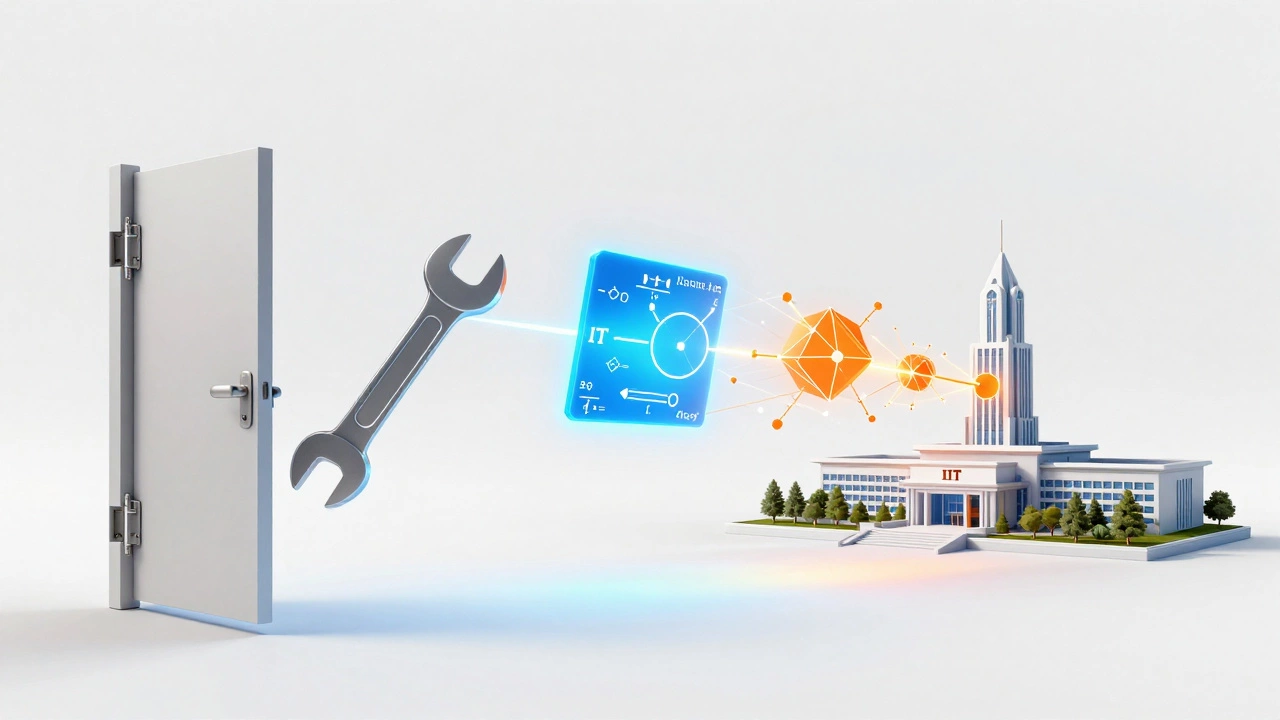
The instructors often use relatable analogies to explain abstract concepts. For instance, instead of just giving you the equation for torque, they might relate it to opening a door or using a wrench. This makes the learning process feel less like a chore and more like a conversation. However, this detailed approach can sometimes feel slow for students who have already mastered the basics and want to jump straight into high-level problem sets.
Breaking Down the JEE Course Structure
When you join a batch, you aren't just getting videos. The ecosystem is built around a cycle of learning and testing. It usually follows this flow: Lecture → Notes → DPP (Daily Practice Problems) → Weekly Tests.
The DPPs are where the real work happens. In the world of JEE, watching a video is passive; solving a problem is active. PW provides these daily sets to ensure you don't just 'understand' the lecture but can actually apply the logic to a question. The variety of questions ranges from easy (to build confidence) to 'challenging' (to simulate the actual exam pressure). If you can consistently clear these DPPs, you're on the right track.
| Feature | Physics Wallah (Online) | Traditional Kota Coaching |
|---|---|---|
| Cost | Extremely Low (Budget Friendly) | Very High (Fees + Living Costs) |
| Flexibility | Watch lectures anytime, anywhere | Fixed schedule, physical commute |
| Personal Attention | Moderate (via chat/doubt forums) | High (Direct face-to-face interaction) |
| Resources | Digital notes, recorded videos | Printed modules, physical classrooms |
| Environment | Home-based (Requires high discipline) | Competitive peer environment |
The Doubt Resolution Struggle
Let's talk about the elephant in the room: doubt solving. In a physical classroom, you can raise your hand and get an answer in seconds. In a massive online batch with thousands of students, that's impossible. PW has implemented doubt-solving engines and dedicated batches for this, but it's still not as seamless as a 1-on-1 interaction.
If you are the kind of student who gets stuck on a single step of a calculus problem and can't move forward without an immediate answer, you might find the online delay frustrating. However, for those who are comfortable using forums or waiting for a scheduled doubt session, it's a manageable trade-off. The key is to maintain a 'doubt log'-write down everything you don't understand and tackle it in one go during the weekend session rather than stopping every five minutes.
Is it Enough for JEE Advanced?
There is a big difference between JEE Main and JEE Advanced. The Main exam tests your speed and accuracy across a broad syllabus. Advanced tests your depth, creativity, and ability to link multiple concepts from different chapters into one problem.
Physics Wallah's content is excellent for building the foundation required for JEE Main. For Advanced, the platform provides the necessary tools, but the success rate depends more on the student's grit. To crack Advanced, you need to move beyond the provided lectures and dive into high-level books like Irodov for Physics or MS Chouhan for Chemistry. PW gives you the map, but you still have to walk the distance. Those who rely *only* on the basic videos without grinding through the toughest available problems might find a gap in their preparation when they hit the Advanced paper.

Discipline: The Secret Ingredient
The biggest risk with any online platform is the 'illusion of competence.' You watch a brilliant teacher solve a complex problem on screen, and your brain tells you, 'I get this.' But when you hold the pen, you realize you can't do it. This happens because watching a video is a passive activity.
To make PW work for you, you need a rigid schedule. You can't just 'watch videos when you feel like it.' You need to treat the app like a school. Wake up, log in, finish the lecture, and spend three hours solving problems. Without this discipline, the affordability of the course becomes a waste of time. The platform is a tool, not a magic pill.
The Verdict: Who Should Choose PW?
If you are a student who is self-driven, prefers learning from the comfort of home, and doesn't have the budget for lakhs of rupees in coaching fees, Physics Wallah is arguably the best option available today. It democratizes quality education, ensuring that a student in a small village has access to the same logic and techniques as a student in a metro city.
On the other hand, if you struggle with procrastination, need a teacher to literally push you to study, or crave the high-pressure environment of a physical classroom to stay motivated, you might find the online model isolating. In that case, a hybrid model (online content for concepts + local tutor for accountability) might be the winning strategy.
Can I crack JEE using only Physics Wallah?
Yes, it is entirely possible. Many students have achieved top ranks using PW. However, the 'only' part is tricky. While the lectures and DPPs are comprehensive, you should supplement them with previous year questions (PYQs) and standard reference books for JEE Advanced to ensure you've covered all possible problem patterns.
How does PW compare to Unacademy or BYJU'S?
PW is generally much more affordable. While Unacademy and BYJU'S offer a very polished user interface and a wide variety of teachers, PW's strength lies in the specific teaching style of its core faculty and its deep connection with the student community. It feels less like a corporate product and more like a coaching center.
Are the PW batches updated for the 2026-2027 syllabus?
Yes, the platform regularly updates its batches to align with the latest NTA (National Testing Agency) guidelines and syllabus changes. Always ensure you are enrolled in the 'Latest' or 'Current' batch rather than watching old YouTube playlists to avoid studying deleted topics.
Is the PW app user-friendly?
The app is designed for functionality over aesthetics. It allows you to track your progress, access recorded lectures, and submit assignments easily. While it may not be as 'slick' as some premium apps, it provides everything a JEE aspirant needs without unnecessary distractions.
What should I do if I find the pace too fast?
One of the biggest advantages of PW is the ability to pause and rewind. If a concept isn't clicking, don't hesitate to re-watch the section. You can also check the comments or the community forums where other students often explain the same concept in a different way.
Next Steps for Your Preparation
If you've decided to go with Physics Wallah, don't just buy the course and wait. Start by auditing a few free lectures on their YouTube channel to see if you vibe with the teacher's energy. Once you enroll, set up a dedicated study corner-away from your bed and phone-to minimize distractions.
For those who are already enrolled but feel stuck, try the 'Reverse Engineering' method: pick a problem from the DPP first, try to solve it for 15 minutes, and only then watch the lecture for that specific topic. This primes your brain to look for the answer, making the lecture far more effective than just watching it like a movie.