Education Comparison: CBSE vs ICSE vs State Boards and More
When you’re choosing a school board in India, you’re not just picking a curriculum—you’re picking a path. Education comparison, the process of evaluating different school systems based on structure, rigor, recognition, and long-term outcomes. Also known as board comparison, it’s the first real decision parents and students make that shapes everything from exam stress to college admissions. This isn’t about which board is "better." It’s about which one fits your child’s goals, learning style, and future plans.
Take CBSE, the Central Board of Secondary Education, India’s most widely followed board, known for its structured syllabus and strong focus on competitive exams like JEE and NEET. It’s the go-to for families aiming for engineering or medical careers. Then there’s ICSE, the Indian Certificate of Secondary Education, which emphasizes deeper understanding, English fluency, and project-based learning. It’s tougher on paper, but gives students an edge in global universities. And let’s not forget state boards, regional education systems that tailor content to local languages, culture, and college admission rules. They’re often easier, but less portable if your child moves states or wants to study abroad.
What about international options? IB and IGCSE are growing fast in urban India. They’re expensive, but if you’re thinking about universities in the US, UK, or Europe, they open more doors. Meanwhile, NIOS offers flexibility for students who need to learn at their own pace or balance school with other commitments.
There’s no one-size-fits-all answer. A student aiming for IIT might thrive under CBSE’s focused syllabus. Another who loves writing and critical thinking might shine in ICSE. And for families with limited mobility or budget, a state board can be the smartest, most practical choice. The key is matching the system to the student—not the other way around.
Below, you’ll find real comparisons that cut through the noise. We’ve looked at which board holds the most value in 2025, why some boards are called the toughest, how Harvard evaluates CBSE students, and what parents actually say about their kids’ experiences. No fluff. No marketing. Just facts, data, and lived experiences to help you decide what’s right for your child.
Traditional vs Distance Education: What Really Sets Them Apart?
Posted by Aria Fenwick On 4 Jun, 2025 Comments (0)
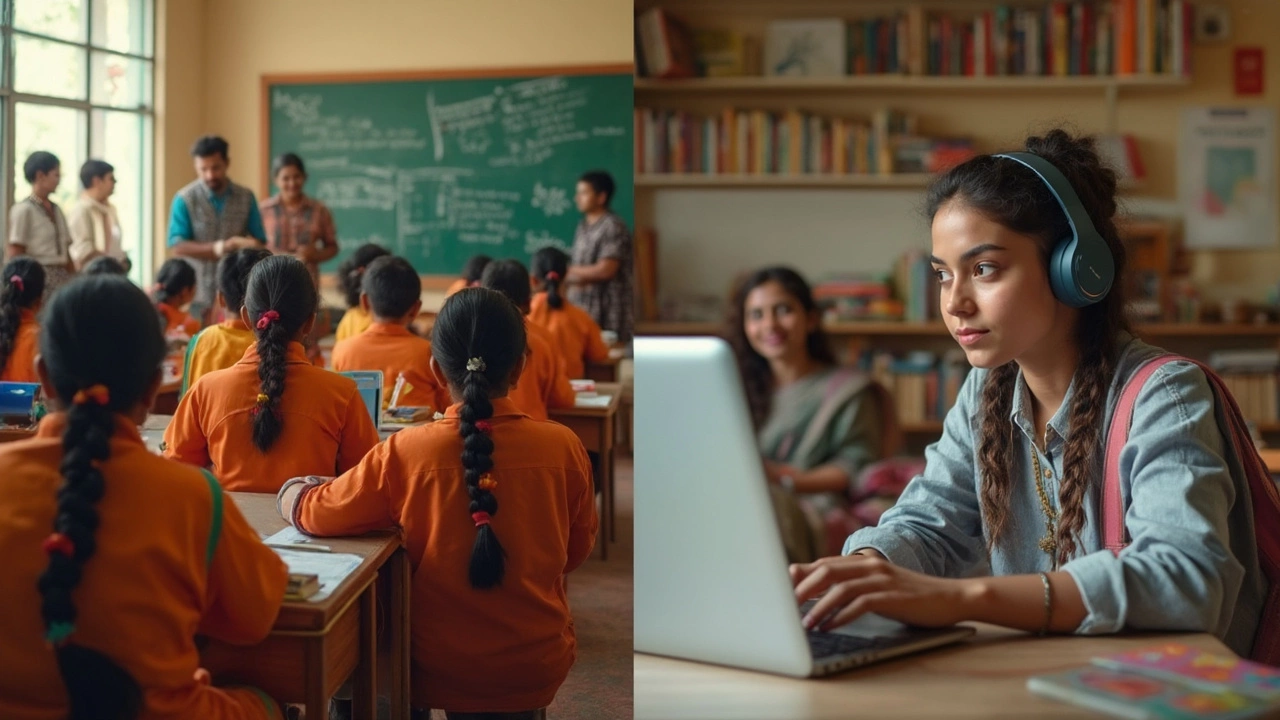
Traditional and distance education aren’t just about where you study—they shape how you learn, interact, and build skills. This article unpacks the big differences, from the daily routines to the tech you’ll use and even job prospects. Get clear insights on what to expect and practical tips for choosing the path that fits your life. Whether you’re curious about online classes or skeptical about remote learning’s value, there’s something here for you.
Is the American Syllabus Really Easier Than CBSE?
Posted by Aria Fenwick On 22 Feb, 2025 Comments (0)
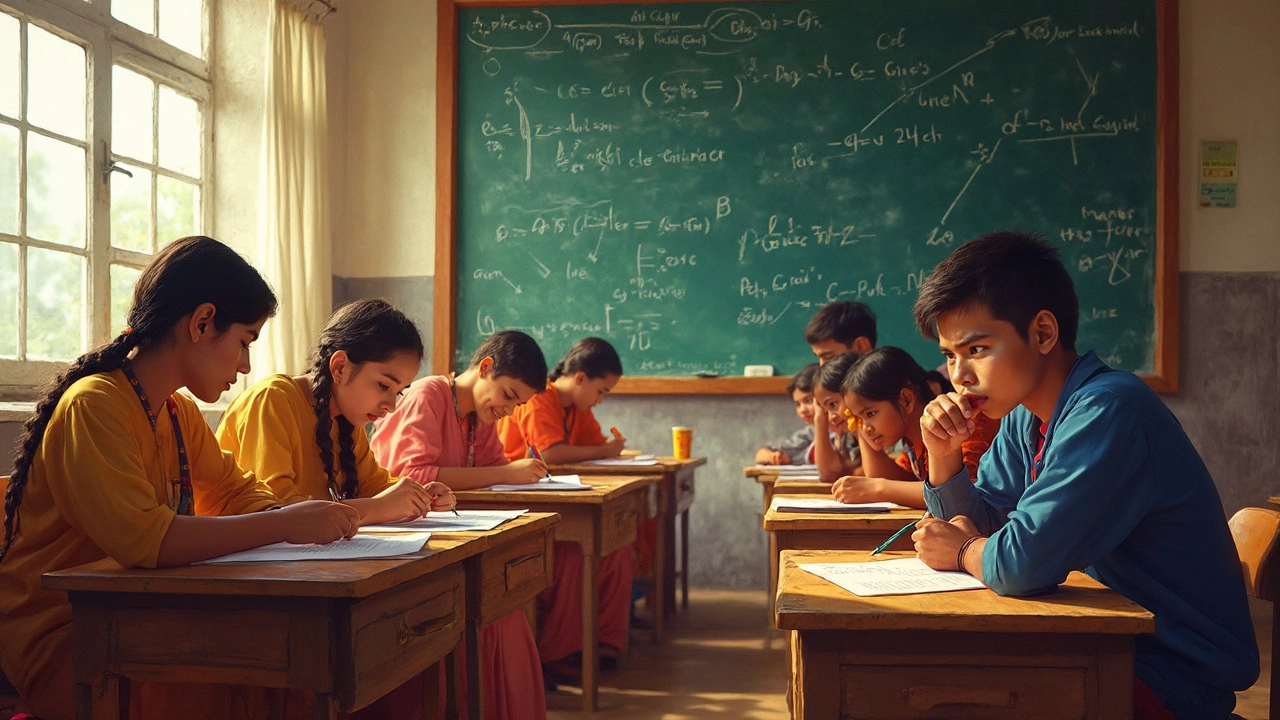
Understanding whether the American syllabus is easier than CBSE requires delving into their unique educational approaches and content coverage. The CBSE's structured, science-focused curriculum contrasts with the often more flexible and broad-based American system. While CBSE emphasizes memorization and high-stakes exams, the American approach may offer a varied assessment method while focusing on critical thinking skills. This article explores these differences and provides insights and tips for navigating these systems.