JEE Advanced: What It Is, Why It Matters, and How to Prepare
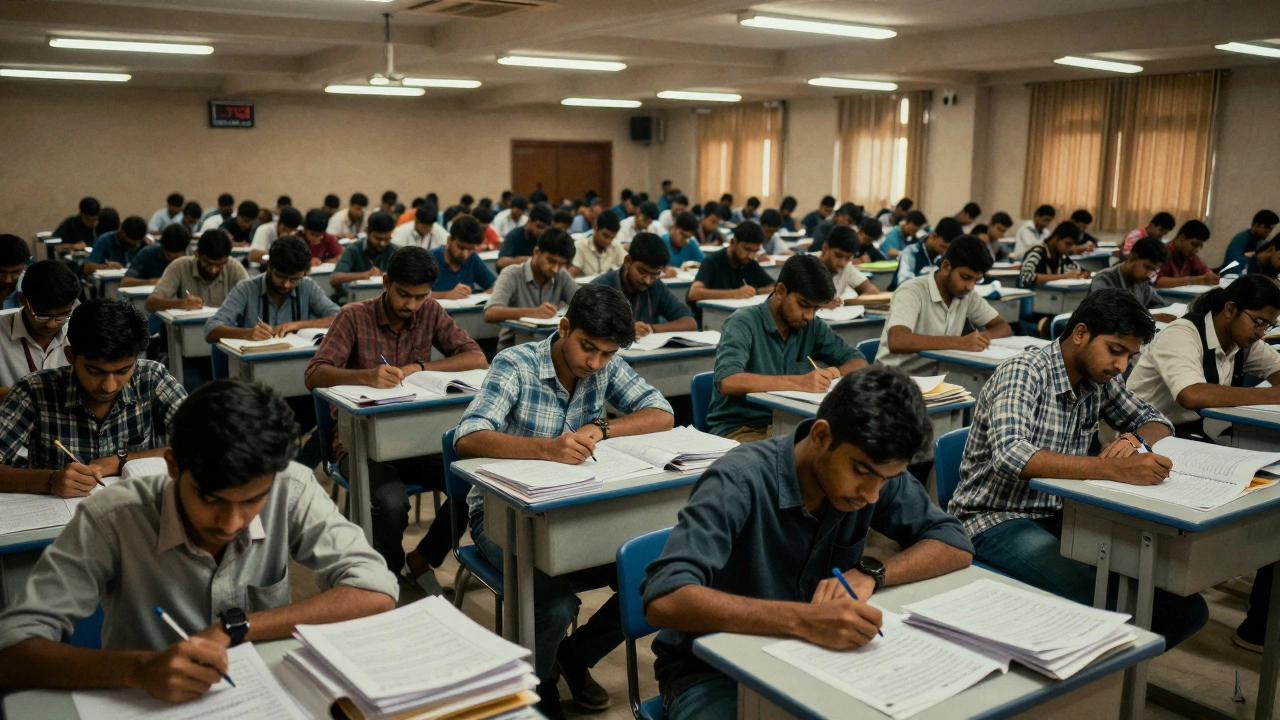
When you hear JEE Advanced, the final and most competitive engineering entrance exam in India that determines admission to the Indian Institutes of Technology (IITs). It's not just another test—it's the gatekeeper to India’s most prestigious engineering schools. Unlike JEE Main, which opens doors to NITs and IIITs, JEE Advanced is reserved for the top 2.5 lakh rankers and is known for its brutal difficulty, deep conceptual questions, and intense time pressure. Only those who master problem-solving under stress, not just memorization, make it through.
This exam doesn’t just test your knowledge of Physics, Chemistry, and Math—it tests your ability to think like an engineer. The questions are designed to separate those who can apply concepts from those who can only recite them. A student might ace their school exams but still fail JEE Advanced because the exam rewards creativity, speed, and precision all at once. That’s why coaching centers like Allen, Resonance, and FIITJEE exist—not to teach the syllabus, but to train your brain to crack patterns you’ve never seen before. IIT JEE, the collective term for JEE Main and JEE Advanced, representing the primary pathway to engineering excellence in India is a two-stage marathon, and JEE Advanced is the final sprint.
What makes this exam unique is how it’s structured. You don’t just need to know formulas—you need to know when to drop them and rebuild the problem from scratch. A single question might combine calculus, mechanics, and electrostatics in a way that forces you to rethink your approach. That’s why students who focus only on one subject, like Math, often fall short. The top scorers balance all three, but they don’t study them equally. They know Chemistry gives them the most reliable marks, Math lifts them to the top ranks, and Physics separates the legends from the rest. JEE preparation, the focused, strategic process of mastering concepts, solving past papers, and building exam-day stamina for the JEE Advanced exam isn’t about studying more hours—it’s about studying smarter. It’s about knowing which topics appear every year, which ones are traps, and which ones are your golden tickets.
And it’s not just about the books. The best candidates know how to manage stress, sleep well, and avoid burnout. They track their progress with mock tests that mimic the real exam’s timing and pressure. They learn from their mistakes—not by redoing the same problems, but by understanding why they got them wrong in the first place. The top schools don’t just teach content; they teach mindset. And that’s what you’re really competing for: not just marks, but mental toughness.
Below, you’ll find real guides from students and coaches who’ve been there—on which schools actually deliver results, what subjects to prioritize, how to pick the right coaching, and how to turn pressure into performance. No fluff. No hype. Just what works.
Is IIT Tougher Than Harvard? Real Comparison of Admission, Academics & Career
Posted by Aria Fenwick On 31 Mar, 2026 Comments (0)
A detailed comparison of admission difficulty, academic workload, and career outcomes between IIT and Harvard University.
Toughest JEE Advanced Paper: Breaking Down the Legend
Posted by Aria Fenwick On 2 Jun, 2025 Comments (0)

Ever wondered which JEE Advanced paper truly pushed thousands of students to their limits? This article digs into the exam's wildest years, why certain papers got labeled as nightmares, and what made them stand out. It also busts some myths and tosses in real stories and advice for those prepping now. If you're eyeing IIT, you'll get a clear sense of what 'tough' actually means—and how to outsmart the exam’s mind games.
Understanding JEE Mains and JEE Advanced: What's the Difference?
Posted by Aria Fenwick On 13 Feb, 2025 Comments (0)

JEE Mains and JEE Advanced are two critical exams for students aiming to enter prestigious engineering institutes in India, but they serve different purposes. JEE Mains is the first step for most engineering aspirants, providing entry into NITs and other institutions. JEE Advanced, however, is specifically for those targeting the Indian Institutes of Technology (IITs). Here, we'll explain the key differences between these exams and offer some tips to help students navigate them successfully.