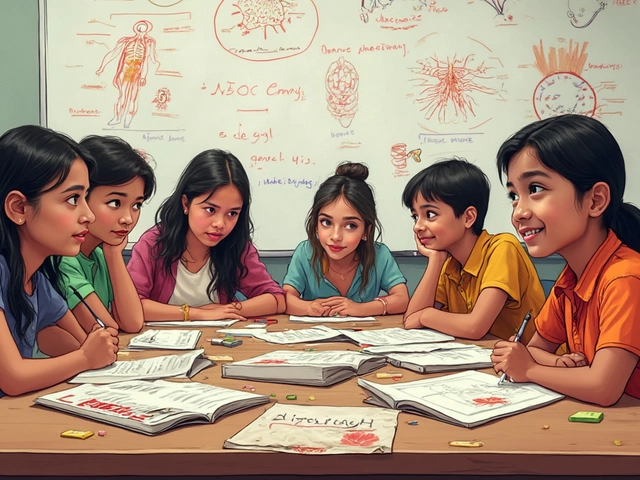
State Boards in India: What They Are, How They Compare, and Why They Matter
When it comes to school education in India, state boards, regional education systems run by individual states that set their own curriculum, exams, and grading standards. Also known as state education boards, they serve over 60% of Indian students and are often the default choice for families focused on local colleges, state-level exams, and regional language learning. Unlike CBSE or ICSE, which follow a national template, state boards tailor content to local needs—whether that’s teaching history through regional heroes, using the state language as the medium of instruction, or aligning exams with state university entrance patterns.
This matters because your child’s board doesn’t just shape their textbooks—it shapes their future. A student in Maharashtra might take Marathi as a mandatory subject, while one in Tamil Nadu could study Tamil literature alongside physics. These differences aren’t just cultural—they affect college admissions, scholarship eligibility, and even how well a student performs in competitive exams like JEE or NEET. Many assume state boards are "easier," but that’s misleading. Some, like Maharashtra’s MSBSHSE or Uttar Pradesh’s UP Board, have notoriously tough grading curves and high-stakes final exams. Others, like Kerala’s SSLC, are known for strong foundational teaching in math and science. The real question isn’t whether they’re hard or easy—it’s whether they match your goals.
State boards also interact with other key players in Indian education. For example, if you’re aiming for an IIT, you’ll need to know that while CBSE syllabi are closer to JEE patterns, many top performers come from state boards because they focus harder on fundamentals. Similarly, if you’re considering studying abroad, some universities still question the rigor of state board transcripts—though that’s changing fast as more state boards adopt modern assessment tools. And if you’re looking at government jobs, many state-level recruitments give preference to candidates from the same state board, making local education an advantage, not a limitation.
What you’ll find in the posts below isn’t a ranking of the "best" board. It’s a real look at what state boards actually offer—how they compare to CBSE and ICSE, which ones are gaining traction, how parents are using them strategically, and why some students thrive under them while others struggle. Whether you’re choosing a school for your child, planning a career path, or just trying to understand the Indian system, the answers here aren’t theoretical. They’re based on what’s happening in classrooms, exam halls, and counseling centers across the country right now.
Which State Leads India in Number of CBSE Schools?
Posted by Aria Fenwick On 20 Mar, 2025 Comments (0)
In India, the CBSE (Central Board of Secondary Education) is a popular choice for families seeking a standardized education system. Ever wondered which state boasts the highest number of CBSE schools? This article explores the state's educational landscape, providing insights and facts on why it leads in CBSE affiliations. Understand how factors like population, urbanization, and educational emphasis contribute to this phenomenon.